{"title":"高危妊娠对围产期左心室功能的影响。","authors":"Yasuyo Komoriya, Kazuo Komamura, Hiroshi Miyake, Hisashi Umeda, Koichi Kobayashi, Ryoji Ishiki, Hidenori Oguchi, Toyoaki Murohara, Mitsunori Iwase","doi":"10.1253/circrep.CR-24-0154","DOIUrl":null,"url":null,"abstract":"<p><strong>Background: </strong>Predictors of the clinical characteristics of pregnant women at risk of peripartum cardiomyopathy (PPCM) remain unclear.</p><p><strong>Methods and results: </strong>We enrolled 450 cases of high-risk pregnancy with any risk factor from among ≥35 years of age, hypertensive disorders of pregnancy (HDP), multiple gestation, or other systemic or obstetric complications except for a history of cardiac disease. All the women underwent echocardiography and plasma B-type natriuretic peptide (BNP) measurement during the second/third trimester and the early/late postpartum period. Logistic regression analyses identified clinical factors associated with left ventricular (LV) dysfunction. The incidence of PPCM was 0.89%, which was higher than in previous reports. Early diastolic mitral annular velocity (e') was significantly negatively associated with the occurrence of PPCM, and the BNP level showed a significant positive association with the occurrence of PPCM. The percentages of cases of e' <7 cm/s, and BNP level ≥100 pg/mL were 25.3%, and 20.4%, respectively. Multivariate regression analysis revealed that HDP was independently associated with e'. A negative correlation between e' and BNP level was observed in HDP.</p><p><strong>Conclusions: </strong>High-risk pregnancy was associated with an increased incidence of PPCM. Measurement of BNP levels and echocardiographic assessment of LV diastolic function during pregnancy may be useful in predicting PPCM.</p>","PeriodicalId":94305,"journal":{"name":"Circulation reports","volume":"7 2","pages":"122-130"},"PeriodicalIF":2.3000,"publicationDate":"2025-01-22","publicationTypes":"Journal Article","fieldsOfStudy":null,"isOpenAccess":false,"openAccessPdf":"https://www.ncbi.nlm.nih.gov/pmc/articles/PMC11807695/pdf/","citationCount":"0","resultStr":"{\"title\":\"Impact of High-Risk Pregnancy on Peripartum Left Ventricular Function.\",\"authors\":\"Yasuyo Komoriya, Kazuo Komamura, Hiroshi Miyake, Hisashi Umeda, Koichi Kobayashi, Ryoji Ishiki, Hidenori Oguchi, Toyoaki Murohara, Mitsunori Iwase\",\"doi\":\"10.1253/circrep.CR-24-0154\",\"DOIUrl\":null,\"url\":null,\"abstract\":\"<p><strong>Background: </strong>Predictors of the clinical characteristics of pregnant women at risk of peripartum cardiomyopathy (PPCM) remain unclear.</p><p><strong>Methods and results: </strong>We enrolled 450 cases of high-risk pregnancy with any risk factor from among ≥35 years of age, hypertensive disorders of pregnancy (HDP), multiple gestation, or other systemic or obstetric complications except for a history of cardiac disease. All the women underwent echocardiography and plasma B-type natriuretic peptide (BNP) measurement during the second/third trimester and the early/late postpartum period. Logistic regression analyses identified clinical factors associated with left ventricular (LV) dysfunction. The incidence of PPCM was 0.89%, which was higher than in previous reports. Early diastolic mitral annular velocity (e') was significantly negatively associated with the occurrence of PPCM, and the BNP level showed a significant positive association with the occurrence of PPCM. The percentages of cases of e' <7 cm/s, and BNP level ≥100 pg/mL were 25.3%, and 20.4%, respectively. Multivariate regression analysis revealed that HDP was independently associated with e'. A negative correlation between e' and BNP level was observed in HDP.</p><p><strong>Conclusions: </strong>High-risk pregnancy was associated with an increased incidence of PPCM. Measurement of BNP levels and echocardiographic assessment of LV diastolic function during pregnancy may be useful in predicting PPCM.</p>\",\"PeriodicalId\":94305,\"journal\":{\"name\":\"Circulation reports\",\"volume\":\"7 2\",\"pages\":\"122-130\"},\"PeriodicalIF\":2.3000,\"publicationDate\":\"2025-01-22\",\"publicationTypes\":\"Journal Article\",\"fieldsOfStudy\":null,\"isOpenAccess\":false,\"openAccessPdf\":\"https://www.ncbi.nlm.nih.gov/pmc/articles/PMC11807695/pdf/\",\"citationCount\":\"0\",\"resultStr\":null,\"platform\":\"Semanticscholar\",\"paperid\":null,\"PeriodicalName\":\"Circulation reports\",\"FirstCategoryId\":\"1085\",\"ListUrlMain\":\"https://doi.org/10.1253/circrep.CR-24-0154\",\"RegionNum\":0,\"RegionCategory\":null,\"ArticlePicture\":[],\"TitleCN\":null,\"AbstractTextCN\":null,\"PMCID\":null,\"EPubDate\":\"2025/2/10 0:00:00\",\"PubModel\":\"eCollection\",\"JCR\":\"\",\"JCRName\":\"\",\"Score\":null,\"Total\":0}","platform":"Semanticscholar","paperid":null,"PeriodicalName":"Circulation reports","FirstCategoryId":"1085","ListUrlMain":"https://doi.org/10.1253/circrep.CR-24-0154","RegionNum":0,"RegionCategory":null,"ArticlePicture":[],"TitleCN":null,"AbstractTextCN":null,"PMCID":null,"EPubDate":"2025/2/10 0:00:00","PubModel":"eCollection","JCR":"","JCRName":"","Score":null,"Total":0}
Impact of High-Risk Pregnancy on Peripartum Left Ventricular Function.
Background: Predictors of the clinical characteristics of pregnant women at risk of peripartum cardiomyopathy (PPCM) remain unclear.
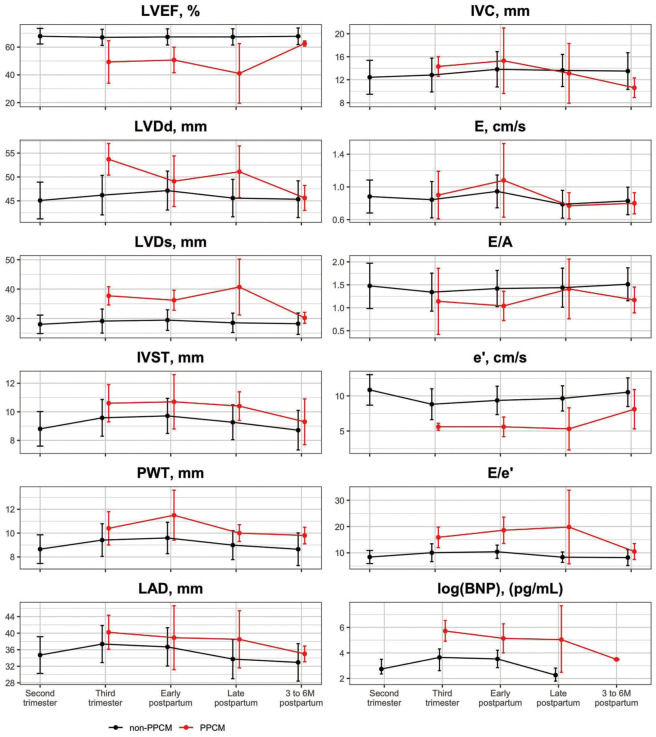
Methods and results: We enrolled 450 cases of high-risk pregnancy with any risk factor from among ≥35 years of age, hypertensive disorders of pregnancy (HDP), multiple gestation, or other systemic or obstetric complications except for a history of cardiac disease. All the women underwent echocardiography and plasma B-type natriuretic peptide (BNP) measurement during the second/third trimester and the early/late postpartum period. Logistic regression analyses identified clinical factors associated with left ventricular (LV) dysfunction. The incidence of PPCM was 0.89%, which was higher than in previous reports. Early diastolic mitral annular velocity (e') was significantly negatively associated with the occurrence of PPCM, and the BNP level showed a significant positive association with the occurrence of PPCM. The percentages of cases of e' <7 cm/s, and BNP level ≥100 pg/mL were 25.3%, and 20.4%, respectively. Multivariate regression analysis revealed that HDP was independently associated with e'. A negative correlation between e' and BNP level was observed in HDP.
Conclusions: High-risk pregnancy was associated with an increased incidence of PPCM. Measurement of BNP levels and echocardiographic assessment of LV diastolic function during pregnancy may be useful in predicting PPCM.






 京公网安备 11010802042870号
京ICP备2023020795号-1
京公网安备 11010802042870号
京ICP备2023020795号-1

 分享
分享

 求助内容:
求助内容: 应助结果提醒方式:
 扫码关注我们
