{"title":"经主动脉瓣血流速度对心脏收缩期杂音发展的影响。","authors":"Daiki Hirayama, Susumu Manabe, Norihisa Yuge","doi":"10.1253/circrep.CR-24-0150","DOIUrl":null,"url":null,"abstract":"<p><strong>Background: </strong>Although cardiac auscultation plays an essential role in detecting valvular heart diseases, false-positive rates due to innocent heart murmurs remain a concern because accelerated transaortic valve blood flow can be a major contributor to systolic heart murmurs. In this study we investigated the effect of transaortic valve flow velocity on the development of systolic heart murmurs.</p><p><strong>Methods and results: </strong>Cardiac auscultation was performed in 571 patients referred for echocardiography and systolic heart murmur was detected in 103 (18.0%). Maximum transaortic valve flow velocity was higher in patients with murmurs than in those without (2.02 vs. 1.34 m/s, P<0.001; area under the receiver operating characteristic curve, 0.82). A cutoff maximum transaortic flow velocity of 1.7 m/s predicted systolic heart murmurs (sensitivity, 65%; specificity, 88%). The incidence of heart murmur was associated with higher maximum transaortic valve flow velocity (<1.7 m/s, 7.3%; 1.7-2.5 m/s, 50.0%; >2.5 m/s, 73.5%). Multivariate analysis revealed the maximum transaortic valve flow velocity as an independent predictor of systolic heart murmurs (hazard ratio, 9.18; 95% confidence interval, 5.35-15.75; P<0.001).</p><p><strong>Conclusions: </strong>Accelerated transaortic valve flow velocity is an important determinant of systolic heart murmurs. Systolic heart murmurs can be heard before the transaortic valve flow velocity reaches the clinically significant aortic stenosis criterion, which can constitute a considerable number of innocent heart murmurs.</p>","PeriodicalId":94305,"journal":{"name":"Circulation reports","volume":"7 2","pages":"139-142"},"PeriodicalIF":1.1000,"publicationDate":"2025-01-22","publicationTypes":"Journal Article","fieldsOfStudy":null,"isOpenAccess":false,"openAccessPdf":"https://www.ncbi.nlm.nih.gov/pmc/articles/PMC11807693/pdf/","citationCount":"0","resultStr":"{\"title\":\"Impact of Transaortic Valve Flow Velocity on the Development of Systolic Heart Murmurs.\",\"authors\":\"Daiki Hirayama, Susumu Manabe, Norihisa Yuge\",\"doi\":\"10.1253/circrep.CR-24-0150\",\"DOIUrl\":null,\"url\":null,\"abstract\":\"<p><strong>Background: </strong>Although cardiac auscultation plays an essential role in detecting valvular heart diseases, false-positive rates due to innocent heart murmurs remain a concern because accelerated transaortic valve blood flow can be a major contributor to systolic heart murmurs. In this study we investigated the effect of transaortic valve flow velocity on the development of systolic heart murmurs.</p><p><strong>Methods and results: </strong>Cardiac auscultation was performed in 571 patients referred for echocardiography and systolic heart murmur was detected in 103 (18.0%). Maximum transaortic valve flow velocity was higher in patients with murmurs than in those without (2.02 vs. 1.34 m/s, P<0.001; area under the receiver operating characteristic curve, 0.82). A cutoff maximum transaortic flow velocity of 1.7 m/s predicted systolic heart murmurs (sensitivity, 65%; specificity, 88%). The incidence of heart murmur was associated with higher maximum transaortic valve flow velocity (<1.7 m/s, 7.3%; 1.7-2.5 m/s, 50.0%; >2.5 m/s, 73.5%). Multivariate analysis revealed the maximum transaortic valve flow velocity as an independent predictor of systolic heart murmurs (hazard ratio, 9.18; 95% confidence interval, 5.35-15.75; P<0.001).</p><p><strong>Conclusions: </strong>Accelerated transaortic valve flow velocity is an important determinant of systolic heart murmurs. Systolic heart murmurs can be heard before the transaortic valve flow velocity reaches the clinically significant aortic stenosis criterion, which can constitute a considerable number of innocent heart murmurs.</p>\",\"PeriodicalId\":94305,\"journal\":{\"name\":\"Circulation reports\",\"volume\":\"7 2\",\"pages\":\"139-142\"},\"PeriodicalIF\":1.1000,\"publicationDate\":\"2025-01-22\",\"publicationTypes\":\"Journal Article\",\"fieldsOfStudy\":null,\"isOpenAccess\":false,\"openAccessPdf\":\"https://www.ncbi.nlm.nih.gov/pmc/articles/PMC11807693/pdf/\",\"citationCount\":\"0\",\"resultStr\":null,\"platform\":\"Semanticscholar\",\"paperid\":null,\"PeriodicalName\":\"Circulation reports\",\"FirstCategoryId\":\"1085\",\"ListUrlMain\":\"https://doi.org/10.1253/circrep.CR-24-0150\",\"RegionNum\":0,\"RegionCategory\":null,\"ArticlePicture\":[],\"TitleCN\":null,\"AbstractTextCN\":null,\"PMCID\":null,\"EPubDate\":\"2025/2/10 0:00:00\",\"PubModel\":\"eCollection\",\"JCR\":\"\",\"JCRName\":\"\",\"Score\":null,\"Total\":0}","platform":"Semanticscholar","paperid":null,"PeriodicalName":"Circulation reports","FirstCategoryId":"1085","ListUrlMain":"https://doi.org/10.1253/circrep.CR-24-0150","RegionNum":0,"RegionCategory":null,"ArticlePicture":[],"TitleCN":null,"AbstractTextCN":null,"PMCID":null,"EPubDate":"2025/2/10 0:00:00","PubModel":"eCollection","JCR":"","JCRName":"","Score":null,"Total":0}
引用次数: 0
摘要
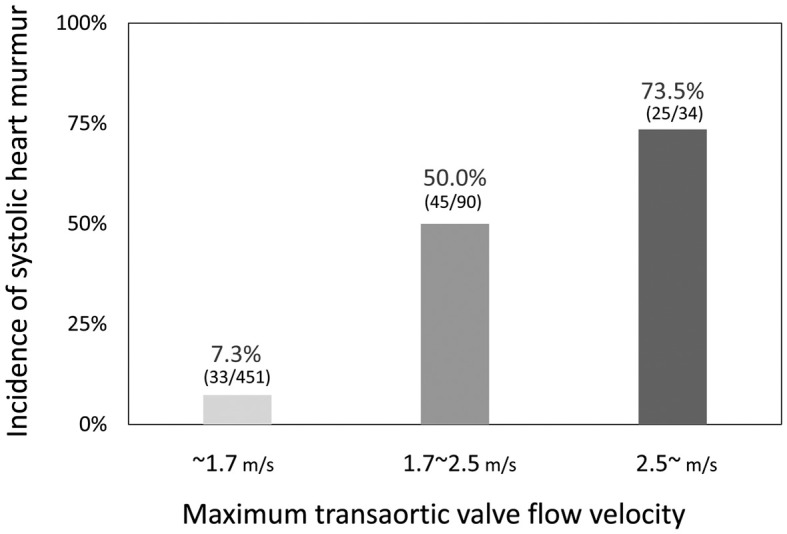
背景:虽然心脏听诊在检测心脏瓣膜疾病中起着至关重要的作用,但由于经主动脉瓣血流加速可能是收缩期心脏杂音的主要原因,因此无辜心脏杂音的假阳性率仍然值得关注。在这项研究中,我们探讨了经主动脉瓣血流速度对心脏收缩期杂音发展的影响。方法与结果:571例超声心动图患者行心脏听诊,发现收缩期心脏杂音103例(18.0%)。有杂音的患者最大经主动脉瓣血流速度高于无杂音的患者(2.02 vs. 1.34 m/s, P2.5 m/s, 73.5%)。多因素分析显示,经主动脉瓣最大血流速度是心脏收缩期杂音的独立预测因子(风险比,9.18;95%置信区间为5.35-15.75;结论:经主动脉瓣血流速度加快是心脏收缩期杂音的重要决定因素。收缩期心脏杂音在经主动脉瓣血流速度达到临床上明显的主动脉狭窄标准之前就可听到,可构成相当数量的无害心脏杂音。
Impact of Transaortic Valve Flow Velocity on the Development of Systolic Heart Murmurs.
Background: Although cardiac auscultation plays an essential role in detecting valvular heart diseases, false-positive rates due to innocent heart murmurs remain a concern because accelerated transaortic valve blood flow can be a major contributor to systolic heart murmurs. In this study we investigated the effect of transaortic valve flow velocity on the development of systolic heart murmurs.
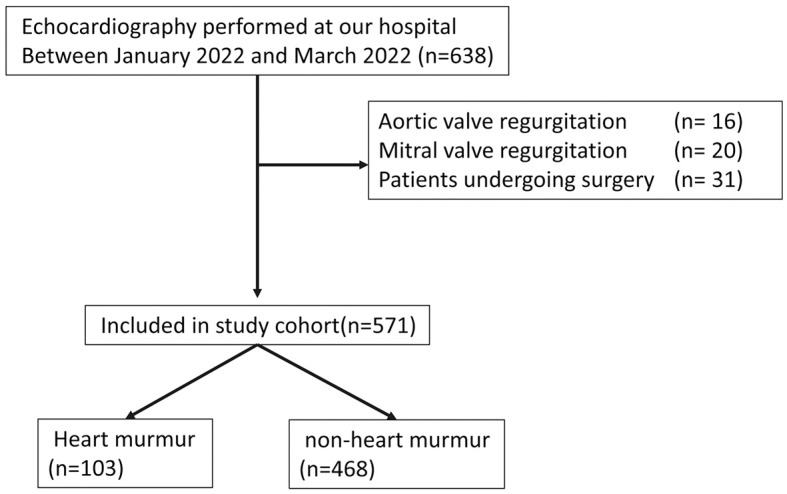
Methods and results: Cardiac auscultation was performed in 571 patients referred for echocardiography and systolic heart murmur was detected in 103 (18.0%). Maximum transaortic valve flow velocity was higher in patients with murmurs than in those without (2.02 vs. 1.34 m/s, P<0.001; area under the receiver operating characteristic curve, 0.82). A cutoff maximum transaortic flow velocity of 1.7 m/s predicted systolic heart murmurs (sensitivity, 65%; specificity, 88%). The incidence of heart murmur was associated with higher maximum transaortic valve flow velocity (<1.7 m/s, 7.3%; 1.7-2.5 m/s, 50.0%; >2.5 m/s, 73.5%). Multivariate analysis revealed the maximum transaortic valve flow velocity as an independent predictor of systolic heart murmurs (hazard ratio, 9.18; 95% confidence interval, 5.35-15.75; P<0.001).
Conclusions: Accelerated transaortic valve flow velocity is an important determinant of systolic heart murmurs. Systolic heart murmurs can be heard before the transaortic valve flow velocity reaches the clinically significant aortic stenosis criterion, which can constitute a considerable number of innocent heart murmurs.





 京公网安备 11010802042870号
京ICP备2023020795号-1
京公网安备 11010802042870号
京ICP备2023020795号-1

 分享
分享

 求助内容:
求助内容: 应助结果提醒方式:
 扫码关注我们
