Arlette Umugwaneza, Mathijs Mutsaers, Jean Claude Semuto Ngabonziza, Johanna Helena Kattenberg, Aline Uwimana, Ayman Ahmed, Eric Remera, Theogene Kubahoniyesu, Christian Nsanzabaganwa, Hassan Mugabo, Gilbert Rukundo, Michee Kabera, Aimable Mbituyumuremyi, Emmanuel Hakizimana, Claude Mambo Muvunyi, Anna Rosanas-Urgell
{"title":"加强疟疾控制的五年:2018年至2023年卢旺达的疟疾趋势和干预措施的影响。","authors":"Arlette Umugwaneza, Mathijs Mutsaers, Jean Claude Semuto Ngabonziza, Johanna Helena Kattenberg, Aline Uwimana, Ayman Ahmed, Eric Remera, Theogene Kubahoniyesu, Christian Nsanzabaganwa, Hassan Mugabo, Gilbert Rukundo, Michee Kabera, Aimable Mbituyumuremyi, Emmanuel Hakizimana, Claude Mambo Muvunyi, Anna Rosanas-Urgell","doi":"10.1186/s12936-025-05278-w","DOIUrl":null,"url":null,"abstract":"<p><strong>Background: </strong>Rwanda has made significant strides in malaria control. This study reviews malaria epidemiology and control strategies in Rwanda from 2018 to 2023, documenting their impact, persistent gaps and emerging challenges.</p><p><strong>Methods: </strong>Data on Rwanda's malaria context from 2018 to 2023 were obtained through a literature review of peer-reviewed articles and grey literature, including annual reports from the malaria programmes, partners, the African Union, and the World Health Organization (WHO). Specific keywords used for the search included \"malaria\", \"Rwanda\", \"case management\", \"control\", \"treatment\", and \"prevention\". Moreover, epidemiological data for this period was extracted from the Health Management Information System (HMIS). Data analysis was done using R & R-Studio, ANOVA to assess the statistical significance (P < 0.05) of observed trends and T-test to compare the focal and blanket IRS techniques.</p><p><strong>Results/discussion: </strong>Between 2018 and 2023, all malaria indicators showed improvement. Malaria incidence dropped from 345 to 40 cases per 1000 persons (P = 0.00292), the severe malaria rate decreased from 112 to 10/100,000 persons (P = 0.018), and the mortality rate fell from 2.72 to 0.258 deaths /100,000 persons (P = 0.00617). Among children under 5 years of age, incidence decreased significantly from 331 to 52/1,000 persons (P = 0.00123), the severe malaria rate dropped from 214 to 29/100,000 persons (P = 0.00399), and mortality declined from 5 to 0.453/100,000 persons (P = 0.00504). Over the same period, key malaria interventions expanded. The proportion of cases treated by CHWs increased significantly, improving access to early diagnosis and treatment (from 13 to 59%), and the new generations of ITNs (PBO and dual-active ingredient nets) were deployed in 9 districts. Since 2019, a blanket spraying technique has been adopted in 12 IRS districts replacing the focal spraying technique contributing to the significant decrease of malaria incidence from 2019 to 2023 (P = 0.0025). However, new challenges have emerged, including the rise of the K13 R561H mutation associated with artemisinin resistance, the spread of insecticide resistance, and limited intervention coverage due to resource constraints.</p><p><strong>Conclusion: </strong>To sustain the progress achieved, it is essential to intensify malaria control efforts, foster compliance with intervention strategies, enhance surveillance systems for timely and effective responses, and secure long-term funding to sustain these measures.</p>","PeriodicalId":18317,"journal":{"name":"Malaria Journal","volume":"24 1","pages":"40"},"PeriodicalIF":3.0000,"publicationDate":"2025-02-12","publicationTypes":"Journal Article","fieldsOfStudy":null,"isOpenAccess":false,"openAccessPdf":"https://www.ncbi.nlm.nih.gov/pmc/articles/PMC11817622/pdf/","citationCount":"0","resultStr":"{\"title\":\"Half-decade of scaling up malaria control: malaria trends and impact of interventions from 2018 to 2023 in Rwanda.\",\"authors\":\"Arlette Umugwaneza, Mathijs Mutsaers, Jean Claude Semuto Ngabonziza, Johanna Helena Kattenberg, Aline Uwimana, Ayman Ahmed, Eric Remera, Theogene Kubahoniyesu, Christian Nsanzabaganwa, Hassan Mugabo, Gilbert Rukundo, Michee Kabera, Aimable Mbituyumuremyi, Emmanuel Hakizimana, Claude Mambo Muvunyi, Anna Rosanas-Urgell\",\"doi\":\"10.1186/s12936-025-05278-w\",\"DOIUrl\":null,\"url\":null,\"abstract\":\"<p><strong>Background: </strong>Rwanda has made significant strides in malaria control. This study reviews malaria epidemiology and control strategies in Rwanda from 2018 to 2023, documenting their impact, persistent gaps and emerging challenges.</p><p><strong>Methods: </strong>Data on Rwanda's malaria context from 2018 to 2023 were obtained through a literature review of peer-reviewed articles and grey literature, including annual reports from the malaria programmes, partners, the African Union, and the World Health Organization (WHO). Specific keywords used for the search included \\\"malaria\\\", \\\"Rwanda\\\", \\\"case management\\\", \\\"control\\\", \\\"treatment\\\", and \\\"prevention\\\". Moreover, epidemiological data for this period was extracted from the Health Management Information System (HMIS). Data analysis was done using R & R-Studio, ANOVA to assess the statistical significance (P < 0.05) of observed trends and T-test to compare the focal and blanket IRS techniques.</p><p><strong>Results/discussion: </strong>Between 2018 and 2023, all malaria indicators showed improvement. Malaria incidence dropped from 345 to 40 cases per 1000 persons (P = 0.00292), the severe malaria rate decreased from 112 to 10/100,000 persons (P = 0.018), and the mortality rate fell from 2.72 to 0.258 deaths /100,000 persons (P = 0.00617). Among children under 5 years of age, incidence decreased significantly from 331 to 52/1,000 persons (P = 0.00123), the severe malaria rate dropped from 214 to 29/100,000 persons (P = 0.00399), and mortality declined from 5 to 0.453/100,000 persons (P = 0.00504). Over the same period, key malaria interventions expanded. The proportion of cases treated by CHWs increased significantly, improving access to early diagnosis and treatment (from 13 to 59%), and the new generations of ITNs (PBO and dual-active ingredient nets) were deployed in 9 districts. Since 2019, a blanket spraying technique has been adopted in 12 IRS districts replacing the focal spraying technique contributing to the significant decrease of malaria incidence from 2019 to 2023 (P = 0.0025). However, new challenges have emerged, including the rise of the K13 R561H mutation associated with artemisinin resistance, the spread of insecticide resistance, and limited intervention coverage due to resource constraints.</p><p><strong>Conclusion: </strong>To sustain the progress achieved, it is essential to intensify malaria control efforts, foster compliance with intervention strategies, enhance surveillance systems for timely and effective responses, and secure long-term funding to sustain these measures.</p>\",\"PeriodicalId\":18317,\"journal\":{\"name\":\"Malaria Journal\",\"volume\":\"24 1\",\"pages\":\"40\"},\"PeriodicalIF\":3.0000,\"publicationDate\":\"2025-02-12\",\"publicationTypes\":\"Journal Article\",\"fieldsOfStudy\":null,\"isOpenAccess\":false,\"openAccessPdf\":\"https://www.ncbi.nlm.nih.gov/pmc/articles/PMC11817622/pdf/\",\"citationCount\":\"0\",\"resultStr\":null,\"platform\":\"Semanticscholar\",\"paperid\":null,\"PeriodicalName\":\"Malaria Journal\",\"FirstCategoryId\":\"3\",\"ListUrlMain\":\"https://doi.org/10.1186/s12936-025-05278-w\",\"RegionNum\":3,\"RegionCategory\":\"医学\",\"ArticlePicture\":[],\"TitleCN\":null,\"AbstractTextCN\":null,\"PMCID\":null,\"EPubDate\":\"\",\"PubModel\":\"\",\"JCR\":\"Q3\",\"JCRName\":\"INFECTIOUS DISEASES\",\"Score\":null,\"Total\":0}","platform":"Semanticscholar","paperid":null,"PeriodicalName":"Malaria Journal","FirstCategoryId":"3","ListUrlMain":"https://doi.org/10.1186/s12936-025-05278-w","RegionNum":3,"RegionCategory":"医学","ArticlePicture":[],"TitleCN":null,"AbstractTextCN":null,"PMCID":null,"EPubDate":"","PubModel":"","JCR":"Q3","JCRName":"INFECTIOUS DISEASES","Score":null,"Total":0}
Half-decade of scaling up malaria control: malaria trends and impact of interventions from 2018 to 2023 in Rwanda.
Background: Rwanda has made significant strides in malaria control. This study reviews malaria epidemiology and control strategies in Rwanda from 2018 to 2023, documenting their impact, persistent gaps and emerging challenges.
Methods: Data on Rwanda's malaria context from 2018 to 2023 were obtained through a literature review of peer-reviewed articles and grey literature, including annual reports from the malaria programmes, partners, the African Union, and the World Health Organization (WHO). Specific keywords used for the search included "malaria", "Rwanda", "case management", "control", "treatment", and "prevention". Moreover, epidemiological data for this period was extracted from the Health Management Information System (HMIS). Data analysis was done using R & R-Studio, ANOVA to assess the statistical significance (P < 0.05) of observed trends and T-test to compare the focal and blanket IRS techniques.
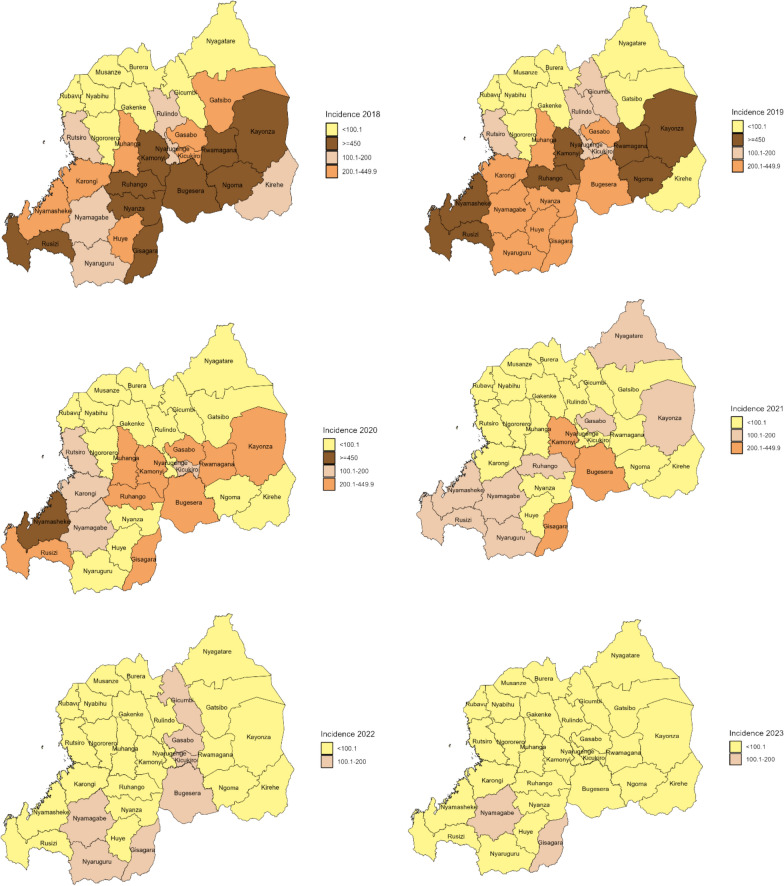
Results/discussion: Between 2018 and 2023, all malaria indicators showed improvement. Malaria incidence dropped from 345 to 40 cases per 1000 persons (P = 0.00292), the severe malaria rate decreased from 112 to 10/100,000 persons (P = 0.018), and the mortality rate fell from 2.72 to 0.258 deaths /100,000 persons (P = 0.00617). Among children under 5 years of age, incidence decreased significantly from 331 to 52/1,000 persons (P = 0.00123), the severe malaria rate dropped from 214 to 29/100,000 persons (P = 0.00399), and mortality declined from 5 to 0.453/100,000 persons (P = 0.00504). Over the same period, key malaria interventions expanded. The proportion of cases treated by CHWs increased significantly, improving access to early diagnosis and treatment (from 13 to 59%), and the new generations of ITNs (PBO and dual-active ingredient nets) were deployed in 9 districts. Since 2019, a blanket spraying technique has been adopted in 12 IRS districts replacing the focal spraying technique contributing to the significant decrease of malaria incidence from 2019 to 2023 (P = 0.0025). However, new challenges have emerged, including the rise of the K13 R561H mutation associated with artemisinin resistance, the spread of insecticide resistance, and limited intervention coverage due to resource constraints.
Conclusion: To sustain the progress achieved, it is essential to intensify malaria control efforts, foster compliance with intervention strategies, enhance surveillance systems for timely and effective responses, and secure long-term funding to sustain these measures.
期刊介绍:
Malaria Journal is aimed at the scientific community interested in malaria in its broadest sense. It is the only journal that publishes exclusively articles on malaria and, as such, it aims to bring together knowledge from the different specialities involved in this very broad discipline, from the bench to the bedside and to the field.






 京公网安备 11010802042870号
京ICP备2023020795号-1
京公网安备 11010802042870号
京ICP备2023020795号-1

 分享
分享
 求助内容:
求助内容: 应助结果提醒方式:
 扫码关注我们
