Chengyu Wang , Wei Wang , Yanji Sun , Yanqiu Pan , Chuanzhi Jia
{"title":"甲醇制烯烃流化床反应器混合模型的人工神经网络校正","authors":"Chengyu Wang , Wei Wang , Yanji Sun , Yanqiu Pan , Chuanzhi Jia","doi":"10.1016/j.ces.2025.121323","DOIUrl":null,"url":null,"abstract":"<div><div>Hybrid modeling of fluidized bed reactor (FBR) remains as a challenging issue. A novel hybrid model was developed for the real-time optimization and control of FBR in the methanol to olefin (MTO) process. Specifically, a pseudo-homogeneous moving bed reactor (PHMBR) model was proposed as an approximation of the FBR, and then a correction model based on the artificial neural network (ANN) was adopted to compensate errors. A data expansion method based on the bootstrap algorithm was used to supplement insufficient training data for the ANN. Two hybrid models with deviation correction and factor correction were compared in order to attain the better predictive performance. The results showed that the hybrid model of MTO-FBR with factor correction could predict FBR outlet parameters with solution time below 0.03 s, RMSE below 2.85, and MRE below 7.63 %. The proposed modeling approach is expected to provide a new strategy for other reaction processes.</div></div>","PeriodicalId":271,"journal":{"name":"Chemical Engineering Science","volume":"307 ","pages":"Article 121323"},"PeriodicalIF":4.3000,"publicationDate":"2025-03-15","publicationTypes":"Journal Article","fieldsOfStudy":null,"isOpenAccess":false,"openAccessPdf":"","citationCount":"0","resultStr":"{\"title\":\"Hybrid modeling of methanol to olefin fluidized bed reactor corrected by artificial neural network\",\"authors\":\"Chengyu Wang , Wei Wang , Yanji Sun , Yanqiu Pan , Chuanzhi Jia\",\"doi\":\"10.1016/j.ces.2025.121323\",\"DOIUrl\":null,\"url\":null,\"abstract\":\"<div><div>Hybrid modeling of fluidized bed reactor (FBR) remains as a challenging issue. A novel hybrid model was developed for the real-time optimization and control of FBR in the methanol to olefin (MTO) process. Specifically, a pseudo-homogeneous moving bed reactor (PHMBR) model was proposed as an approximation of the FBR, and then a correction model based on the artificial neural network (ANN) was adopted to compensate errors. A data expansion method based on the bootstrap algorithm was used to supplement insufficient training data for the ANN. Two hybrid models with deviation correction and factor correction were compared in order to attain the better predictive performance. The results showed that the hybrid model of MTO-FBR with factor correction could predict FBR outlet parameters with solution time below 0.03 s, RMSE below 2.85, and MRE below 7.63 %. The proposed modeling approach is expected to provide a new strategy for other reaction processes.</div></div>\",\"PeriodicalId\":271,\"journal\":{\"name\":\"Chemical Engineering Science\",\"volume\":\"307 \",\"pages\":\"Article 121323\"},\"PeriodicalIF\":4.3000,\"publicationDate\":\"2025-03-15\",\"publicationTypes\":\"Journal Article\",\"fieldsOfStudy\":null,\"isOpenAccess\":false,\"openAccessPdf\":\"\",\"citationCount\":\"0\",\"resultStr\":null,\"platform\":\"Semanticscholar\",\"paperid\":null,\"PeriodicalName\":\"Chemical Engineering Science\",\"FirstCategoryId\":\"5\",\"ListUrlMain\":\"https://www.sciencedirect.com/science/article/pii/S0009250925001460\",\"RegionNum\":2,\"RegionCategory\":\"工程技术\",\"ArticlePicture\":[],\"TitleCN\":null,\"AbstractTextCN\":null,\"PMCID\":null,\"EPubDate\":\"2025/2/12 0:00:00\",\"PubModel\":\"Epub\",\"JCR\":\"Q2\",\"JCRName\":\"ENGINEERING, CHEMICAL\",\"Score\":null,\"Total\":0}","platform":"Semanticscholar","paperid":null,"PeriodicalName":"Chemical Engineering Science","FirstCategoryId":"5","ListUrlMain":"https://www.sciencedirect.com/science/article/pii/S0009250925001460","RegionNum":2,"RegionCategory":"工程技术","ArticlePicture":[],"TitleCN":null,"AbstractTextCN":null,"PMCID":null,"EPubDate":"2025/2/12 0:00:00","PubModel":"Epub","JCR":"Q2","JCRName":"ENGINEERING, CHEMICAL","Score":null,"Total":0}
Hybrid modeling of methanol to olefin fluidized bed reactor corrected by artificial neural network
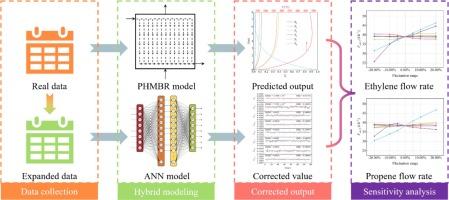
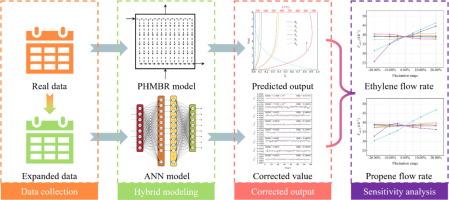
Hybrid modeling of fluidized bed reactor (FBR) remains as a challenging issue. A novel hybrid model was developed for the real-time optimization and control of FBR in the methanol to olefin (MTO) process. Specifically, a pseudo-homogeneous moving bed reactor (PHMBR) model was proposed as an approximation of the FBR, and then a correction model based on the artificial neural network (ANN) was adopted to compensate errors. A data expansion method based on the bootstrap algorithm was used to supplement insufficient training data for the ANN. Two hybrid models with deviation correction and factor correction were compared in order to attain the better predictive performance. The results showed that the hybrid model of MTO-FBR with factor correction could predict FBR outlet parameters with solution time below 0.03 s, RMSE below 2.85, and MRE below 7.63 %. The proposed modeling approach is expected to provide a new strategy for other reaction processes.
期刊介绍:
Chemical engineering enables the transformation of natural resources and energy into useful products for society. It draws on and applies natural sciences, mathematics and economics, and has developed fundamental engineering science that underpins the discipline.
Chemical Engineering Science (CES) has been publishing papers on the fundamentals of chemical engineering since 1951. CES is the platform where the most significant advances in the discipline have ever since been published. Chemical Engineering Science has accompanied and sustained chemical engineering through its development into the vibrant and broad scientific discipline it is today.





 京公网安备 11010802042870号
京ICP备2023020795号-1
京公网安备 11010802042870号
京ICP备2023020795号-1

 分享
分享
 求助内容:
求助内容: 应助结果提醒方式:
 扫码关注我们
