{"title":"膦化萘二亚胺和自由基阴离子的合成:set介导的途径避免了金属/光催化剂的使用","authors":"Rustam Tamim, Poonam Saini, Krishna Kumar M S, Yogendra Kumar, Pritam Mukhopadhyay","doi":"10.1021/acs.joc.4c02501","DOIUrl":null,"url":null,"abstract":"Phosphinylation of π-scaffolds is of huge current interest; however, the ensuing C–P(O) bond formation necessitates catalyst, light, heat, etc. We report that electron-deficient halogenated naphthalene diimide (NDI) scaffolds can enable catalyst-free, room-temperature phosphinylation via a possible single-eT-mediated reaction. The arylphosphinylated NDIs show multielectron acceptor property, and LUMO of −4.24 eV, rendering the Ph<sub>2</sub>PO group equally potent as the electron-withdrawing C≡N group. Thus, in situ reduction can be propelled leading to radical anions and dianions.","PeriodicalId":57,"journal":{"name":"Journal of Organic Chemistry","volume":"161 1","pages":""},"PeriodicalIF":3.6000,"publicationDate":"2025-02-13","publicationTypes":"Journal Article","fieldsOfStudy":null,"isOpenAccess":false,"openAccessPdf":"","citationCount":"0","resultStr":"{\"title\":\"Synthesis of Phosphinylated Naphthalene Diimides and Radical Anions: A SeT-Mediated Route Circumvents the Use of Metal/Photocatalyst\",\"authors\":\"Rustam Tamim, Poonam Saini, Krishna Kumar M S, Yogendra Kumar, Pritam Mukhopadhyay\",\"doi\":\"10.1021/acs.joc.4c02501\",\"DOIUrl\":null,\"url\":null,\"abstract\":\"Phosphinylation of π-scaffolds is of huge current interest; however, the ensuing C–P(O) bond formation necessitates catalyst, light, heat, etc. We report that electron-deficient halogenated naphthalene diimide (NDI) scaffolds can enable catalyst-free, room-temperature phosphinylation via a possible single-eT-mediated reaction. The arylphosphinylated NDIs show multielectron acceptor property, and LUMO of −4.24 eV, rendering the Ph<sub>2</sub>PO group equally potent as the electron-withdrawing C≡N group. Thus, in situ reduction can be propelled leading to radical anions and dianions.\",\"PeriodicalId\":57,\"journal\":{\"name\":\"Journal of Organic Chemistry\",\"volume\":\"161 1\",\"pages\":\"\"},\"PeriodicalIF\":3.6000,\"publicationDate\":\"2025-02-13\",\"publicationTypes\":\"Journal Article\",\"fieldsOfStudy\":null,\"isOpenAccess\":false,\"openAccessPdf\":\"\",\"citationCount\":\"0\",\"resultStr\":null,\"platform\":\"Semanticscholar\",\"paperid\":null,\"PeriodicalName\":\"Journal of Organic Chemistry\",\"FirstCategoryId\":\"1\",\"ListUrlMain\":\"https://doi.org/10.1021/acs.joc.4c02501\",\"RegionNum\":2,\"RegionCategory\":\"化学\",\"ArticlePicture\":[],\"TitleCN\":null,\"AbstractTextCN\":null,\"PMCID\":null,\"EPubDate\":\"\",\"PubModel\":\"\",\"JCR\":\"Q1\",\"JCRName\":\"CHEMISTRY, ORGANIC\",\"Score\":null,\"Total\":0}","platform":"Semanticscholar","paperid":null,"PeriodicalName":"Journal of Organic Chemistry","FirstCategoryId":"1","ListUrlMain":"https://doi.org/10.1021/acs.joc.4c02501","RegionNum":2,"RegionCategory":"化学","ArticlePicture":[],"TitleCN":null,"AbstractTextCN":null,"PMCID":null,"EPubDate":"","PubModel":"","JCR":"Q1","JCRName":"CHEMISTRY, ORGANIC","Score":null,"Total":0}
Synthesis of Phosphinylated Naphthalene Diimides and Radical Anions: A SeT-Mediated Route Circumvents the Use of Metal/Photocatalyst
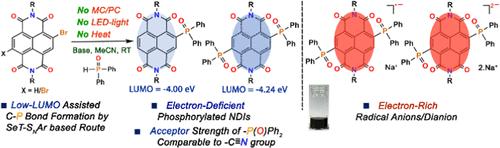
Phosphinylation of π-scaffolds is of huge current interest; however, the ensuing C–P(O) bond formation necessitates catalyst, light, heat, etc. We report that electron-deficient halogenated naphthalene diimide (NDI) scaffolds can enable catalyst-free, room-temperature phosphinylation via a possible single-eT-mediated reaction. The arylphosphinylated NDIs show multielectron acceptor property, and LUMO of −4.24 eV, rendering the Ph2PO group equally potent as the electron-withdrawing C≡N group. Thus, in situ reduction can be propelled leading to radical anions and dianions.
期刊介绍:
Journal of Organic Chemistry welcomes original contributions of fundamental research in all branches of the theory and practice of organic chemistry. In selecting manuscripts for publication, the editors place emphasis on the quality and novelty of the work, as well as the breadth of interest to the organic chemistry community.




 京公网安备 11010802042870号
京ICP备2023020795号-1
京公网安备 11010802042870号
京ICP备2023020795号-1

 分享
分享
 求助内容:
求助内容: 应助结果提醒方式:
 扫码关注我们
