Muhammad Saqib , Muhammad Sagir , Sairah , Mudassir Hussain Tahir , Hosam O. Elansary , Muqadas Javed
{"title":"钙钛矿太阳能电池小分子优化设计的数据辅助方法","authors":"Muhammad Saqib , Muhammad Sagir , Sairah , Mudassir Hussain Tahir , Hosam O. Elansary , Muqadas Javed","doi":"10.1016/j.jssc.2025.125250","DOIUrl":null,"url":null,"abstract":"<div><div>Conventional computational methods have long history in designing the organic compounds, however, these approaches generally require significantly higher computational cost. To overcome these challenges, machine learning is applied as a powerful approach to screen and design high performance materials in a rapid and computationally cost-effective manner. Reorganization energy (Re) is predicted using machine learning. Mordred software is used to calculate molecular descriptors. Different algorithms such as random forest regressor, gradient boosting regressor, K-neighbors regressor, and extra tree regressor models are used to train the machine learning models. Random forest regressor model reveals higher predictive capability (R<sup>2</sup> = 0.73). Automatic method is used to design new compounds. 30 potential candidates are identified and their synthetic ability score are predicted. Clustering is used for similarity analysis. Interestingly, synthetic accessibility score reveals that these compounds can be synthesize with ease. The proposed approach holds immense potential for screening and designing high performance hole transport materials for perovskite solar cells in a cost-effective and rapid manner.</div></div>","PeriodicalId":378,"journal":{"name":"Journal of Solid State Chemistry","volume":"345 ","pages":"Article 125250"},"PeriodicalIF":3.2000,"publicationDate":"2025-05-01","publicationTypes":"Journal Article","fieldsOfStudy":null,"isOpenAccess":false,"openAccessPdf":"","citationCount":"0","resultStr":"{\"title\":\"Data-assisted approach for optimal designing of small molecules for perovskite solar cells\",\"authors\":\"Muhammad Saqib , Muhammad Sagir , Sairah , Mudassir Hussain Tahir , Hosam O. Elansary , Muqadas Javed\",\"doi\":\"10.1016/j.jssc.2025.125250\",\"DOIUrl\":null,\"url\":null,\"abstract\":\"<div><div>Conventional computational methods have long history in designing the organic compounds, however, these approaches generally require significantly higher computational cost. To overcome these challenges, machine learning is applied as a powerful approach to screen and design high performance materials in a rapid and computationally cost-effective manner. Reorganization energy (Re) is predicted using machine learning. Mordred software is used to calculate molecular descriptors. Different algorithms such as random forest regressor, gradient boosting regressor, K-neighbors regressor, and extra tree regressor models are used to train the machine learning models. Random forest regressor model reveals higher predictive capability (R<sup>2</sup> = 0.73). Automatic method is used to design new compounds. 30 potential candidates are identified and their synthetic ability score are predicted. Clustering is used for similarity analysis. Interestingly, synthetic accessibility score reveals that these compounds can be synthesize with ease. The proposed approach holds immense potential for screening and designing high performance hole transport materials for perovskite solar cells in a cost-effective and rapid manner.</div></div>\",\"PeriodicalId\":378,\"journal\":{\"name\":\"Journal of Solid State Chemistry\",\"volume\":\"345 \",\"pages\":\"Article 125250\"},\"PeriodicalIF\":3.2000,\"publicationDate\":\"2025-05-01\",\"publicationTypes\":\"Journal Article\",\"fieldsOfStudy\":null,\"isOpenAccess\":false,\"openAccessPdf\":\"\",\"citationCount\":\"0\",\"resultStr\":null,\"platform\":\"Semanticscholar\",\"paperid\":null,\"PeriodicalName\":\"Journal of Solid State Chemistry\",\"FirstCategoryId\":\"92\",\"ListUrlMain\":\"https://www.sciencedirect.com/science/article/pii/S0022459625000738\",\"RegionNum\":3,\"RegionCategory\":\"化学\",\"ArticlePicture\":[],\"TitleCN\":null,\"AbstractTextCN\":null,\"PMCID\":null,\"EPubDate\":\"2025/2/10 0:00:00\",\"PubModel\":\"Epub\",\"JCR\":\"Q2\",\"JCRName\":\"CHEMISTRY, INORGANIC & NUCLEAR\",\"Score\":null,\"Total\":0}","platform":"Semanticscholar","paperid":null,"PeriodicalName":"Journal of Solid State Chemistry","FirstCategoryId":"92","ListUrlMain":"https://www.sciencedirect.com/science/article/pii/S0022459625000738","RegionNum":3,"RegionCategory":"化学","ArticlePicture":[],"TitleCN":null,"AbstractTextCN":null,"PMCID":null,"EPubDate":"2025/2/10 0:00:00","PubModel":"Epub","JCR":"Q2","JCRName":"CHEMISTRY, INORGANIC & NUCLEAR","Score":null,"Total":0}
Data-assisted approach for optimal designing of small molecules for perovskite solar cells
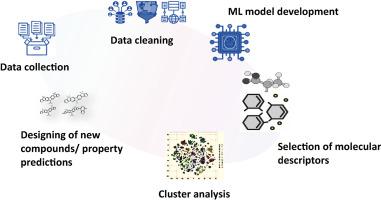
Conventional computational methods have long history in designing the organic compounds, however, these approaches generally require significantly higher computational cost. To overcome these challenges, machine learning is applied as a powerful approach to screen and design high performance materials in a rapid and computationally cost-effective manner. Reorganization energy (Re) is predicted using machine learning. Mordred software is used to calculate molecular descriptors. Different algorithms such as random forest regressor, gradient boosting regressor, K-neighbors regressor, and extra tree regressor models are used to train the machine learning models. Random forest regressor model reveals higher predictive capability (R2 = 0.73). Automatic method is used to design new compounds. 30 potential candidates are identified and their synthetic ability score are predicted. Clustering is used for similarity analysis. Interestingly, synthetic accessibility score reveals that these compounds can be synthesize with ease. The proposed approach holds immense potential for screening and designing high performance hole transport materials for perovskite solar cells in a cost-effective and rapid manner.
期刊介绍:
Covering major developments in the field of solid state chemistry and related areas such as ceramics and amorphous materials, the Journal of Solid State Chemistry features studies of chemical, structural, thermodynamic, electronic, magnetic, and optical properties and processes in solids.




 京公网安备 11010802042870号
京ICP备2023020795号-1
京公网安备 11010802042870号
京ICP备2023020795号-1

 分享
分享
 求助内容:
求助内容: 应助结果提醒方式:
 扫码关注我们
