Duncan K Gathungu, Viona N Ojiambo, Mark E Kimathi, David Kaftan, Hae-Young Kim, Daniel T Citron, Ingrida Platais, Daniel Briedenbecker, Clark Kirkman, Samuel M Mwalili, Anna Bershteyn
{"title":"在肯尼亚西部使用生物医学和结构相结合的干预措施减轻与寡妇清洗和妻子遗传相关的艾滋病毒风险:一项数学建模研究。","authors":"Duncan K Gathungu, Viona N Ojiambo, Mark E Kimathi, David Kaftan, Hae-Young Kim, Daniel T Citron, Ingrida Platais, Daniel Briedenbecker, Clark Kirkman, Samuel M Mwalili, Anna Bershteyn","doi":"10.1186/s12916-025-03906-5","DOIUrl":null,"url":null,"abstract":"<p><strong>Background: </strong>In parts of Africa, women who become widowed lose housing, bank accounts, and other property and must re-marry to avoid extreme poverty. To re-marry, some women are required to undergo widow \"cleansing\"-condomless sex with a man who removes \"impurities\" ascribed to her from her husband's death-and are \"inherited\" as a wife of a brother-in-law. This study explores how HIV biomedical and structural interventions could reduce HIV-related harms associated with these practices.</p><p><strong>Methods: </strong>We adapted EMOD-HIV, an HIV agent-based network transmission model previously calibrated and validated for the Nyanza region of western Kenya. Building on the model's pre-existing configuration of marriages, mortality, and widowhood, we added widow cleansing and wife inheritance with assumptions based on literature. Modeled HIV prevalence among inherited widows was validated to match observed data. We modeled the effect of widowed women, cleansers, and inheritors receiving biomedical HIV interventions (testing, treatment for those tested positive, and 1 year of pre-exposure prophylaxis (PrEP) initiated at cleansing for those tested negative) with or without structural interventions (female empowerment). We modeled low (30%) and high (70%) intervention uptake and reported HIV outcomes including cumulative infections over 2025-2050.</p><p><strong>Results: </strong>Modeled HIV prevalence among inherited widowed women was 59.8% (95% CI: 59.5-60.2%), comparable to observed prevalence of 64.1% (95% CI: 63.2-65.4%). Among all widowed women, biomedical interventions averted 2.0% (95% CI: 1.3-2.6%) of HIV infections with low uptake and 2.6% (95% CI: 2.0-3.2%) with high uptake. Combined biomedical and structural interventions averted 7.8% (95% CI: 7.2-8.4%) of HIV infections with low uptake and 16.1% (95% CI: 15.5-16.6%) with high uptake. Impacts were smaller for men, e.g., high-uptake structural and biomedical interventions averted 1.8% (95% CI: 1.5-2.2%) of infections among cleansers and 2.7% (95% CI: 2.4-3.0%) among inheritors.</p><p><strong>Conclusions: </strong>Widowed women are a vulnerable population with extremely high HIV prevalence. Combined biomedical and structural interventions focused on the practice of widow cleansing and wife inheritance have the potential to avert up to one-quarter of HIV infections among widowed women, and a smaller proportion among men participating in these practices.</p>","PeriodicalId":9188,"journal":{"name":"BMC Medicine","volume":"23 1","pages":"88"},"PeriodicalIF":8.3000,"publicationDate":"2025-02-12","publicationTypes":"Journal Article","fieldsOfStudy":null,"isOpenAccess":false,"openAccessPdf":"https://www.ncbi.nlm.nih.gov/pmc/articles/PMC11823008/pdf/","citationCount":"0","resultStr":"{\"title\":\"Mitigating HIV risk associated with widow cleansing and wife inheritance using combined biomedical and structural interventions in western Kenya: a mathematical modeling study.\",\"authors\":\"Duncan K Gathungu, Viona N Ojiambo, Mark E Kimathi, David Kaftan, Hae-Young Kim, Daniel T Citron, Ingrida Platais, Daniel Briedenbecker, Clark Kirkman, Samuel M Mwalili, Anna Bershteyn\",\"doi\":\"10.1186/s12916-025-03906-5\",\"DOIUrl\":null,\"url\":null,\"abstract\":\"<p><strong>Background: </strong>In parts of Africa, women who become widowed lose housing, bank accounts, and other property and must re-marry to avoid extreme poverty. To re-marry, some women are required to undergo widow \\\"cleansing\\\"-condomless sex with a man who removes \\\"impurities\\\" ascribed to her from her husband's death-and are \\\"inherited\\\" as a wife of a brother-in-law. This study explores how HIV biomedical and structural interventions could reduce HIV-related harms associated with these practices.</p><p><strong>Methods: </strong>We adapted EMOD-HIV, an HIV agent-based network transmission model previously calibrated and validated for the Nyanza region of western Kenya. Building on the model's pre-existing configuration of marriages, mortality, and widowhood, we added widow cleansing and wife inheritance with assumptions based on literature. Modeled HIV prevalence among inherited widows was validated to match observed data. We modeled the effect of widowed women, cleansers, and inheritors receiving biomedical HIV interventions (testing, treatment for those tested positive, and 1 year of pre-exposure prophylaxis (PrEP) initiated at cleansing for those tested negative) with or without structural interventions (female empowerment). We modeled low (30%) and high (70%) intervention uptake and reported HIV outcomes including cumulative infections over 2025-2050.</p><p><strong>Results: </strong>Modeled HIV prevalence among inherited widowed women was 59.8% (95% CI: 59.5-60.2%), comparable to observed prevalence of 64.1% (95% CI: 63.2-65.4%). Among all widowed women, biomedical interventions averted 2.0% (95% CI: 1.3-2.6%) of HIV infections with low uptake and 2.6% (95% CI: 2.0-3.2%) with high uptake. Combined biomedical and structural interventions averted 7.8% (95% CI: 7.2-8.4%) of HIV infections with low uptake and 16.1% (95% CI: 15.5-16.6%) with high uptake. Impacts were smaller for men, e.g., high-uptake structural and biomedical interventions averted 1.8% (95% CI: 1.5-2.2%) of infections among cleansers and 2.7% (95% CI: 2.4-3.0%) among inheritors.</p><p><strong>Conclusions: </strong>Widowed women are a vulnerable population with extremely high HIV prevalence. Combined biomedical and structural interventions focused on the practice of widow cleansing and wife inheritance have the potential to avert up to one-quarter of HIV infections among widowed women, and a smaller proportion among men participating in these practices.</p>\",\"PeriodicalId\":9188,\"journal\":{\"name\":\"BMC Medicine\",\"volume\":\"23 1\",\"pages\":\"88\"},\"PeriodicalIF\":8.3000,\"publicationDate\":\"2025-02-12\",\"publicationTypes\":\"Journal Article\",\"fieldsOfStudy\":null,\"isOpenAccess\":false,\"openAccessPdf\":\"https://www.ncbi.nlm.nih.gov/pmc/articles/PMC11823008/pdf/\",\"citationCount\":\"0\",\"resultStr\":null,\"platform\":\"Semanticscholar\",\"paperid\":null,\"PeriodicalName\":\"BMC Medicine\",\"FirstCategoryId\":\"3\",\"ListUrlMain\":\"https://doi.org/10.1186/s12916-025-03906-5\",\"RegionNum\":1,\"RegionCategory\":\"医学\",\"ArticlePicture\":[],\"TitleCN\":null,\"AbstractTextCN\":null,\"PMCID\":null,\"EPubDate\":\"\",\"PubModel\":\"\",\"JCR\":\"Q1\",\"JCRName\":\"MEDICINE, GENERAL & INTERNAL\",\"Score\":null,\"Total\":0}","platform":"Semanticscholar","paperid":null,"PeriodicalName":"BMC Medicine","FirstCategoryId":"3","ListUrlMain":"https://doi.org/10.1186/s12916-025-03906-5","RegionNum":1,"RegionCategory":"医学","ArticlePicture":[],"TitleCN":null,"AbstractTextCN":null,"PMCID":null,"EPubDate":"","PubModel":"","JCR":"Q1","JCRName":"MEDICINE, GENERAL & INTERNAL","Score":null,"Total":0}
Mitigating HIV risk associated with widow cleansing and wife inheritance using combined biomedical and structural interventions in western Kenya: a mathematical modeling study.
Background: In parts of Africa, women who become widowed lose housing, bank accounts, and other property and must re-marry to avoid extreme poverty. To re-marry, some women are required to undergo widow "cleansing"-condomless sex with a man who removes "impurities" ascribed to her from her husband's death-and are "inherited" as a wife of a brother-in-law. This study explores how HIV biomedical and structural interventions could reduce HIV-related harms associated with these practices.
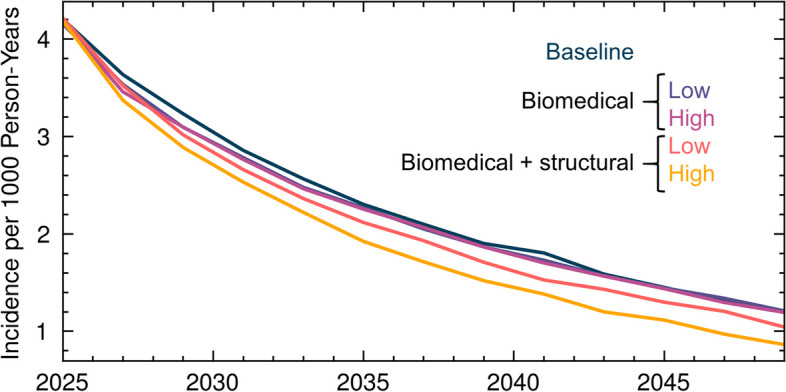
Methods: We adapted EMOD-HIV, an HIV agent-based network transmission model previously calibrated and validated for the Nyanza region of western Kenya. Building on the model's pre-existing configuration of marriages, mortality, and widowhood, we added widow cleansing and wife inheritance with assumptions based on literature. Modeled HIV prevalence among inherited widows was validated to match observed data. We modeled the effect of widowed women, cleansers, and inheritors receiving biomedical HIV interventions (testing, treatment for those tested positive, and 1 year of pre-exposure prophylaxis (PrEP) initiated at cleansing for those tested negative) with or without structural interventions (female empowerment). We modeled low (30%) and high (70%) intervention uptake and reported HIV outcomes including cumulative infections over 2025-2050.
Results: Modeled HIV prevalence among inherited widowed women was 59.8% (95% CI: 59.5-60.2%), comparable to observed prevalence of 64.1% (95% CI: 63.2-65.4%). Among all widowed women, biomedical interventions averted 2.0% (95% CI: 1.3-2.6%) of HIV infections with low uptake and 2.6% (95% CI: 2.0-3.2%) with high uptake. Combined biomedical and structural interventions averted 7.8% (95% CI: 7.2-8.4%) of HIV infections with low uptake and 16.1% (95% CI: 15.5-16.6%) with high uptake. Impacts were smaller for men, e.g., high-uptake structural and biomedical interventions averted 1.8% (95% CI: 1.5-2.2%) of infections among cleansers and 2.7% (95% CI: 2.4-3.0%) among inheritors.
Conclusions: Widowed women are a vulnerable population with extremely high HIV prevalence. Combined biomedical and structural interventions focused on the practice of widow cleansing and wife inheritance have the potential to avert up to one-quarter of HIV infections among widowed women, and a smaller proportion among men participating in these practices.
期刊介绍:
BMC Medicine is an open access, transparent peer-reviewed general medical journal. It is the flagship journal of the BMC series and publishes outstanding and influential research in various areas including clinical practice, translational medicine, medical and health advances, public health, global health, policy, and general topics of interest to the biomedical and sociomedical professional communities. In addition to research articles, the journal also publishes stimulating debates, reviews, unique forum articles, and concise tutorials. All articles published in BMC Medicine are included in various databases such as Biological Abstracts, BIOSIS, CAS, Citebase, Current contents, DOAJ, Embase, MEDLINE, PubMed, Science Citation Index Expanded, OAIster, SCImago, Scopus, SOCOLAR, and Zetoc.






 京公网安备 11010802042870号
京ICP备2023020795号-1
京公网安备 11010802042870号
京ICP备2023020795号-1

 分享
分享
 求助内容:
求助内容: 应助结果提醒方式:
 扫码关注我们
