{"title":"口腔癌驱动基因突变在口腔潜在恶性疾病:临床意义和诊断意义。","authors":"Sayaka Kojima, Nobuyuki Kuribayashi, Hiroyuki Goda, Koh-Ichi Nakashiro, Daisuke Uchida","doi":"10.1007/s12672-025-01923-7","DOIUrl":null,"url":null,"abstract":"<p><p>Oral potentially malignant disorders (OPMDs), such as oral lichen planus (OLP) and oral leukoplakia (OLK), are clinical conditions associated with the risk of developing oral squamous cell carcinoma; however, no standardized treatment guidelines exist. Mutations in specific genes, known as oral cancer driver gene mutations (ODGMs), are responsible for carcinogenesis. We aimed to analyze the ODGMs in OPMDs and investigate their clinical correlations. We investigated 41 cases of OPMDs, including OLP and OLK, and performed next-generation sequencing using a custom gene panel targeting whole exons of TP53, HRAS, PIK3CA, NOTCH1, CDKN2A, FBXW7, and BRAF. We detected ODGMs in four OLK cases and one OLP case. All ODGM-positive OLK cases were located in the tongue, a site associated with a higher risk of malignant transformation compared with those in other oral sites. Moreover, ODGMs were significantly associated with alcohol consumption. While there was a tendency for mutations to increase with higher grades, we found no significant correlation between the presence of ODGMs and oral epithelial dysplasia (OED) grade. Notably, in the case of OLP with ODGM, the lesion histopathologically developed OED during the follow-up period, indicating an increased risk of cancer development and that cases with identified ODGMs require early surgical excision. These findings suggest that ODGM analysis may predict the risk of cancer development in OPMDs that are difficult to diagnose using histopathological examination alone.</p>","PeriodicalId":11148,"journal":{"name":"Discover. Oncology","volume":"16 1","pages":"174"},"PeriodicalIF":2.8000,"publicationDate":"2025-02-13","publicationTypes":"Journal Article","fieldsOfStudy":null,"isOpenAccess":false,"openAccessPdf":"https://www.ncbi.nlm.nih.gov/pmc/articles/PMC11825417/pdf/","citationCount":"0","resultStr":"{\"title\":\"Oral cancer driver gene mutations in oral potentially malignant disorders: clinical significance and diagnostic implications.\",\"authors\":\"Sayaka Kojima, Nobuyuki Kuribayashi, Hiroyuki Goda, Koh-Ichi Nakashiro, Daisuke Uchida\",\"doi\":\"10.1007/s12672-025-01923-7\",\"DOIUrl\":null,\"url\":null,\"abstract\":\"<p><p>Oral potentially malignant disorders (OPMDs), such as oral lichen planus (OLP) and oral leukoplakia (OLK), are clinical conditions associated with the risk of developing oral squamous cell carcinoma; however, no standardized treatment guidelines exist. Mutations in specific genes, known as oral cancer driver gene mutations (ODGMs), are responsible for carcinogenesis. We aimed to analyze the ODGMs in OPMDs and investigate their clinical correlations. We investigated 41 cases of OPMDs, including OLP and OLK, and performed next-generation sequencing using a custom gene panel targeting whole exons of TP53, HRAS, PIK3CA, NOTCH1, CDKN2A, FBXW7, and BRAF. We detected ODGMs in four OLK cases and one OLP case. All ODGM-positive OLK cases were located in the tongue, a site associated with a higher risk of malignant transformation compared with those in other oral sites. Moreover, ODGMs were significantly associated with alcohol consumption. While there was a tendency for mutations to increase with higher grades, we found no significant correlation between the presence of ODGMs and oral epithelial dysplasia (OED) grade. Notably, in the case of OLP with ODGM, the lesion histopathologically developed OED during the follow-up period, indicating an increased risk of cancer development and that cases with identified ODGMs require early surgical excision. These findings suggest that ODGM analysis may predict the risk of cancer development in OPMDs that are difficult to diagnose using histopathological examination alone.</p>\",\"PeriodicalId\":11148,\"journal\":{\"name\":\"Discover. Oncology\",\"volume\":\"16 1\",\"pages\":\"174\"},\"PeriodicalIF\":2.8000,\"publicationDate\":\"2025-02-13\",\"publicationTypes\":\"Journal Article\",\"fieldsOfStudy\":null,\"isOpenAccess\":false,\"openAccessPdf\":\"https://www.ncbi.nlm.nih.gov/pmc/articles/PMC11825417/pdf/\",\"citationCount\":\"0\",\"resultStr\":null,\"platform\":\"Semanticscholar\",\"paperid\":null,\"PeriodicalName\":\"Discover. Oncology\",\"FirstCategoryId\":\"3\",\"ListUrlMain\":\"https://doi.org/10.1007/s12672-025-01923-7\",\"RegionNum\":4,\"RegionCategory\":\"医学\",\"ArticlePicture\":[],\"TitleCN\":null,\"AbstractTextCN\":null,\"PMCID\":null,\"EPubDate\":\"\",\"PubModel\":\"\",\"JCR\":\"Q3\",\"JCRName\":\"ENDOCRINOLOGY & METABOLISM\",\"Score\":null,\"Total\":0}","platform":"Semanticscholar","paperid":null,"PeriodicalName":"Discover. Oncology","FirstCategoryId":"3","ListUrlMain":"https://doi.org/10.1007/s12672-025-01923-7","RegionNum":4,"RegionCategory":"医学","ArticlePicture":[],"TitleCN":null,"AbstractTextCN":null,"PMCID":null,"EPubDate":"","PubModel":"","JCR":"Q3","JCRName":"ENDOCRINOLOGY & METABOLISM","Score":null,"Total":0}
Oral cancer driver gene mutations in oral potentially malignant disorders: clinical significance and diagnostic implications.
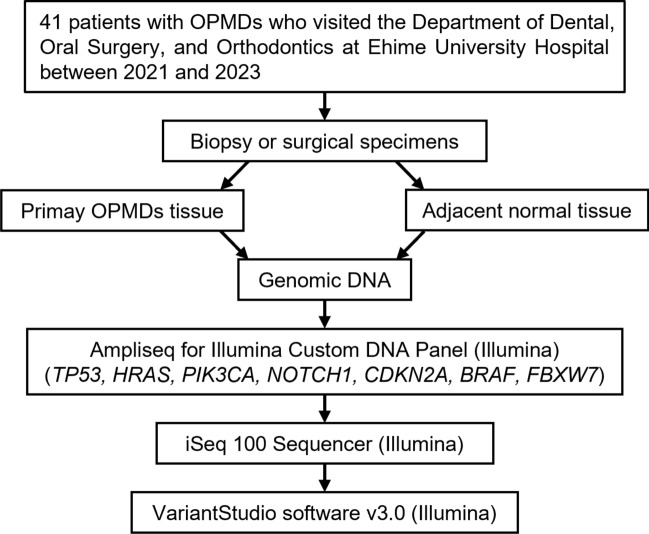
Oral potentially malignant disorders (OPMDs), such as oral lichen planus (OLP) and oral leukoplakia (OLK), are clinical conditions associated with the risk of developing oral squamous cell carcinoma; however, no standardized treatment guidelines exist. Mutations in specific genes, known as oral cancer driver gene mutations (ODGMs), are responsible for carcinogenesis. We aimed to analyze the ODGMs in OPMDs and investigate their clinical correlations. We investigated 41 cases of OPMDs, including OLP and OLK, and performed next-generation sequencing using a custom gene panel targeting whole exons of TP53, HRAS, PIK3CA, NOTCH1, CDKN2A, FBXW7, and BRAF. We detected ODGMs in four OLK cases and one OLP case. All ODGM-positive OLK cases were located in the tongue, a site associated with a higher risk of malignant transformation compared with those in other oral sites. Moreover, ODGMs were significantly associated with alcohol consumption. While there was a tendency for mutations to increase with higher grades, we found no significant correlation between the presence of ODGMs and oral epithelial dysplasia (OED) grade. Notably, in the case of OLP with ODGM, the lesion histopathologically developed OED during the follow-up period, indicating an increased risk of cancer development and that cases with identified ODGMs require early surgical excision. These findings suggest that ODGM analysis may predict the risk of cancer development in OPMDs that are difficult to diagnose using histopathological examination alone.







 京公网安备 11010802042870号
京ICP备2023020795号-1
京公网安备 11010802042870号
京ICP备2023020795号-1

 分享
分享
 求助内容:
求助内容: 应助结果提醒方式:
 扫码关注我们
