Bahar Mikaeili, Zuhair A Alqahtani, Ana L Hincapie, Jeff Jianfei Guo
{"title":"类风湿性关节炎Janus激酶抑制剂的安全性:2012年至2022年FAERS数据库的歧化分析","authors":"Bahar Mikaeili, Zuhair A Alqahtani, Ana L Hincapie, Jeff Jianfei Guo","doi":"10.1007/s10067-025-07360-9","DOIUrl":null,"url":null,"abstract":"<p><strong>Introduction/objective: </strong>Janus kinase (JAK) inhibitors have expanded treatment options for rheumatoid arthritis (RA), particularly for patients unresponsive to traditional disease-modifying antirheumatic drugs (DMARDs). However, safety concerns necessitate a thorough post-market evaluation. This study is aimed at comparing the safety profiles of tofacitinib, baricitinib, and upadacitinib using adverse event (AE) reports from the FDA Adverse Event Reporting System (FAERS).</p><p><strong>Methods: </strong>A retrospective disproportionality analysis was performed using the FAERS data from 2012 to 2022. The AE reports were categorized into cardiovascular, cancer, respiratory, gastrointestinal, musculoskeletal, and arthralgia-related events. Proportional reporting ratio (PRR) and reporting odds ratios (RORs) with 95% confidence intervals (CIs) were calculated to identify significant safety signals.</p><p><strong>Results: </strong>Of 273,657 AE reports, tofacitinib had the most (227,144), with increased musculoskeletal-related events (ROR = 1.53, 95% CI 1.49-1.57) and a reduced cancer risk (ROR = 0.44, 95% CI 0.41-0.47). Baricitinib (9305 reports) showed the highest risk of cardiovascular events (ROR = 1.63, 95% CI 1.50-1.78) and cancer (ROR = 2.17, 95% CI 1.83-2.58). Upadacitinib (37,208 reports) had elevated risks for respiratory events (ROR = 2.04, 95% CI 1.88-2.21) and cancer (ROR = 2.24, 95% CI 2.05-2.43).</p><p><strong>Conclusion: </strong>The distinct safety profiles of these JAK inhibitors suggest that baricitinib poses higher cardiovascular and cancer risks, whereas upadacitinib increases the risk of respiratory and gastrointestinal events. Tofacitinib may be safer for patients with a history of cancer but requires monitoring for musculoskeletal AEs. Personalized risk assessments are critical for safe use of JAK inhibitors. Key Points • This study provides a comprehensive post-market safety assessment of three JAK inhibitors-tofacitinib, baricitinib, and upadacitinib-using the FAERS data from 2012 to 2022. • Distinct safety profiles were identified, with baricitinib showing a higher risk of cardiovascular events and cancer, while upadacitinib posed an increased risk of respiratory and gastrointestinal events. • Tofacitinib demonstrated a lower cancer risk than other JAK inhibitors but was associated with more musculoskeletal-related adverse events. • These findings emphasize the importance of personalized risk assessment and vigilant monitoring when prescribing JAK inhibitors for rheumatoid arthritis.</p>","PeriodicalId":10482,"journal":{"name":"Clinical Rheumatology","volume":" ","pages":"1467-1474"},"PeriodicalIF":2.8000,"publicationDate":"2025-04-01","publicationTypes":"Journal Article","fieldsOfStudy":null,"isOpenAccess":false,"openAccessPdf":"https://www.ncbi.nlm.nih.gov/pmc/articles/PMC11993438/pdf/","citationCount":"0","resultStr":"{\"title\":\"Safety of Janus kinase inhibitors in rheumatoid arthritis: a disproportionality analysis using FAERS database from 2012 to 2022.\",\"authors\":\"Bahar Mikaeili, Zuhair A Alqahtani, Ana L Hincapie, Jeff Jianfei Guo\",\"doi\":\"10.1007/s10067-025-07360-9\",\"DOIUrl\":null,\"url\":null,\"abstract\":\"<p><strong>Introduction/objective: </strong>Janus kinase (JAK) inhibitors have expanded treatment options for rheumatoid arthritis (RA), particularly for patients unresponsive to traditional disease-modifying antirheumatic drugs (DMARDs). However, safety concerns necessitate a thorough post-market evaluation. This study is aimed at comparing the safety profiles of tofacitinib, baricitinib, and upadacitinib using adverse event (AE) reports from the FDA Adverse Event Reporting System (FAERS).</p><p><strong>Methods: </strong>A retrospective disproportionality analysis was performed using the FAERS data from 2012 to 2022. The AE reports were categorized into cardiovascular, cancer, respiratory, gastrointestinal, musculoskeletal, and arthralgia-related events. Proportional reporting ratio (PRR) and reporting odds ratios (RORs) with 95% confidence intervals (CIs) were calculated to identify significant safety signals.</p><p><strong>Results: </strong>Of 273,657 AE reports, tofacitinib had the most (227,144), with increased musculoskeletal-related events (ROR = 1.53, 95% CI 1.49-1.57) and a reduced cancer risk (ROR = 0.44, 95% CI 0.41-0.47). Baricitinib (9305 reports) showed the highest risk of cardiovascular events (ROR = 1.63, 95% CI 1.50-1.78) and cancer (ROR = 2.17, 95% CI 1.83-2.58). Upadacitinib (37,208 reports) had elevated risks for respiratory events (ROR = 2.04, 95% CI 1.88-2.21) and cancer (ROR = 2.24, 95% CI 2.05-2.43).</p><p><strong>Conclusion: </strong>The distinct safety profiles of these JAK inhibitors suggest that baricitinib poses higher cardiovascular and cancer risks, whereas upadacitinib increases the risk of respiratory and gastrointestinal events. Tofacitinib may be safer for patients with a history of cancer but requires monitoring for musculoskeletal AEs. Personalized risk assessments are critical for safe use of JAK inhibitors. Key Points • This study provides a comprehensive post-market safety assessment of three JAK inhibitors-tofacitinib, baricitinib, and upadacitinib-using the FAERS data from 2012 to 2022. • Distinct safety profiles were identified, with baricitinib showing a higher risk of cardiovascular events and cancer, while upadacitinib posed an increased risk of respiratory and gastrointestinal events. • Tofacitinib demonstrated a lower cancer risk than other JAK inhibitors but was associated with more musculoskeletal-related adverse events. • These findings emphasize the importance of personalized risk assessment and vigilant monitoring when prescribing JAK inhibitors for rheumatoid arthritis.</p>\",\"PeriodicalId\":10482,\"journal\":{\"name\":\"Clinical Rheumatology\",\"volume\":\" \",\"pages\":\"1467-1474\"},\"PeriodicalIF\":2.8000,\"publicationDate\":\"2025-04-01\",\"publicationTypes\":\"Journal Article\",\"fieldsOfStudy\":null,\"isOpenAccess\":false,\"openAccessPdf\":\"https://www.ncbi.nlm.nih.gov/pmc/articles/PMC11993438/pdf/\",\"citationCount\":\"0\",\"resultStr\":null,\"platform\":\"Semanticscholar\",\"paperid\":null,\"PeriodicalName\":\"Clinical Rheumatology\",\"FirstCategoryId\":\"3\",\"ListUrlMain\":\"https://doi.org/10.1007/s10067-025-07360-9\",\"RegionNum\":3,\"RegionCategory\":\"医学\",\"ArticlePicture\":[],\"TitleCN\":null,\"AbstractTextCN\":null,\"PMCID\":null,\"EPubDate\":\"2025/2/13 0:00:00\",\"PubModel\":\"Epub\",\"JCR\":\"Q2\",\"JCRName\":\"RHEUMATOLOGY\",\"Score\":null,\"Total\":0}","platform":"Semanticscholar","paperid":null,"PeriodicalName":"Clinical Rheumatology","FirstCategoryId":"3","ListUrlMain":"https://doi.org/10.1007/s10067-025-07360-9","RegionNum":3,"RegionCategory":"医学","ArticlePicture":[],"TitleCN":null,"AbstractTextCN":null,"PMCID":null,"EPubDate":"2025/2/13 0:00:00","PubModel":"Epub","JCR":"Q2","JCRName":"RHEUMATOLOGY","Score":null,"Total":0}
引用次数: 0
摘要
简介/目的:Janus激酶(JAK)抑制剂扩大了类风湿关节炎(RA)的治疗选择,特别是对传统疾病改善抗风湿药物(DMARDs)无反应的患者。然而,出于安全考虑,需要进行全面的上市后评估。本研究旨在通过FDA不良事件报告系统(FAERS)的不良事件(AE)报告,比较tofacitinib、baricitinib和upadacitinib的安全性。方法:利用2012 - 2022年FAERS数据进行回顾性歧化分析。AE报告分为心血管、癌症、呼吸、胃肠道、肌肉骨骼和关节痛相关事件。计算具有95%置信区间(ci)的比例报告比(PRR)和报告优势比(RORs),以识别重要的安全信号。结果:在273,657例AE报告中,托法替尼最多(227,144例),增加了肌肉骨骼相关事件(ROR = 1.53, 95% CI 1.49-1.57),降低了癌症风险(ROR = 0.44, 95% CI 0.41-0.47)。Baricitinib(9305份报告)显示心血管事件(ROR = 1.63, 95% CI 1.50-1.78)和癌症(ROR = 2.17, 95% CI 1.83-2.58)的风险最高。Upadacitinib(37,208份报告)增加了呼吸事件(ROR = 2.04, 95% CI 1.88-2.21)和癌症(ROR = 2.24, 95% CI 2.05-2.43)的风险。结论:这些JAK抑制剂的不同安全性表明,baricitinib具有更高的心血管和癌症风险,而upadacitinib增加呼吸和胃肠道事件的风险。对于有癌症病史的患者,托法替尼可能更安全,但需要监测肌肉骨骼不良反应。个性化风险评估对于安全使用JAK抑制剂至关重要。•本研究使用2012年至2022年的FAERS数据,对三种JAK抑制剂(tofacitinib、baricitinib和upadacitinib)进行了全面的上市后安全性评估。•确定了不同的安全性,baricitinib显示出更高的心血管事件和癌症风险,而upadacitinib则增加了呼吸和胃肠道事件的风险。•与其他JAK抑制剂相比,托法替尼显示出较低的癌症风险,但与更多的肌肉骨骼相关不良事件相关。•这些发现强调了在为类风湿关节炎开具JAK抑制剂处方时进行个性化风险评估和警惕监测的重要性。
Safety of Janus kinase inhibitors in rheumatoid arthritis: a disproportionality analysis using FAERS database from 2012 to 2022.
Introduction/objective: Janus kinase (JAK) inhibitors have expanded treatment options for rheumatoid arthritis (RA), particularly for patients unresponsive to traditional disease-modifying antirheumatic drugs (DMARDs). However, safety concerns necessitate a thorough post-market evaluation. This study is aimed at comparing the safety profiles of tofacitinib, baricitinib, and upadacitinib using adverse event (AE) reports from the FDA Adverse Event Reporting System (FAERS).
Methods: A retrospective disproportionality analysis was performed using the FAERS data from 2012 to 2022. The AE reports were categorized into cardiovascular, cancer, respiratory, gastrointestinal, musculoskeletal, and arthralgia-related events. Proportional reporting ratio (PRR) and reporting odds ratios (RORs) with 95% confidence intervals (CIs) were calculated to identify significant safety signals.
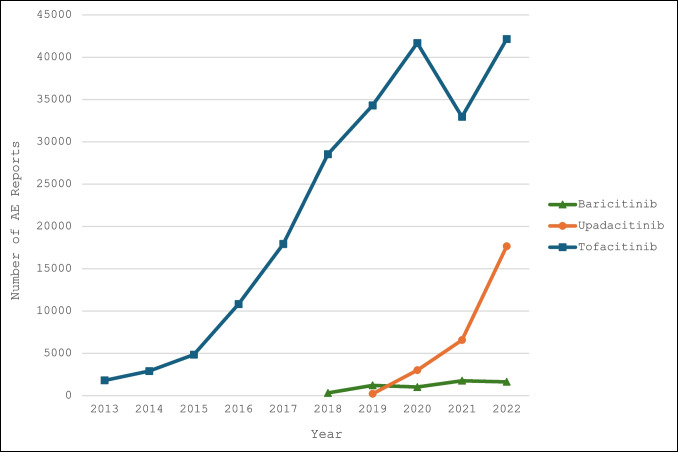
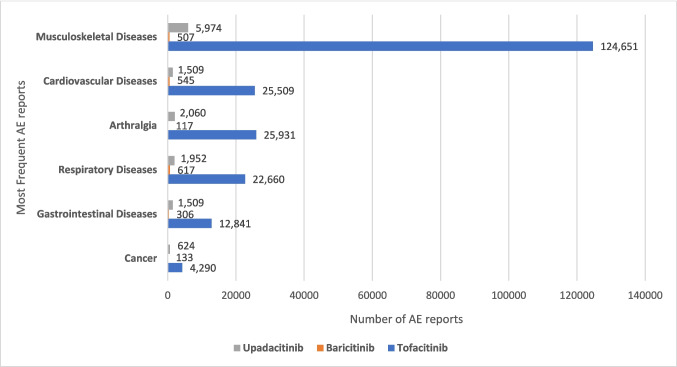
Results: Of 273,657 AE reports, tofacitinib had the most (227,144), with increased musculoskeletal-related events (ROR = 1.53, 95% CI 1.49-1.57) and a reduced cancer risk (ROR = 0.44, 95% CI 0.41-0.47). Baricitinib (9305 reports) showed the highest risk of cardiovascular events (ROR = 1.63, 95% CI 1.50-1.78) and cancer (ROR = 2.17, 95% CI 1.83-2.58). Upadacitinib (37,208 reports) had elevated risks for respiratory events (ROR = 2.04, 95% CI 1.88-2.21) and cancer (ROR = 2.24, 95% CI 2.05-2.43).
Conclusion: The distinct safety profiles of these JAK inhibitors suggest that baricitinib poses higher cardiovascular and cancer risks, whereas upadacitinib increases the risk of respiratory and gastrointestinal events. Tofacitinib may be safer for patients with a history of cancer but requires monitoring for musculoskeletal AEs. Personalized risk assessments are critical for safe use of JAK inhibitors. Key Points • This study provides a comprehensive post-market safety assessment of three JAK inhibitors-tofacitinib, baricitinib, and upadacitinib-using the FAERS data from 2012 to 2022. • Distinct safety profiles were identified, with baricitinib showing a higher risk of cardiovascular events and cancer, while upadacitinib posed an increased risk of respiratory and gastrointestinal events. • Tofacitinib demonstrated a lower cancer risk than other JAK inhibitors but was associated with more musculoskeletal-related adverse events. • These findings emphasize the importance of personalized risk assessment and vigilant monitoring when prescribing JAK inhibitors for rheumatoid arthritis.
期刊介绍:
Clinical Rheumatology is an international English-language journal devoted to publishing original clinical investigation and research in the general field of rheumatology with accent on clinical aspects at postgraduate level.
The journal succeeds Acta Rheumatologica Belgica, originally founded in 1945 as the official journal of the Belgian Rheumatology Society. Clinical Rheumatology aims to cover all modern trends in clinical and experimental research as well as the management and evaluation of diagnostic and treatment procedures connected with the inflammatory, immunologic, metabolic, genetic and degenerative soft and hard connective tissue diseases.




 京公网安备 11010802042870号
京ICP备2023020795号-1
京公网安备 11010802042870号
京ICP备2023020795号-1

 分享
分享
 求助内容:
求助内容: 应助结果提醒方式:
 扫码关注我们
