Yura K Ko, Wataru Kagaya, Daisuke Yoneoka, James Kongere, Victor Opiyo, Jared Oginga, Protus Omondi, Kelvin B Musyoka, Chim W Chan, Bernard N Kanoi, Jesse Gitaka, Akira Kaneko
{"title":"难以触及的人群在哪里?肯尼亚维多利亚湖地区获得蚊帐和疟疾疫苗的横断面研究的空间分析。","authors":"Yura K Ko, Wataru Kagaya, Daisuke Yoneoka, James Kongere, Victor Opiyo, Jared Oginga, Protus Omondi, Kelvin B Musyoka, Chim W Chan, Bernard N Kanoi, Jesse Gitaka, Akira Kaneko","doi":"10.1186/s12936-025-05280-2","DOIUrl":null,"url":null,"abstract":"<p><strong>Background: </strong>Long-lasting insecticidal nets (LLIN) and vaccines are effective malaria control tools. However, inadequate uptake has been reported in countries where both interventions are available. To maximize the impact these tools provide, it is crucial to identify populations that are not being reached and the barriers to uptake.</p><p><strong>Methods: </strong>In a cross-sectional study conducted in April 2024 in Kanyamwa Kologi Ward in Homa Bay County, Kenya, 4,662 households in 58 randomely selected villages were visited and interviewed. The proportions of households that (1) received at least one new LLIN within the previous five months (net distribution), (2) reported all children used LLIN (net usage), (3) reported at least one child had received one dose of the RTS,S vaccine (vaccine uptake), and (4) reported all children had received four doses of the vaccine (vaccine completion) were examined. Bayesian spatial autoregression analyses were used to estimate adjusted odds ratio (aOR) and its credible intervals (CrI) to identify the association between the household-level characteristics and the four outcomes.</p><p><strong>Results: </strong>The overall uptake proportions were 89.9% for net distribution, 84.4% for net usage, 88.2% for vaccine uptake, and 53.7% for vaccine completion. All four outcomes showed geographical heterogeneity with significant (p < 0.05) Moran's I. Households headed by adults of > 40 years had higher odds of having received a new LLIN (aOR = 2.02, 95% CrI 1.02-5.42), having one child who had received one vaccine dose (aOR = 1.83, 0.69-4.66), and having all children fully vaccinated (aOR = 2.36, 1.09-5.46), but lower odds of net usage by all children (aOR = 0.62, 0.40-0.96). Households with five or more children had higher odds of having received a new LLIN (aOR = 5.36, 2.24-27.0) but lower odds of net usage by all children (aOR = 0.24, 0.14-0.38) and having all children fully vaccinated (aOR = 0.20, 0.04-0.61). Distance to the nearest health centre was negatively associated with all outcomes. Household wealth was positively associated with all outcomes.</p><p><strong>Conclusion: </strong>Uptake of LLIN and malaria vaccine in Homa Bay County, Kenya varied by geography and household characteristics. These findings suggest that different sets of actions should be considered to improve the coverage and compliance of these interventions in different areas.</p>","PeriodicalId":18317,"journal":{"name":"Malaria Journal","volume":"24 1","pages":"42"},"PeriodicalIF":3.7000,"publicationDate":"2025-02-12","publicationTypes":"Journal Article","fieldsOfStudy":null,"isOpenAccess":false,"openAccessPdf":"https://www.ncbi.nlm.nih.gov/pmc/articles/PMC11823133/pdf/","citationCount":"0","resultStr":"{\"title\":\"Where is the hard-to-reach population? Spatial analysis from a cross-sectional study on the access to bed net and malaria vaccine in the Lake Victoria Region, Kenya.\",\"authors\":\"Yura K Ko, Wataru Kagaya, Daisuke Yoneoka, James Kongere, Victor Opiyo, Jared Oginga, Protus Omondi, Kelvin B Musyoka, Chim W Chan, Bernard N Kanoi, Jesse Gitaka, Akira Kaneko\",\"doi\":\"10.1186/s12936-025-05280-2\",\"DOIUrl\":null,\"url\":null,\"abstract\":\"<p><strong>Background: </strong>Long-lasting insecticidal nets (LLIN) and vaccines are effective malaria control tools. However, inadequate uptake has been reported in countries where both interventions are available. To maximize the impact these tools provide, it is crucial to identify populations that are not being reached and the barriers to uptake.</p><p><strong>Methods: </strong>In a cross-sectional study conducted in April 2024 in Kanyamwa Kologi Ward in Homa Bay County, Kenya, 4,662 households in 58 randomely selected villages were visited and interviewed. The proportions of households that (1) received at least one new LLIN within the previous five months (net distribution), (2) reported all children used LLIN (net usage), (3) reported at least one child had received one dose of the RTS,S vaccine (vaccine uptake), and (4) reported all children had received four doses of the vaccine (vaccine completion) were examined. Bayesian spatial autoregression analyses were used to estimate adjusted odds ratio (aOR) and its credible intervals (CrI) to identify the association between the household-level characteristics and the four outcomes.</p><p><strong>Results: </strong>The overall uptake proportions were 89.9% for net distribution, 84.4% for net usage, 88.2% for vaccine uptake, and 53.7% for vaccine completion. All four outcomes showed geographical heterogeneity with significant (p < 0.05) Moran's I. Households headed by adults of > 40 years had higher odds of having received a new LLIN (aOR = 2.02, 95% CrI 1.02-5.42), having one child who had received one vaccine dose (aOR = 1.83, 0.69-4.66), and having all children fully vaccinated (aOR = 2.36, 1.09-5.46), but lower odds of net usage by all children (aOR = 0.62, 0.40-0.96). Households with five or more children had higher odds of having received a new LLIN (aOR = 5.36, 2.24-27.0) but lower odds of net usage by all children (aOR = 0.24, 0.14-0.38) and having all children fully vaccinated (aOR = 0.20, 0.04-0.61). Distance to the nearest health centre was negatively associated with all outcomes. Household wealth was positively associated with all outcomes.</p><p><strong>Conclusion: </strong>Uptake of LLIN and malaria vaccine in Homa Bay County, Kenya varied by geography and household characteristics. These findings suggest that different sets of actions should be considered to improve the coverage and compliance of these interventions in different areas.</p>\",\"PeriodicalId\":18317,\"journal\":{\"name\":\"Malaria Journal\",\"volume\":\"24 1\",\"pages\":\"42\"},\"PeriodicalIF\":3.7000,\"publicationDate\":\"2025-02-12\",\"publicationTypes\":\"Journal Article\",\"fieldsOfStudy\":null,\"isOpenAccess\":false,\"openAccessPdf\":\"https://www.ncbi.nlm.nih.gov/pmc/articles/PMC11823133/pdf/\",\"citationCount\":\"0\",\"resultStr\":null,\"platform\":\"Semanticscholar\",\"paperid\":null,\"PeriodicalName\":\"Malaria Journal\",\"FirstCategoryId\":\"3\",\"ListUrlMain\":\"https://doi.org/10.1186/s12936-025-05280-2\",\"RegionNum\":3,\"RegionCategory\":\"医学\",\"ArticlePicture\":[],\"TitleCN\":null,\"AbstractTextCN\":null,\"PMCID\":null,\"EPubDate\":\"\",\"PubModel\":\"\",\"JCR\":\"Q3\",\"JCRName\":\"INFECTIOUS DISEASES\",\"Score\":null,\"Total\":0}","platform":"Semanticscholar","paperid":null,"PeriodicalName":"Malaria Journal","FirstCategoryId":"3","ListUrlMain":"https://doi.org/10.1186/s12936-025-05280-2","RegionNum":3,"RegionCategory":"医学","ArticlePicture":[],"TitleCN":null,"AbstractTextCN":null,"PMCID":null,"EPubDate":"","PubModel":"","JCR":"Q3","JCRName":"INFECTIOUS DISEASES","Score":null,"Total":0}
Where is the hard-to-reach population? Spatial analysis from a cross-sectional study on the access to bed net and malaria vaccine in the Lake Victoria Region, Kenya.
Background: Long-lasting insecticidal nets (LLIN) and vaccines are effective malaria control tools. However, inadequate uptake has been reported in countries where both interventions are available. To maximize the impact these tools provide, it is crucial to identify populations that are not being reached and the barriers to uptake.
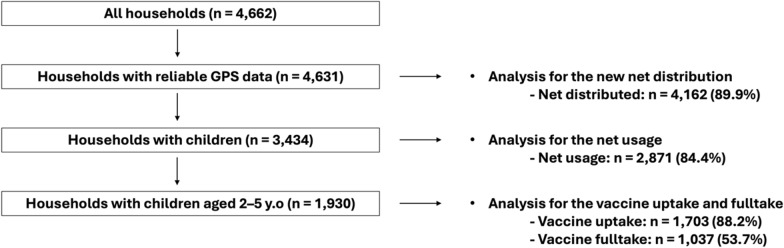
Methods: In a cross-sectional study conducted in April 2024 in Kanyamwa Kologi Ward in Homa Bay County, Kenya, 4,662 households in 58 randomely selected villages were visited and interviewed. The proportions of households that (1) received at least one new LLIN within the previous five months (net distribution), (2) reported all children used LLIN (net usage), (3) reported at least one child had received one dose of the RTS,S vaccine (vaccine uptake), and (4) reported all children had received four doses of the vaccine (vaccine completion) were examined. Bayesian spatial autoregression analyses were used to estimate adjusted odds ratio (aOR) and its credible intervals (CrI) to identify the association between the household-level characteristics and the four outcomes.
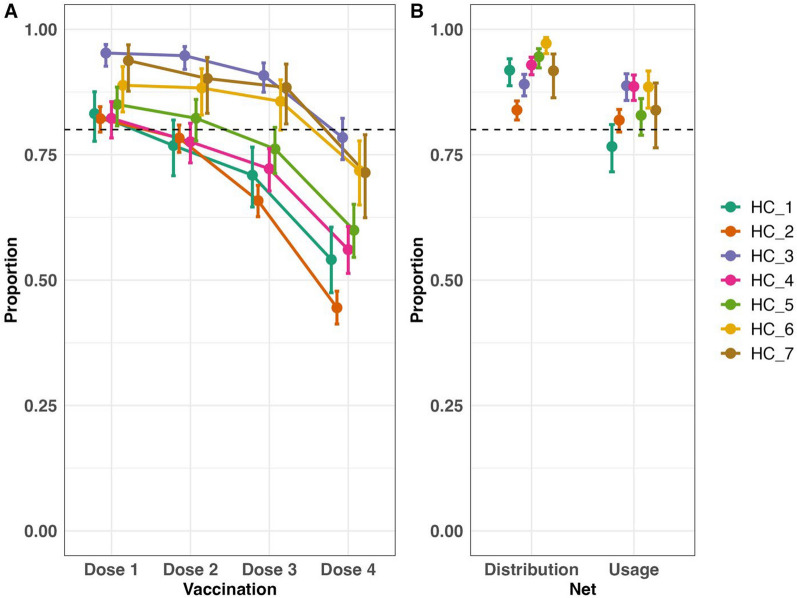
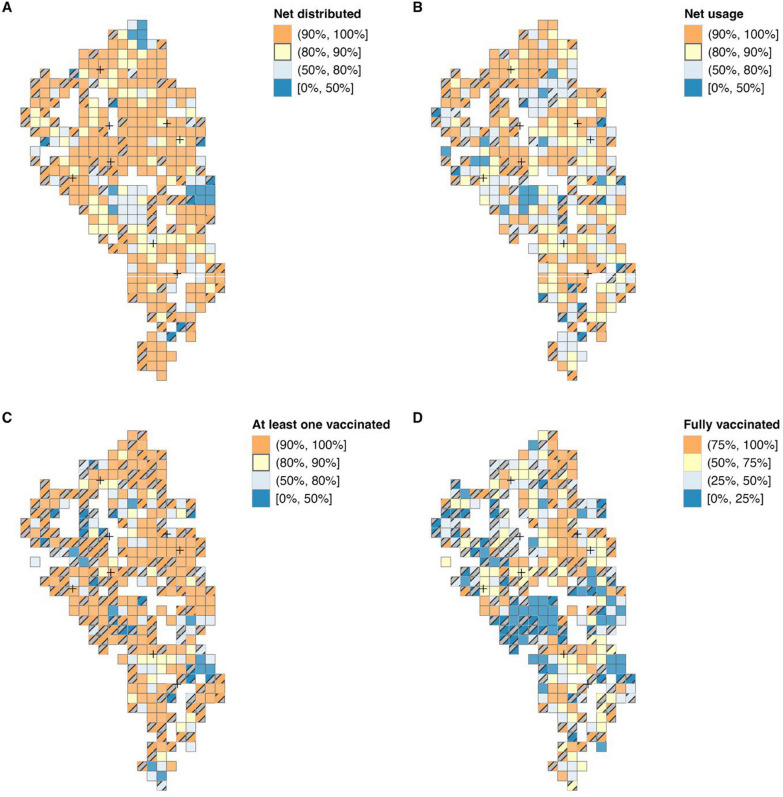
Results: The overall uptake proportions were 89.9% for net distribution, 84.4% for net usage, 88.2% for vaccine uptake, and 53.7% for vaccine completion. All four outcomes showed geographical heterogeneity with significant (p < 0.05) Moran's I. Households headed by adults of > 40 years had higher odds of having received a new LLIN (aOR = 2.02, 95% CrI 1.02-5.42), having one child who had received one vaccine dose (aOR = 1.83, 0.69-4.66), and having all children fully vaccinated (aOR = 2.36, 1.09-5.46), but lower odds of net usage by all children (aOR = 0.62, 0.40-0.96). Households with five or more children had higher odds of having received a new LLIN (aOR = 5.36, 2.24-27.0) but lower odds of net usage by all children (aOR = 0.24, 0.14-0.38) and having all children fully vaccinated (aOR = 0.20, 0.04-0.61). Distance to the nearest health centre was negatively associated with all outcomes. Household wealth was positively associated with all outcomes.
Conclusion: Uptake of LLIN and malaria vaccine in Homa Bay County, Kenya varied by geography and household characteristics. These findings suggest that different sets of actions should be considered to improve the coverage and compliance of these interventions in different areas.
期刊介绍:
Malaria Journal is aimed at the scientific community interested in malaria in its broadest sense. It is the only journal that publishes exclusively articles on malaria and, as such, it aims to bring together knowledge from the different specialities involved in this very broad discipline, from the bench to the bedside and to the field.




 京公网安备 11010802042870号
京ICP备2023020795号-1
京公网安备 11010802042870号
京ICP备2023020795号-1

 分享
分享
 求助内容:
求助内容: 应助结果提醒方式:
 扫码关注我们
