{"title":"氯己定和阿奇霉素的联合作用:对治疗潜力和机制的启示。","authors":"Sinem Tunçer Çağlayan","doi":"10.1016/j.micpath.2025.107373","DOIUrl":null,"url":null,"abstract":"<div><div>The use of drug combinations to re-sensitize resistant strains is a promising strategy to overcome the stagnation in the drug discovery pipeline. Here, the results demonstrate that the combined application of the broad-spectrum bisbiguanide antiseptic chlorhexidine (CHX) and the macrolide antibiotic azithromycin (AZM) significantly inhibits the growth of the <em>Pseudomonas aeruginosa</em> strain PAO1 (isolated from a wound) compared to the individual effects of each agent. Specifically, 1.5 μg/mL CHX caused 11.4 ± 4 % growth inhibition and 2 μg/mL AZM resulted in 14 ± 4.5 % inhibition; however, the combination of 1.5 μg/mL CHX and 2 μg/mL AZM achieved 58 ± 6 % inhibition, significantly exceeding the sum of their individual effects. Furthermore, the AZM and CHX combination reduced bacterial viability in biofilms. <em>P. aeruginosa</em> is a common pathogen in wounds, particularly chronic wounds, where it delays the healing process. An <em>in vitro</em> wound infection model further demonstrated that CHX and AZM combination reduced bacterial density and activity in a serum-supported collagen matrix. This combination was found to be effective not only against the Gram-negative <em>P. aeruginosa</em> but also against the Gram-positive <em>Streptococcus mutans</em>.</div><div>To explain the observed combinatory inhibition effect mechanistically, Fourier Transform Infrared Spectroscopy (FTIR) was employed for the first time in the literature. The results reveal that CHX increases the cellular accumulation of AZM. Changes in the membrane lipid composition of the bacteria additionally suggest a mechanism for enhanced antibiotic accumulation in the presence of CHX.</div><div>These findings suggest that the role of CHX as a potential partner in different syncretic combinations calls for comprehensive exploration in antibiotic resistant bacterial infections.</div></div>","PeriodicalId":18599,"journal":{"name":"Microbial pathogenesis","volume":"201 ","pages":"Article 107373"},"PeriodicalIF":3.5000,"publicationDate":"2025-04-01","publicationTypes":"Journal Article","fieldsOfStudy":null,"isOpenAccess":false,"openAccessPdf":"","citationCount":"0","resultStr":"{\"title\":\"Combinatory effects of chlorhexidine and azithromycin: Implications for therapeutic potential and mechanistic insights\",\"authors\":\"Sinem Tunçer Çağlayan\",\"doi\":\"10.1016/j.micpath.2025.107373\",\"DOIUrl\":null,\"url\":null,\"abstract\":\"<div><div>The use of drug combinations to re-sensitize resistant strains is a promising strategy to overcome the stagnation in the drug discovery pipeline. Here, the results demonstrate that the combined application of the broad-spectrum bisbiguanide antiseptic chlorhexidine (CHX) and the macrolide antibiotic azithromycin (AZM) significantly inhibits the growth of the <em>Pseudomonas aeruginosa</em> strain PAO1 (isolated from a wound) compared to the individual effects of each agent. Specifically, 1.5 μg/mL CHX caused 11.4 ± 4 % growth inhibition and 2 μg/mL AZM resulted in 14 ± 4.5 % inhibition; however, the combination of 1.5 μg/mL CHX and 2 μg/mL AZM achieved 58 ± 6 % inhibition, significantly exceeding the sum of their individual effects. Furthermore, the AZM and CHX combination reduced bacterial viability in biofilms. <em>P. aeruginosa</em> is a common pathogen in wounds, particularly chronic wounds, where it delays the healing process. An <em>in vitro</em> wound infection model further demonstrated that CHX and AZM combination reduced bacterial density and activity in a serum-supported collagen matrix. This combination was found to be effective not only against the Gram-negative <em>P. aeruginosa</em> but also against the Gram-positive <em>Streptococcus mutans</em>.</div><div>To explain the observed combinatory inhibition effect mechanistically, Fourier Transform Infrared Spectroscopy (FTIR) was employed for the first time in the literature. The results reveal that CHX increases the cellular accumulation of AZM. Changes in the membrane lipid composition of the bacteria additionally suggest a mechanism for enhanced antibiotic accumulation in the presence of CHX.</div><div>These findings suggest that the role of CHX as a potential partner in different syncretic combinations calls for comprehensive exploration in antibiotic resistant bacterial infections.</div></div>\",\"PeriodicalId\":18599,\"journal\":{\"name\":\"Microbial pathogenesis\",\"volume\":\"201 \",\"pages\":\"Article 107373\"},\"PeriodicalIF\":3.5000,\"publicationDate\":\"2025-04-01\",\"publicationTypes\":\"Journal Article\",\"fieldsOfStudy\":null,\"isOpenAccess\":false,\"openAccessPdf\":\"\",\"citationCount\":\"0\",\"resultStr\":null,\"platform\":\"Semanticscholar\",\"paperid\":null,\"PeriodicalName\":\"Microbial pathogenesis\",\"FirstCategoryId\":\"3\",\"ListUrlMain\":\"https://www.sciencedirect.com/science/article/pii/S0882401025000981\",\"RegionNum\":3,\"RegionCategory\":\"医学\",\"ArticlePicture\":[],\"TitleCN\":null,\"AbstractTextCN\":null,\"PMCID\":null,\"EPubDate\":\"2025/2/10 0:00:00\",\"PubModel\":\"Epub\",\"JCR\":\"Q3\",\"JCRName\":\"IMMUNOLOGY\",\"Score\":null,\"Total\":0}","platform":"Semanticscholar","paperid":null,"PeriodicalName":"Microbial pathogenesis","FirstCategoryId":"3","ListUrlMain":"https://www.sciencedirect.com/science/article/pii/S0882401025000981","RegionNum":3,"RegionCategory":"医学","ArticlePicture":[],"TitleCN":null,"AbstractTextCN":null,"PMCID":null,"EPubDate":"2025/2/10 0:00:00","PubModel":"Epub","JCR":"Q3","JCRName":"IMMUNOLOGY","Score":null,"Total":0}
Combinatory effects of chlorhexidine and azithromycin: Implications for therapeutic potential and mechanistic insights
The use of drug combinations to re-sensitize resistant strains is a promising strategy to overcome the stagnation in the drug discovery pipeline. Here, the results demonstrate that the combined application of the broad-spectrum bisbiguanide antiseptic chlorhexidine (CHX) and the macrolide antibiotic azithromycin (AZM) significantly inhibits the growth of the Pseudomonas aeruginosa strain PAO1 (isolated from a wound) compared to the individual effects of each agent. Specifically, 1.5 μg/mL CHX caused 11.4 ± 4 % growth inhibition and 2 μg/mL AZM resulted in 14 ± 4.5 % inhibition; however, the combination of 1.5 μg/mL CHX and 2 μg/mL AZM achieved 58 ± 6 % inhibition, significantly exceeding the sum of their individual effects. Furthermore, the AZM and CHX combination reduced bacterial viability in biofilms. P. aeruginosa is a common pathogen in wounds, particularly chronic wounds, where it delays the healing process. An in vitro wound infection model further demonstrated that CHX and AZM combination reduced bacterial density and activity in a serum-supported collagen matrix. This combination was found to be effective not only against the Gram-negative P. aeruginosa but also against the Gram-positive Streptococcus mutans.
To explain the observed combinatory inhibition effect mechanistically, Fourier Transform Infrared Spectroscopy (FTIR) was employed for the first time in the literature. The results reveal that CHX increases the cellular accumulation of AZM. Changes in the membrane lipid composition of the bacteria additionally suggest a mechanism for enhanced antibiotic accumulation in the presence of CHX.
These findings suggest that the role of CHX as a potential partner in different syncretic combinations calls for comprehensive exploration in antibiotic resistant bacterial infections.
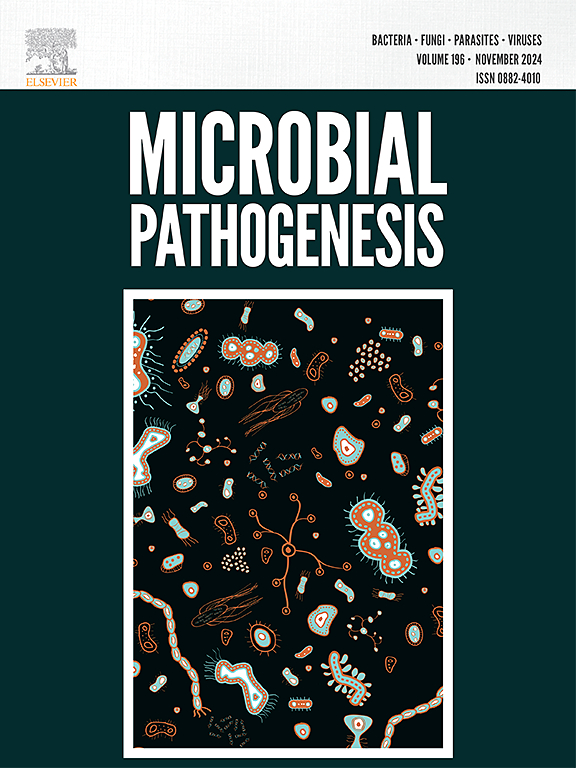
期刊介绍:
Microbial Pathogenesis publishes original contributions and reviews about the molecular and cellular mechanisms of infectious diseases. It covers microbiology, host-pathogen interaction and immunology related to infectious agents, including bacteria, fungi, viruses and protozoa. It also accepts papers in the field of clinical microbiology, with the exception of case reports.
Research Areas Include:
-Pathogenesis
-Virulence factors
-Host susceptibility or resistance
-Immune mechanisms
-Identification, cloning and sequencing of relevant genes
-Genetic studies
-Viruses, prokaryotic organisms and protozoa
-Microbiota
-Systems biology related to infectious diseases
-Targets for vaccine design (pre-clinical studies)



 京公网安备 11010802042870号
京ICP备2023020795号-1
京公网安备 11010802042870号
京ICP备2023020795号-1

 分享
分享
 求助内容:
求助内容: 应助结果提醒方式:
 扫码关注我们
