James S Bennett, Erin Mutch, Andrew Tollefson, Ed Chalstrey, Majid Benam, Enrico Cioni, Jenny Reddish, Jakob Zsambok, Jill Levine, C Justin Cook, Pieter Francois, Daniel Hoyer, Peter Turchin
{"title":"Cliopatria -一个从公元前3400年到公元2024年的全球政治实体的地理空间数据库。","authors":"James S Bennett, Erin Mutch, Andrew Tollefson, Ed Chalstrey, Majid Benam, Enrico Cioni, Jenny Reddish, Jakob Zsambok, Jill Levine, C Justin Cook, Pieter Francois, Daniel Hoyer, Peter Turchin","doi":"10.1038/s41597-025-04516-9","DOIUrl":null,"url":null,"abstract":"<p><p>The scientific understanding of the complex dynamics of global history - from the rise and spread of states to their declines and falls, from their peaceful interactions with economic or diplomatic exchanges to violent confrontations - requires, at its core, a consistent and explicit encoding of historical political entities, their locations, extents and durations. Numerous attempts have been made to produce digital geographical compendia of polities with different time depths and resolutions. Most have been limited in scope and many of the more comprehensive geospatial datasets must either be licensed or are stored in proprietary formats, making access for scholarly analysis difficult. To address these issues we have developed Cliopatria, a comprehensive open-source geospatial dataset of worldwide states from 3400BCE to 2024CE. Presently it comprises over 1600 political entities sampled at varying timesteps and spatial scales. Here, we discuss its construction, its scope, and its current limitations.</p>","PeriodicalId":21597,"journal":{"name":"Scientific Data","volume":"12 1","pages":"247"},"PeriodicalIF":7.2000,"publicationDate":"2025-02-12","publicationTypes":"Journal Article","fieldsOfStudy":null,"isOpenAccess":false,"openAccessPdf":"https://www.ncbi.nlm.nih.gov/pmc/articles/PMC11822181/pdf/","citationCount":"0","resultStr":"{\"title\":\"Cliopatria - A geospatial database of world-wide political entities from 3400BCE to 2024CE.\",\"authors\":\"James S Bennett, Erin Mutch, Andrew Tollefson, Ed Chalstrey, Majid Benam, Enrico Cioni, Jenny Reddish, Jakob Zsambok, Jill Levine, C Justin Cook, Pieter Francois, Daniel Hoyer, Peter Turchin\",\"doi\":\"10.1038/s41597-025-04516-9\",\"DOIUrl\":null,\"url\":null,\"abstract\":\"<p><p>The scientific understanding of the complex dynamics of global history - from the rise and spread of states to their declines and falls, from their peaceful interactions with economic or diplomatic exchanges to violent confrontations - requires, at its core, a consistent and explicit encoding of historical political entities, their locations, extents and durations. Numerous attempts have been made to produce digital geographical compendia of polities with different time depths and resolutions. Most have been limited in scope and many of the more comprehensive geospatial datasets must either be licensed or are stored in proprietary formats, making access for scholarly analysis difficult. To address these issues we have developed Cliopatria, a comprehensive open-source geospatial dataset of worldwide states from 3400BCE to 2024CE. Presently it comprises over 1600 political entities sampled at varying timesteps and spatial scales. Here, we discuss its construction, its scope, and its current limitations.</p>\",\"PeriodicalId\":21597,\"journal\":{\"name\":\"Scientific Data\",\"volume\":\"12 1\",\"pages\":\"247\"},\"PeriodicalIF\":7.2000,\"publicationDate\":\"2025-02-12\",\"publicationTypes\":\"Journal Article\",\"fieldsOfStudy\":null,\"isOpenAccess\":false,\"openAccessPdf\":\"https://www.ncbi.nlm.nih.gov/pmc/articles/PMC11822181/pdf/\",\"citationCount\":\"0\",\"resultStr\":null,\"platform\":\"Semanticscholar\",\"paperid\":null,\"PeriodicalName\":\"Scientific Data\",\"FirstCategoryId\":\"103\",\"ListUrlMain\":\"https://doi.org/10.1038/s41597-025-04516-9\",\"RegionNum\":2,\"RegionCategory\":\"综合性期刊\",\"ArticlePicture\":[],\"TitleCN\":null,\"AbstractTextCN\":null,\"PMCID\":null,\"EPubDate\":\"\",\"PubModel\":\"\",\"JCR\":\"Q1\",\"JCRName\":\"MULTIDISCIPLINARY SCIENCES\",\"Score\":null,\"Total\":0}","platform":"Semanticscholar","paperid":null,"PeriodicalName":"Scientific Data","FirstCategoryId":"103","ListUrlMain":"https://doi.org/10.1038/s41597-025-04516-9","RegionNum":2,"RegionCategory":"综合性期刊","ArticlePicture":[],"TitleCN":null,"AbstractTextCN":null,"PMCID":null,"EPubDate":"","PubModel":"","JCR":"Q1","JCRName":"MULTIDISCIPLINARY SCIENCES","Score":null,"Total":0}
Cliopatria - A geospatial database of world-wide political entities from 3400BCE to 2024CE.
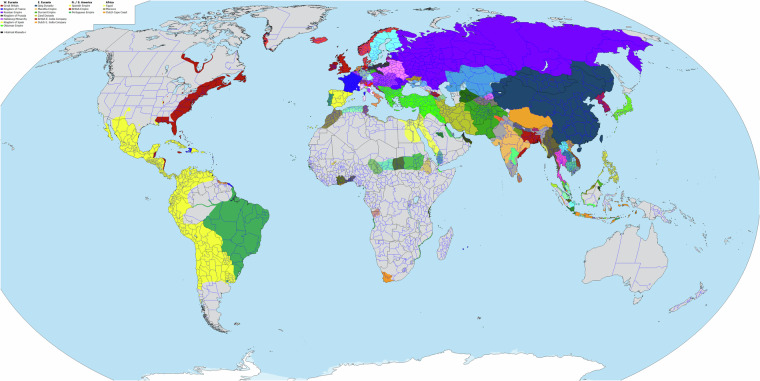
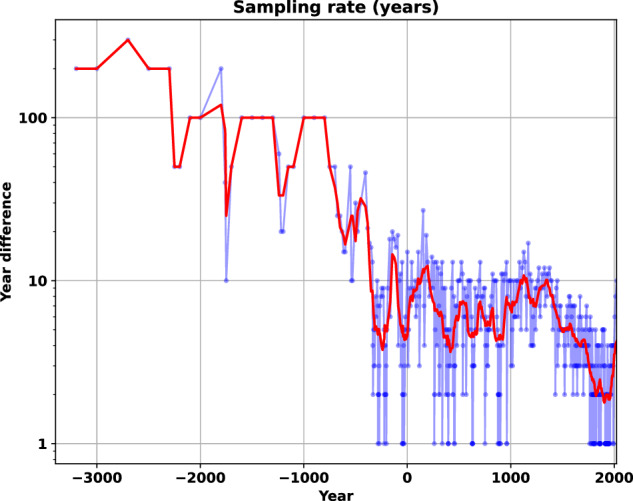
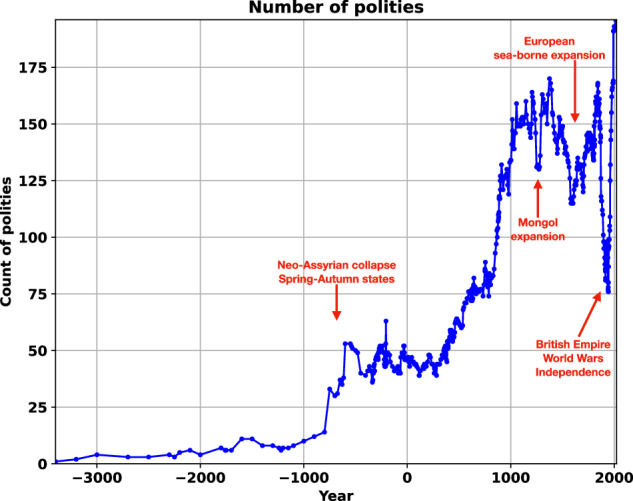
The scientific understanding of the complex dynamics of global history - from the rise and spread of states to their declines and falls, from their peaceful interactions with economic or diplomatic exchanges to violent confrontations - requires, at its core, a consistent and explicit encoding of historical political entities, their locations, extents and durations. Numerous attempts have been made to produce digital geographical compendia of polities with different time depths and resolutions. Most have been limited in scope and many of the more comprehensive geospatial datasets must either be licensed or are stored in proprietary formats, making access for scholarly analysis difficult. To address these issues we have developed Cliopatria, a comprehensive open-source geospatial dataset of worldwide states from 3400BCE to 2024CE. Presently it comprises over 1600 political entities sampled at varying timesteps and spatial scales. Here, we discuss its construction, its scope, and its current limitations.
期刊介绍:
Scientific Data is an open-access journal focused on data, publishing descriptions of research datasets and articles on data sharing across natural sciences, medicine, engineering, and social sciences. Its goal is to enhance the sharing and reuse of scientific data, encourage broader data sharing, and acknowledge those who share their data.
The journal primarily publishes Data Descriptors, which offer detailed descriptions of research datasets, including data collection methods and technical analyses validating data quality. These descriptors aim to facilitate data reuse rather than testing hypotheses or presenting new interpretations, methods, or in-depth analyses.




 京公网安备 11010802042870号
京ICP备2023020795号-1
京公网安备 11010802042870号
京ICP备2023020795号-1

 分享
分享
 求助内容:
求助内容: 应助结果提醒方式:
 扫码关注我们
