Pedro Moñino Fernández, Marina López Morales, Aniek de Winter, Fred van den End, Marcel Janssen, Maria Barbosa
{"title":"硫酸铁蛭的平衡氧混合营养中试栽培。","authors":"Pedro Moñino Fernández, Marina López Morales, Aniek de Winter, Fred van den End, Marcel Janssen, Maria Barbosa","doi":"10.1021/acssuschemeng.4c09186","DOIUrl":null,"url":null,"abstract":"<p><p>Oxygen-balanced mixotrophy (OBM) is a particular type of microalgae mixotrophic cultivation, where the supply of an organic carbon substrate is adjusted to match heterotrophic oxygen consumption with photosynthetic production. In this way, the need for aeration is eliminated due to intracellular gas recycling during daytime. After implementing this process at lab scale, we sought to explore its scalability in a tubular photobioreactor (TPBR). In this study, OBM was implemented in a two-phase tubular photobioreactor of 1700 L placed in a greenhouse and exposed to sunlight. The process was run with the polyextremophilic species <i>Galdieria sulphuraria</i>, using glucose as a carbon source. The gas phase was continuously recirculated, and the oxygen concentration was monitored and utilized to manage the glucose supply through a proportional-integral controller. An excessive rate of night aeration, however, resulted in CO<sub>2</sub> limitation issues. Subsequent tuning and optimization of controller settings and the nighttime aeration rate effectively addressed the problem. The average biomass productivity reached 0.81 g·L<sup>-1</sup>·day<sup>-1</sup>, a significant improvement over autotrophic productivity in the same pilot system. On the other hand, the biomass yield on the substrate was 0.68 C-mol <sub><i>x</i></sub> ·C-mol<sub>s</sub> <sup>-1</sup>, indicating that considerable carbon recycling took place but to a lower extent than at lab scale. These results provide a solid foundation for the large-scale industrial implementation of OBM.</p>","PeriodicalId":25,"journal":{"name":"ACS Sustainable Chemistry & Engineering","volume":"13 5","pages":"2132-2140"},"PeriodicalIF":7.6000,"publicationDate":"2025-01-31","publicationTypes":"Journal Article","fieldsOfStudy":null,"isOpenAccess":false,"openAccessPdf":"https://www.ncbi.nlm.nih.gov/pmc/articles/PMC11816015/pdf/","citationCount":"0","resultStr":"{\"title\":\"Pilot-Scale Oxygen-Balanced Mixotrophic Cultivation of <i>Galdieria sulphuraria</i>.\",\"authors\":\"Pedro Moñino Fernández, Marina López Morales, Aniek de Winter, Fred van den End, Marcel Janssen, Maria Barbosa\",\"doi\":\"10.1021/acssuschemeng.4c09186\",\"DOIUrl\":null,\"url\":null,\"abstract\":\"<p><p>Oxygen-balanced mixotrophy (OBM) is a particular type of microalgae mixotrophic cultivation, where the supply of an organic carbon substrate is adjusted to match heterotrophic oxygen consumption with photosynthetic production. In this way, the need for aeration is eliminated due to intracellular gas recycling during daytime. After implementing this process at lab scale, we sought to explore its scalability in a tubular photobioreactor (TPBR). In this study, OBM was implemented in a two-phase tubular photobioreactor of 1700 L placed in a greenhouse and exposed to sunlight. The process was run with the polyextremophilic species <i>Galdieria sulphuraria</i>, using glucose as a carbon source. The gas phase was continuously recirculated, and the oxygen concentration was monitored and utilized to manage the glucose supply through a proportional-integral controller. An excessive rate of night aeration, however, resulted in CO<sub>2</sub> limitation issues. Subsequent tuning and optimization of controller settings and the nighttime aeration rate effectively addressed the problem. The average biomass productivity reached 0.81 g·L<sup>-1</sup>·day<sup>-1</sup>, a significant improvement over autotrophic productivity in the same pilot system. On the other hand, the biomass yield on the substrate was 0.68 C-mol <sub><i>x</i></sub> ·C-mol<sub>s</sub> <sup>-1</sup>, indicating that considerable carbon recycling took place but to a lower extent than at lab scale. These results provide a solid foundation for the large-scale industrial implementation of OBM.</p>\",\"PeriodicalId\":25,\"journal\":{\"name\":\"ACS Sustainable Chemistry & Engineering\",\"volume\":\"13 5\",\"pages\":\"2132-2140\"},\"PeriodicalIF\":7.6000,\"publicationDate\":\"2025-01-31\",\"publicationTypes\":\"Journal Article\",\"fieldsOfStudy\":null,\"isOpenAccess\":false,\"openAccessPdf\":\"https://www.ncbi.nlm.nih.gov/pmc/articles/PMC11816015/pdf/\",\"citationCount\":\"0\",\"resultStr\":null,\"platform\":\"Semanticscholar\",\"paperid\":null,\"PeriodicalName\":\"ACS Sustainable Chemistry & Engineering\",\"FirstCategoryId\":\"92\",\"ListUrlMain\":\"https://doi.org/10.1021/acssuschemeng.4c09186\",\"RegionNum\":1,\"RegionCategory\":\"化学\",\"ArticlePicture\":[],\"TitleCN\":null,\"AbstractTextCN\":null,\"PMCID\":null,\"EPubDate\":\"2025/2/10 0:00:00\",\"PubModel\":\"eCollection\",\"JCR\":\"Q1\",\"JCRName\":\"CHEMISTRY, MULTIDISCIPLINARY\",\"Score\":null,\"Total\":0}","platform":"Semanticscholar","paperid":null,"PeriodicalName":"ACS Sustainable Chemistry & Engineering","FirstCategoryId":"92","ListUrlMain":"https://doi.org/10.1021/acssuschemeng.4c09186","RegionNum":1,"RegionCategory":"化学","ArticlePicture":[],"TitleCN":null,"AbstractTextCN":null,"PMCID":null,"EPubDate":"2025/2/10 0:00:00","PubModel":"eCollection","JCR":"Q1","JCRName":"CHEMISTRY, MULTIDISCIPLINARY","Score":null,"Total":0}
Pilot-Scale Oxygen-Balanced Mixotrophic Cultivation of Galdieria sulphuraria.
Oxygen-balanced mixotrophy (OBM) is a particular type of microalgae mixotrophic cultivation, where the supply of an organic carbon substrate is adjusted to match heterotrophic oxygen consumption with photosynthetic production. In this way, the need for aeration is eliminated due to intracellular gas recycling during daytime. After implementing this process at lab scale, we sought to explore its scalability in a tubular photobioreactor (TPBR). In this study, OBM was implemented in a two-phase tubular photobioreactor of 1700 L placed in a greenhouse and exposed to sunlight. The process was run with the polyextremophilic species Galdieria sulphuraria, using glucose as a carbon source. The gas phase was continuously recirculated, and the oxygen concentration was monitored and utilized to manage the glucose supply through a proportional-integral controller. An excessive rate of night aeration, however, resulted in CO2 limitation issues. Subsequent tuning and optimization of controller settings and the nighttime aeration rate effectively addressed the problem. The average biomass productivity reached 0.81 g·L-1·day-1, a significant improvement over autotrophic productivity in the same pilot system. On the other hand, the biomass yield on the substrate was 0.68 C-mol x ·C-mols-1, indicating that considerable carbon recycling took place but to a lower extent than at lab scale. These results provide a solid foundation for the large-scale industrial implementation of OBM.
期刊介绍:
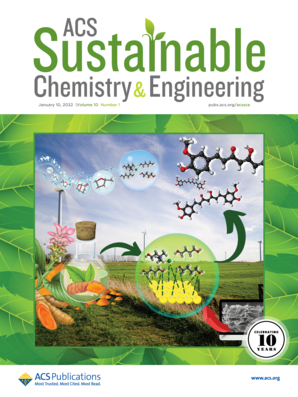
ACS Sustainable Chemistry & Engineering is a prestigious weekly peer-reviewed scientific journal published by the American Chemical Society. Dedicated to advancing the principles of green chemistry and green engineering, it covers a wide array of research topics including green chemistry, green engineering, biomass, alternative energy, and life cycle assessment.
The journal welcomes submissions in various formats, including Letters, Articles, Features, and Perspectives (Reviews), that address the challenges of sustainability in the chemical enterprise and contribute to the advancement of sustainable practices. Join us in shaping the future of sustainable chemistry and engineering.




 京公网安备 11010802042870号
京ICP备2023020795号-1
京公网安备 11010802042870号
京ICP备2023020795号-1

 分享
分享
 求助内容:
求助内容: 应助结果提醒方式:
 扫码关注我们
