{"title":"喹啉碳-氢键功能化合成喹啉模拟物的研究进展","authors":"Inder Kumar , Ritika Sharma , Upendra Sharma","doi":"10.1039/d4ob02013h","DOIUrl":null,"url":null,"abstract":"<div><div>Functionalization of the quinoline ring has emerged as a transformative strategy in modern synthetic chemistry because of the medicinal potential of quinoline-based scaffolds. The precise and selective introduction of diverse functional groups significantly expands the chemical space and enhances the pharmacological profile of quinoline derivatives. By carefully selecting catalysts, reaction conditions, and directing groups, researchers have unlocked novel pathways for the efficient synthesis of quinoline-based compounds with improved efficacy, target selectivity, and safety. This approach accelerates drug discovery and broadens the therapeutic potential of quinoline scaffolds for treating various diseases, including cancer, infectious diseases, and neurological disorders. Over the past two decades, this field has experienced exponential growth, as evidenced by the increasing number of research publications and comprehensive review articles. This surge in interest is driven by the potential of quinoline functionalization to generate novel drug candidates with enhanced bioactivity and reduced side effects. This review summarizes the key advancements from January 2021 to 2024, focusing on the latest methodologies, catalytic systems, and applications in drug development.</div></div>","PeriodicalId":96,"journal":{"name":"Organic & Biomolecular Chemistry","volume":"23 11","pages":"Pages 2572-2585"},"PeriodicalIF":2.8000,"publicationDate":"2025-01-28","publicationTypes":"Journal Article","fieldsOfStudy":null,"isOpenAccess":false,"openAccessPdf":"","citationCount":"0","resultStr":"{\"title\":\"Synthesis of quinoline mimics via C–H bond functionalization of quinoline: a review on recent progress\",\"authors\":\"Inder Kumar , Ritika Sharma , Upendra Sharma\",\"doi\":\"10.1039/d4ob02013h\",\"DOIUrl\":null,\"url\":null,\"abstract\":\"<div><div>Functionalization of the quinoline ring has emerged as a transformative strategy in modern synthetic chemistry because of the medicinal potential of quinoline-based scaffolds. The precise and selective introduction of diverse functional groups significantly expands the chemical space and enhances the pharmacological profile of quinoline derivatives. By carefully selecting catalysts, reaction conditions, and directing groups, researchers have unlocked novel pathways for the efficient synthesis of quinoline-based compounds with improved efficacy, target selectivity, and safety. This approach accelerates drug discovery and broadens the therapeutic potential of quinoline scaffolds for treating various diseases, including cancer, infectious diseases, and neurological disorders. Over the past two decades, this field has experienced exponential growth, as evidenced by the increasing number of research publications and comprehensive review articles. This surge in interest is driven by the potential of quinoline functionalization to generate novel drug candidates with enhanced bioactivity and reduced side effects. This review summarizes the key advancements from January 2021 to 2024, focusing on the latest methodologies, catalytic systems, and applications in drug development.</div></div>\",\"PeriodicalId\":96,\"journal\":{\"name\":\"Organic & Biomolecular Chemistry\",\"volume\":\"23 11\",\"pages\":\"Pages 2572-2585\"},\"PeriodicalIF\":2.8000,\"publicationDate\":\"2025-01-28\",\"publicationTypes\":\"Journal Article\",\"fieldsOfStudy\":null,\"isOpenAccess\":false,\"openAccessPdf\":\"\",\"citationCount\":\"0\",\"resultStr\":null,\"platform\":\"Semanticscholar\",\"paperid\":null,\"PeriodicalName\":\"Organic & Biomolecular Chemistry\",\"FirstCategoryId\":\"92\",\"ListUrlMain\":\"https://www.sciencedirect.com/org/science/article/pii/S1477052025001144\",\"RegionNum\":3,\"RegionCategory\":\"化学\",\"ArticlePicture\":[],\"TitleCN\":null,\"AbstractTextCN\":null,\"PMCID\":null,\"EPubDate\":\"\",\"PubModel\":\"\",\"JCR\":\"Q1\",\"JCRName\":\"CHEMISTRY, ORGANIC\",\"Score\":null,\"Total\":0}","platform":"Semanticscholar","paperid":null,"PeriodicalName":"Organic & Biomolecular Chemistry","FirstCategoryId":"92","ListUrlMain":"https://www.sciencedirect.com/org/science/article/pii/S1477052025001144","RegionNum":3,"RegionCategory":"化学","ArticlePicture":[],"TitleCN":null,"AbstractTextCN":null,"PMCID":null,"EPubDate":"","PubModel":"","JCR":"Q1","JCRName":"CHEMISTRY, ORGANIC","Score":null,"Total":0}
Synthesis of quinoline mimics via C–H bond functionalization of quinoline: a review on recent progress
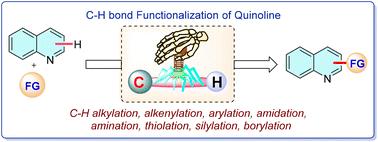
Functionalization of the quinoline ring has emerged as a transformative strategy in modern synthetic chemistry because of the medicinal potential of quinoline-based scaffolds. The precise and selective introduction of diverse functional groups significantly expands the chemical space and enhances the pharmacological profile of quinoline derivatives. By carefully selecting catalysts, reaction conditions, and directing groups, researchers have unlocked novel pathways for the efficient synthesis of quinoline-based compounds with improved efficacy, target selectivity, and safety. This approach accelerates drug discovery and broadens the therapeutic potential of quinoline scaffolds for treating various diseases, including cancer, infectious diseases, and neurological disorders. Over the past two decades, this field has experienced exponential growth, as evidenced by the increasing number of research publications and comprehensive review articles. This surge in interest is driven by the potential of quinoline functionalization to generate novel drug candidates with enhanced bioactivity and reduced side effects. This review summarizes the key advancements from January 2021 to 2024, focusing on the latest methodologies, catalytic systems, and applications in drug development.
期刊介绍:
Organic & Biomolecular Chemistry is an international journal using integrated research in chemistry-organic chemistry. Founded in 2003 by the Royal Society of Chemistry, the journal is published in Semimonthly issues and has been indexed by SCIE, a leading international database. The journal focuses on the key research and cutting-edge progress in the field of chemistry-organic chemistry, publishes and reports the research results in this field in a timely manner, and is committed to becoming a window and platform for rapid academic exchanges among peers in this field. The journal's impact factor in 2023 is 2.9, and its CiteScore is 5.5.




 京公网安备 11010802042870号
京ICP备2023020795号-1
京公网安备 11010802042870号
京ICP备2023020795号-1

 分享
分享
 求助内容:
求助内容: 应助结果提醒方式:
 扫码关注我们
