{"title":"理解辅助技术对视障人士的社会心理影响:范围审查方案。","authors":"Raul Szekely, Catherine Holloway, Maryam Bandukda","doi":"10.2196/65056","DOIUrl":null,"url":null,"abstract":"<p><strong>Background: </strong>There has been a rapid growth in the literature on the design and evaluation of assistive technologies for people with visual impairments; yet, there is a lack of a comprehensive analysis of the existing literature on the classification of immediate-, short-, medium-, and long-term psychosocial impact of assistive technologies on the quality of life of people with visual impairments.</p><p><strong>Objective: </strong>This protocol outlines the methodology for a scoping review aimed at identifying and synthesizing the existing literature on the psychosocial impact of assistive technologies on the quality of life of people with visual impairments.</p><p><strong>Methods: </strong>The review will include primary research studies published in English between 2019 and 2024 that focus on the psychosocial outcomes of assistive technologies for people with visual impairments. Eligible studies will involve participants with visual impairments, of all ages and across various settings, examining psychological (eg, emotional well-being and self-esteem) and social outcomes (eg, social participation and support). Searches will be conducted across 7 electronic research databases: CINAHL (EBSCO), PsycINFO (EBSCO), ACM Digital Library, IEEE Xplore, Scopus, Web of Science, and Google Scholar (first 100 records). Studies will undergo screening and selection based on predefined eligibility criteria, with data extraction focusing on publication details, study design, population characteristics, type of assistive technology, and psychosocial impacts. Results will be summarized using descriptive statistics, charts, and narrative synthesis.</p><p><strong>Results: </strong>The database search, conducted in July 2024, identified 1145 records, which will be screened and analyzed in subsequent stages of the review process. This protocol outlines the planned approach for identifying, categorizing, and synthesizing evidence. The study findings are anticipated to be finalized and submitted for publication in a peer-reviewed journal by February 2025.</p><p><strong>Conclusions: </strong>This study will synthesize the recent body of work on the psychosocial impact of assistive technologies for people with visual impairments and recommendations for researchers and designers interested in this research area.</p><p><strong>Trial registration: </strong>Open Science Framework 10.17605/OSF.IO/SK7N8; https://osf.io/4gc5t.</p><p><strong>International registered report identifier (irrid): </strong>DERR1-10.2196/65056.</p>","PeriodicalId":14755,"journal":{"name":"JMIR Research Protocols","volume":"14 ","pages":"e65056"},"PeriodicalIF":1.5000,"publicationDate":"2025-02-13","publicationTypes":"Journal Article","fieldsOfStudy":null,"isOpenAccess":false,"openAccessPdf":"https://www.ncbi.nlm.nih.gov/pmc/articles/PMC11888052/pdf/","citationCount":"0","resultStr":"{\"title\":\"Understanding the Psychosocial Impact of Assistive Technologies for People With Visual Impairments: Protocol for a Scoping Review.\",\"authors\":\"Raul Szekely, Catherine Holloway, Maryam Bandukda\",\"doi\":\"10.2196/65056\",\"DOIUrl\":null,\"url\":null,\"abstract\":\"<p><strong>Background: </strong>There has been a rapid growth in the literature on the design and evaluation of assistive technologies for people with visual impairments; yet, there is a lack of a comprehensive analysis of the existing literature on the classification of immediate-, short-, medium-, and long-term psychosocial impact of assistive technologies on the quality of life of people with visual impairments.</p><p><strong>Objective: </strong>This protocol outlines the methodology for a scoping review aimed at identifying and synthesizing the existing literature on the psychosocial impact of assistive technologies on the quality of life of people with visual impairments.</p><p><strong>Methods: </strong>The review will include primary research studies published in English between 2019 and 2024 that focus on the psychosocial outcomes of assistive technologies for people with visual impairments. Eligible studies will involve participants with visual impairments, of all ages and across various settings, examining psychological (eg, emotional well-being and self-esteem) and social outcomes (eg, social participation and support). Searches will be conducted across 7 electronic research databases: CINAHL (EBSCO), PsycINFO (EBSCO), ACM Digital Library, IEEE Xplore, Scopus, Web of Science, and Google Scholar (first 100 records). Studies will undergo screening and selection based on predefined eligibility criteria, with data extraction focusing on publication details, study design, population characteristics, type of assistive technology, and psychosocial impacts. Results will be summarized using descriptive statistics, charts, and narrative synthesis.</p><p><strong>Results: </strong>The database search, conducted in July 2024, identified 1145 records, which will be screened and analyzed in subsequent stages of the review process. This protocol outlines the planned approach for identifying, categorizing, and synthesizing evidence. The study findings are anticipated to be finalized and submitted for publication in a peer-reviewed journal by February 2025.</p><p><strong>Conclusions: </strong>This study will synthesize the recent body of work on the psychosocial impact of assistive technologies for people with visual impairments and recommendations for researchers and designers interested in this research area.</p><p><strong>Trial registration: </strong>Open Science Framework 10.17605/OSF.IO/SK7N8; https://osf.io/4gc5t.</p><p><strong>International registered report identifier (irrid): </strong>DERR1-10.2196/65056.</p>\",\"PeriodicalId\":14755,\"journal\":{\"name\":\"JMIR Research Protocols\",\"volume\":\"14 \",\"pages\":\"e65056\"},\"PeriodicalIF\":1.5000,\"publicationDate\":\"2025-02-13\",\"publicationTypes\":\"Journal Article\",\"fieldsOfStudy\":null,\"isOpenAccess\":false,\"openAccessPdf\":\"https://www.ncbi.nlm.nih.gov/pmc/articles/PMC11888052/pdf/\",\"citationCount\":\"0\",\"resultStr\":null,\"platform\":\"Semanticscholar\",\"paperid\":null,\"PeriodicalName\":\"JMIR Research Protocols\",\"FirstCategoryId\":\"1085\",\"ListUrlMain\":\"https://doi.org/10.2196/65056\",\"RegionNum\":0,\"RegionCategory\":null,\"ArticlePicture\":[],\"TitleCN\":null,\"AbstractTextCN\":null,\"PMCID\":null,\"EPubDate\":\"\",\"PubModel\":\"\",\"JCR\":\"Q3\",\"JCRName\":\"HEALTH CARE SCIENCES & SERVICES\",\"Score\":null,\"Total\":0}","platform":"Semanticscholar","paperid":null,"PeriodicalName":"JMIR Research Protocols","FirstCategoryId":"1085","ListUrlMain":"https://doi.org/10.2196/65056","RegionNum":0,"RegionCategory":null,"ArticlePicture":[],"TitleCN":null,"AbstractTextCN":null,"PMCID":null,"EPubDate":"","PubModel":"","JCR":"Q3","JCRName":"HEALTH CARE SCIENCES & SERVICES","Score":null,"Total":0}
引用次数: 0
摘要
背景:关于视觉障碍人士辅助技术的设计和评估的文献迅速增长;然而,对于辅助技术对视力障碍患者生活质量的即时、短期、中期和长期社会心理影响的分类,缺乏对现有文献的全面分析。目的:本协议概述了范围审查的方法,旨在识别和综合有关辅助技术对视力障碍患者生活质量的心理社会影响的现有文献。方法:该综述将包括2019年至2024年间以英文发表的主要研究,这些研究侧重于视觉障碍患者辅助技术的社会心理结果。符合条件的研究将涉及所有年龄和不同环境的视觉障碍参与者,检查心理(例如,情感健康和自尊)和社会结果(例如,社会参与和支持)。检索将在7个电子研究数据库中进行:CINAHL (EBSCO), PsycINFO (EBSCO), ACM数字图书馆,IEEE explore, Scopus, Web of Science和b谷歌Scholar(前100条记录)。研究将根据预先确定的资格标准进行筛选和选择,数据提取侧重于出版物细节、研究设计、人口特征、辅助技术类型和社会心理影响。结果将使用描述性统计、图表和叙述性综合进行总结。结果:数据库检索于2024年7月进行,确定了1145条记录,将在后续审查过程中进行筛选和分析。本协议概述了确定、分类和综合证据的计划方法。研究结果预计将于2025年2月完成,并提交给同行评审期刊发表。结论:本研究将综合最近关于辅助技术对视障人士的社会心理影响的研究成果,并为对这一研究领域感兴趣的研究人员和设计师提供建议。试验注册:Open Science Framework 10.17605/OSF.IO/SK7N8;https://osf.io/4gc5t.International注册报告标识符(irrid): DERR1-10.2196/65056。
Understanding the Psychosocial Impact of Assistive Technologies for People With Visual Impairments: Protocol for a Scoping Review.
Background: There has been a rapid growth in the literature on the design and evaluation of assistive technologies for people with visual impairments; yet, there is a lack of a comprehensive analysis of the existing literature on the classification of immediate-, short-, medium-, and long-term psychosocial impact of assistive technologies on the quality of life of people with visual impairments.
Objective: This protocol outlines the methodology for a scoping review aimed at identifying and synthesizing the existing literature on the psychosocial impact of assistive technologies on the quality of life of people with visual impairments.
Methods: The review will include primary research studies published in English between 2019 and 2024 that focus on the psychosocial outcomes of assistive technologies for people with visual impairments. Eligible studies will involve participants with visual impairments, of all ages and across various settings, examining psychological (eg, emotional well-being and self-esteem) and social outcomes (eg, social participation and support). Searches will be conducted across 7 electronic research databases: CINAHL (EBSCO), PsycINFO (EBSCO), ACM Digital Library, IEEE Xplore, Scopus, Web of Science, and Google Scholar (first 100 records). Studies will undergo screening and selection based on predefined eligibility criteria, with data extraction focusing on publication details, study design, population characteristics, type of assistive technology, and psychosocial impacts. Results will be summarized using descriptive statistics, charts, and narrative synthesis.
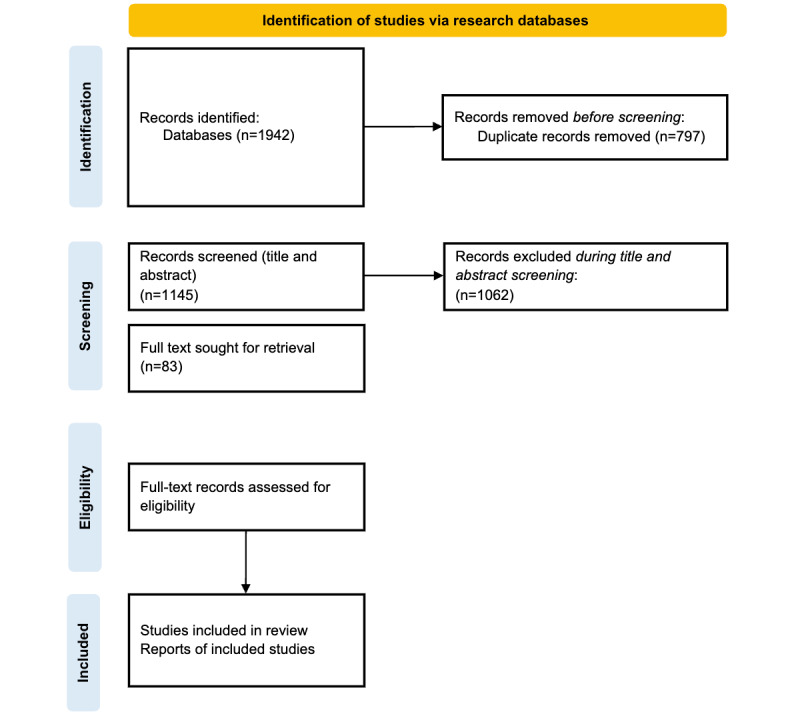
Results: The database search, conducted in July 2024, identified 1145 records, which will be screened and analyzed in subsequent stages of the review process. This protocol outlines the planned approach for identifying, categorizing, and synthesizing evidence. The study findings are anticipated to be finalized and submitted for publication in a peer-reviewed journal by February 2025.
Conclusions: This study will synthesize the recent body of work on the psychosocial impact of assistive technologies for people with visual impairments and recommendations for researchers and designers interested in this research area.
Trial registration: Open Science Framework 10.17605/OSF.IO/SK7N8; https://osf.io/4gc5t.
International registered report identifier (irrid): DERR1-10.2196/65056.





 京公网安备 11010802042870号
京ICP备2023020795号-1
京公网安备 11010802042870号
京ICP备2023020795号-1

 分享
分享
 求助内容:
求助内容: 应助结果提醒方式:
 扫码关注我们
