Omnia M Elsharkasy, Willemijn S de Voogt, Maria Laura Tognoli, Leanne van der Werff, Jerney J Gitz-Francois, Cornelis W Seinen, Raymond M Schiffelers, Olivier G de Jong, Pieter Vader
{"title":"整合素- 1和纤维连接蛋白介导细胞外囊泡摄取和功能性RNA传递。","authors":"Omnia M Elsharkasy, Willemijn S de Voogt, Maria Laura Tognoli, Leanne van der Werff, Jerney J Gitz-Francois, Cornelis W Seinen, Raymond M Schiffelers, Olivier G de Jong, Pieter Vader","doi":"10.1016/j.jbc.2025.108305","DOIUrl":null,"url":null,"abstract":"<p><p>Extracellular vesicles (EVs) are cell-derived vesicles secreted by all cell types into the extracellular spaces. EVs comprise a heterogenous population of vesicles that carry bioactive molecules, such as proteins, lipids, and RNAs, which they can deliver to recipient cells. Over the past few years, EVs have been recognized for their vital role in intercellular communication, and thereby in various physiological and pathological processes. In addition, EVs are increasingly being studied as potential drug delivery vehicles. It is therefore crucial to understand the mechanisms and molecular players underlying EV uptake and functional cargo delivery. Several studies have investigated various EV uptake pathways; nonetheless, molecular mechanisms governing uptake and cargo transfer remain largely lacking. Here, we show, using a CRISPR/Cas9-mediated reporter system, that integrin β1 on recipient cells plays an important role in EV uptake and EV-mediated RNA delivery. Additionally, using both RNA interference and blocking antibodies, we show that association of integrin β1 with integrin α4 is essential for this process. We demonstrate that α4β1 on recipient cells interacts with EVs through surface localized fibronectin via binding to its leucine-aspartic acid-valine motif, and that blocking of this interaction reduces both EV uptake and RNA delivery. Thus, we identify a key mechanism in EV uptake and cargo delivery which could potentially facilitate research into EV biology and pave the way for the development of novel therapeutic approaches by targeting pathways that lead to functional cargo delivery.</p>","PeriodicalId":15140,"journal":{"name":"Journal of Biological Chemistry","volume":" ","pages":"108305"},"PeriodicalIF":4.0000,"publicationDate":"2025-03-01","publicationTypes":"Journal Article","fieldsOfStudy":null,"isOpenAccess":false,"openAccessPdf":"https://www.ncbi.nlm.nih.gov/pmc/articles/PMC12020920/pdf/","citationCount":"0","resultStr":"{\"title\":\"Integrin beta 1 and fibronectin mediate extracellular vesicle uptake and functional RNA delivery.\",\"authors\":\"Omnia M Elsharkasy, Willemijn S de Voogt, Maria Laura Tognoli, Leanne van der Werff, Jerney J Gitz-Francois, Cornelis W Seinen, Raymond M Schiffelers, Olivier G de Jong, Pieter Vader\",\"doi\":\"10.1016/j.jbc.2025.108305\",\"DOIUrl\":null,\"url\":null,\"abstract\":\"<p><p>Extracellular vesicles (EVs) are cell-derived vesicles secreted by all cell types into the extracellular spaces. EVs comprise a heterogenous population of vesicles that carry bioactive molecules, such as proteins, lipids, and RNAs, which they can deliver to recipient cells. Over the past few years, EVs have been recognized for their vital role in intercellular communication, and thereby in various physiological and pathological processes. In addition, EVs are increasingly being studied as potential drug delivery vehicles. It is therefore crucial to understand the mechanisms and molecular players underlying EV uptake and functional cargo delivery. Several studies have investigated various EV uptake pathways; nonetheless, molecular mechanisms governing uptake and cargo transfer remain largely lacking. Here, we show, using a CRISPR/Cas9-mediated reporter system, that integrin β1 on recipient cells plays an important role in EV uptake and EV-mediated RNA delivery. Additionally, using both RNA interference and blocking antibodies, we show that association of integrin β1 with integrin α4 is essential for this process. We demonstrate that α4β1 on recipient cells interacts with EVs through surface localized fibronectin via binding to its leucine-aspartic acid-valine motif, and that blocking of this interaction reduces both EV uptake and RNA delivery. Thus, we identify a key mechanism in EV uptake and cargo delivery which could potentially facilitate research into EV biology and pave the way for the development of novel therapeutic approaches by targeting pathways that lead to functional cargo delivery.</p>\",\"PeriodicalId\":15140,\"journal\":{\"name\":\"Journal of Biological Chemistry\",\"volume\":\" \",\"pages\":\"108305\"},\"PeriodicalIF\":4.0000,\"publicationDate\":\"2025-03-01\",\"publicationTypes\":\"Journal Article\",\"fieldsOfStudy\":null,\"isOpenAccess\":false,\"openAccessPdf\":\"https://www.ncbi.nlm.nih.gov/pmc/articles/PMC12020920/pdf/\",\"citationCount\":\"0\",\"resultStr\":null,\"platform\":\"Semanticscholar\",\"paperid\":null,\"PeriodicalName\":\"Journal of Biological Chemistry\",\"FirstCategoryId\":\"99\",\"ListUrlMain\":\"https://doi.org/10.1016/j.jbc.2025.108305\",\"RegionNum\":2,\"RegionCategory\":\"生物学\",\"ArticlePicture\":[],\"TitleCN\":null,\"AbstractTextCN\":null,\"PMCID\":null,\"EPubDate\":\"2025/2/11 0:00:00\",\"PubModel\":\"Epub\",\"JCR\":\"Q2\",\"JCRName\":\"BIOCHEMISTRY & MOLECULAR BIOLOGY\",\"Score\":null,\"Total\":0}","platform":"Semanticscholar","paperid":null,"PeriodicalName":"Journal of Biological Chemistry","FirstCategoryId":"99","ListUrlMain":"https://doi.org/10.1016/j.jbc.2025.108305","RegionNum":2,"RegionCategory":"生物学","ArticlePicture":[],"TitleCN":null,"AbstractTextCN":null,"PMCID":null,"EPubDate":"2025/2/11 0:00:00","PubModel":"Epub","JCR":"Q2","JCRName":"BIOCHEMISTRY & MOLECULAR BIOLOGY","Score":null,"Total":0}
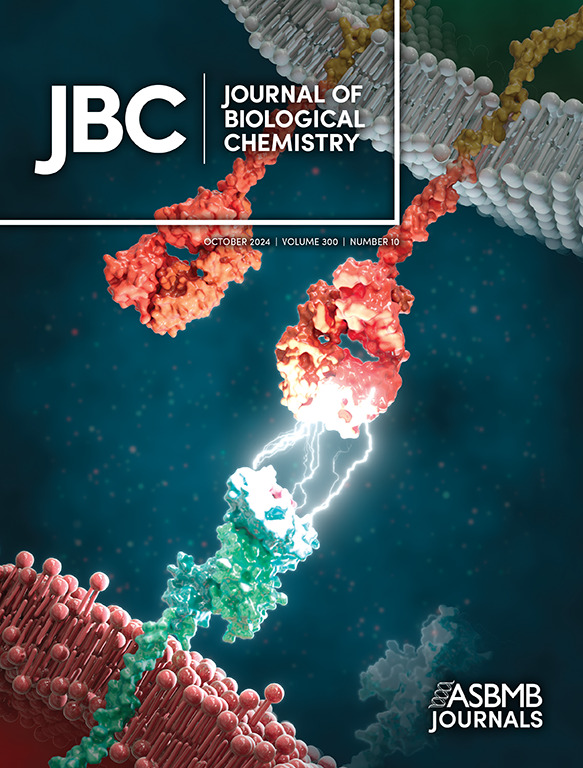
Integrin beta 1 and fibronectin mediate extracellular vesicle uptake and functional RNA delivery.
Extracellular vesicles (EVs) are cell-derived vesicles secreted by all cell types into the extracellular spaces. EVs comprise a heterogenous population of vesicles that carry bioactive molecules, such as proteins, lipids, and RNAs, which they can deliver to recipient cells. Over the past few years, EVs have been recognized for their vital role in intercellular communication, and thereby in various physiological and pathological processes. In addition, EVs are increasingly being studied as potential drug delivery vehicles. It is therefore crucial to understand the mechanisms and molecular players underlying EV uptake and functional cargo delivery. Several studies have investigated various EV uptake pathways; nonetheless, molecular mechanisms governing uptake and cargo transfer remain largely lacking. Here, we show, using a CRISPR/Cas9-mediated reporter system, that integrin β1 on recipient cells plays an important role in EV uptake and EV-mediated RNA delivery. Additionally, using both RNA interference and blocking antibodies, we show that association of integrin β1 with integrin α4 is essential for this process. We demonstrate that α4β1 on recipient cells interacts with EVs through surface localized fibronectin via binding to its leucine-aspartic acid-valine motif, and that blocking of this interaction reduces both EV uptake and RNA delivery. Thus, we identify a key mechanism in EV uptake and cargo delivery which could potentially facilitate research into EV biology and pave the way for the development of novel therapeutic approaches by targeting pathways that lead to functional cargo delivery.
期刊介绍:
The Journal of Biological Chemistry welcomes high-quality science that seeks to elucidate the molecular and cellular basis of biological processes. Papers published in JBC can therefore fall under the umbrellas of not only biological chemistry, chemical biology, or biochemistry, but also allied disciplines such as biophysics, systems biology, RNA biology, immunology, microbiology, neurobiology, epigenetics, computational biology, ’omics, and many more. The outcome of our focus on papers that contribute novel and important mechanistic insights, rather than on a particular topic area, is that JBC is truly a melting pot for scientists across disciplines. In addition, JBC welcomes papers that describe methods that will help scientists push their biochemical inquiries forward and resources that will be of use to the research community.




 京公网安备 11010802042870号
京ICP备2023020795号-1
京公网安备 11010802042870号
京ICP备2023020795号-1

 分享
分享
 求助内容:
求助内容: 应助结果提醒方式:
 扫码关注我们
