Julia Döge MD, Berit Hackenberg MD, Manfred E. Beutel MD, PhD, MSc, Daniëlle Otten MSc, Philipp S. Wild MD, PhD, MSc, Julian Chalabi BSc, GHS Research Consortium, Christoph Matthias MD, PhD, Katharina Bahr-Hamm MD
{"title":"听力损失及其与孤独和抑郁的关系——一项基于人群的队列研究。","authors":"Julia Döge MD, Berit Hackenberg MD, Manfred E. Beutel MD, PhD, MSc, Daniëlle Otten MSc, Philipp S. Wild MD, PhD, MSc, Julian Chalabi BSc, GHS Research Consortium, Christoph Matthias MD, PhD, Katharina Bahr-Hamm MD","doi":"10.1002/lary.32060","DOIUrl":null,"url":null,"abstract":"<div>\n \n <section>\n \n <h3> Objectives</h3>\n \n <p>Hearing loss is a prevalent factor contributing to reduced quality of life and has been linked to various comorbidities, with potential significant implications for psychosocial and cognitive health. The aim of this study was to give current information about the prevalence of hearing loss, loneliness and depression, and to examine the association between these.</p>\n </section>\n \n <section>\n \n <h3> Study Design</h3>\n \n <p>Cohort study.</p>\n </section>\n \n <section>\n \n <h3> Methods</h3>\n \n <p>The Gutenberg Health Study, a large representative cohort study for the general population, was initiated in 2007 at the University Medical Center Mainz, Germany. Hearing loss was assessed using pure-tone audiometry, with severity graduated in percentages according to the World Health Organization (WHO). Loneliness and depressive symptoms were assessed using self-report measures: Loneliness Scale (≥2) for loneliness and the PHQ-9 (≥10) for depressive symptoms.</p>\n </section>\n \n <section>\n \n <h3> Results</h3>\n \n <p>Among 5,948 participants (25–86 years), the prevalence of hearing loss was 38.7%. Loneliness was reported by 9.5% of the participants and the prevalence of significant symptoms of depression was 9.9%. The risk of loneliness was found to be significantly higher in participants with severe to complete hearing loss (OR = 3.92, <i>p</i> = 0.011). In addition, the odds ratio (OR) for depressive symptoms was significantly higher in those with a mild to severe hearing loss compared to those with normal hearing (OR = 1.3; <i>p</i> = 0.025). There was no association with hearing aid use.</p>\n </section>\n \n <section>\n \n <h3> Conclusion</h3>\n \n <p>Hearing loss is associated with both loneliness and depressive symptoms. Longitudinal studies are required to clarify the causal relationships and to further investigate the direct impact of early hearing aid fitting on the progression of loneliness and depression.</p>\n </section>\n \n <section>\n \n <h3> Level of Evidence</h3>\n \n <p>2 <i>Laryngoscope</i>, 135:2497–2505, 2025</p>\n </section>\n </div>","PeriodicalId":49921,"journal":{"name":"Laryngoscope","volume":"135 7","pages":"2497-2505"},"PeriodicalIF":2.0000,"publicationDate":"2025-02-14","publicationTypes":"Journal Article","fieldsOfStudy":null,"isOpenAccess":false,"openAccessPdf":"https://onlinelibrary.wiley.com/doi/epdf/10.1002/lary.32060","citationCount":"0","resultStr":"{\"title\":\"Hearing Loss and Its Relation to Loneliness and Depression—A Population-Based Cohort Study\",\"authors\":\"Julia Döge MD, Berit Hackenberg MD, Manfred E. Beutel MD, PhD, MSc, Daniëlle Otten MSc, Philipp S. Wild MD, PhD, MSc, Julian Chalabi BSc, GHS Research Consortium, Christoph Matthias MD, PhD, Katharina Bahr-Hamm MD\",\"doi\":\"10.1002/lary.32060\",\"DOIUrl\":null,\"url\":null,\"abstract\":\"<div>\\n \\n <section>\\n \\n <h3> Objectives</h3>\\n \\n <p>Hearing loss is a prevalent factor contributing to reduced quality of life and has been linked to various comorbidities, with potential significant implications for psychosocial and cognitive health. The aim of this study was to give current information about the prevalence of hearing loss, loneliness and depression, and to examine the association between these.</p>\\n </section>\\n \\n <section>\\n \\n <h3> Study Design</h3>\\n \\n <p>Cohort study.</p>\\n </section>\\n \\n <section>\\n \\n <h3> Methods</h3>\\n \\n <p>The Gutenberg Health Study, a large representative cohort study for the general population, was initiated in 2007 at the University Medical Center Mainz, Germany. Hearing loss was assessed using pure-tone audiometry, with severity graduated in percentages according to the World Health Organization (WHO). Loneliness and depressive symptoms were assessed using self-report measures: Loneliness Scale (≥2) for loneliness and the PHQ-9 (≥10) for depressive symptoms.</p>\\n </section>\\n \\n <section>\\n \\n <h3> Results</h3>\\n \\n <p>Among 5,948 participants (25–86 years), the prevalence of hearing loss was 38.7%. Loneliness was reported by 9.5% of the participants and the prevalence of significant symptoms of depression was 9.9%. The risk of loneliness was found to be significantly higher in participants with severe to complete hearing loss (OR = 3.92, <i>p</i> = 0.011). In addition, the odds ratio (OR) for depressive symptoms was significantly higher in those with a mild to severe hearing loss compared to those with normal hearing (OR = 1.3; <i>p</i> = 0.025). There was no association with hearing aid use.</p>\\n </section>\\n \\n <section>\\n \\n <h3> Conclusion</h3>\\n \\n <p>Hearing loss is associated with both loneliness and depressive symptoms. Longitudinal studies are required to clarify the causal relationships and to further investigate the direct impact of early hearing aid fitting on the progression of loneliness and depression.</p>\\n </section>\\n \\n <section>\\n \\n <h3> Level of Evidence</h3>\\n \\n <p>2 <i>Laryngoscope</i>, 135:2497–2505, 2025</p>\\n </section>\\n </div>\",\"PeriodicalId\":49921,\"journal\":{\"name\":\"Laryngoscope\",\"volume\":\"135 7\",\"pages\":\"2497-2505\"},\"PeriodicalIF\":2.0000,\"publicationDate\":\"2025-02-14\",\"publicationTypes\":\"Journal Article\",\"fieldsOfStudy\":null,\"isOpenAccess\":false,\"openAccessPdf\":\"https://onlinelibrary.wiley.com/doi/epdf/10.1002/lary.32060\",\"citationCount\":\"0\",\"resultStr\":null,\"platform\":\"Semanticscholar\",\"paperid\":null,\"PeriodicalName\":\"Laryngoscope\",\"FirstCategoryId\":\"3\",\"ListUrlMain\":\"https://onlinelibrary.wiley.com/doi/10.1002/lary.32060\",\"RegionNum\":3,\"RegionCategory\":\"医学\",\"ArticlePicture\":[],\"TitleCN\":null,\"AbstractTextCN\":null,\"PMCID\":null,\"EPubDate\":\"\",\"PubModel\":\"\",\"JCR\":\"Q3\",\"JCRName\":\"MEDICINE, RESEARCH & EXPERIMENTAL\",\"Score\":null,\"Total\":0}","platform":"Semanticscholar","paperid":null,"PeriodicalName":"Laryngoscope","FirstCategoryId":"3","ListUrlMain":"https://onlinelibrary.wiley.com/doi/10.1002/lary.32060","RegionNum":3,"RegionCategory":"医学","ArticlePicture":[],"TitleCN":null,"AbstractTextCN":null,"PMCID":null,"EPubDate":"","PubModel":"","JCR":"Q3","JCRName":"MEDICINE, RESEARCH & EXPERIMENTAL","Score":null,"Total":0}
引用次数: 0
摘要
目的:听力损失是导致生活质量下降的一个普遍因素,并与各种合并症有关,对社会心理和认知健康具有潜在的重大影响。这项研究的目的是提供有关听力损失、孤独和抑郁的流行情况的最新信息,并检查它们之间的联系。研究设计:队列研究。方法:古登堡健康研究是一项针对普通人群的大型代表性队列研究,于2007年在德国美因茨大学医学中心启动。听力损失采用纯音测听法进行评估,根据世界卫生组织(WHO)的规定,以百分比分级严重程度。孤独感和抑郁症状采用自我报告量表进行评估:孤独感量表(≥2)和抑郁症状PHQ-9(≥10)。结果:在5948名参与者(25-86岁)中,听力损失的患病率为38.7%。9.5%的参与者报告有孤独感,9.9%的人有明显的抑郁症状。重度至完全性听力损失的受试者孤独感风险明显更高(OR = 3.92, p = 0.011)。此外,轻度至重度听力损失患者抑郁症状的比值比(OR)显著高于听力正常患者(OR = 1.3;p = 0.025)。这与助听器的使用无关。结论:听力损失与孤独和抑郁症状相关。需要进行纵向研究来澄清因果关系,并进一步调查早期助听器配戴对孤独感和抑郁症发展的直接影响。证据等级:2喉镜,2025。
Hearing Loss and Its Relation to Loneliness and Depression—A Population-Based Cohort Study
Objectives
Hearing loss is a prevalent factor contributing to reduced quality of life and has been linked to various comorbidities, with potential significant implications for psychosocial and cognitive health. The aim of this study was to give current information about the prevalence of hearing loss, loneliness and depression, and to examine the association between these.
Study Design
Cohort study.
Methods
The Gutenberg Health Study, a large representative cohort study for the general population, was initiated in 2007 at the University Medical Center Mainz, Germany. Hearing loss was assessed using pure-tone audiometry, with severity graduated in percentages according to the World Health Organization (WHO). Loneliness and depressive symptoms were assessed using self-report measures: Loneliness Scale (≥2) for loneliness and the PHQ-9 (≥10) for depressive symptoms.
Results
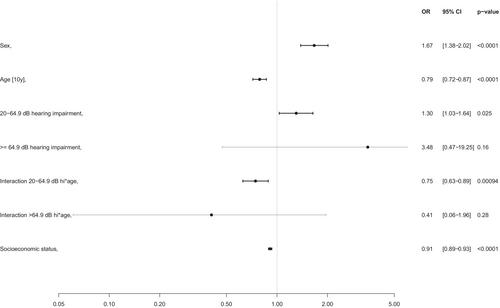
Among 5,948 participants (25–86 years), the prevalence of hearing loss was 38.7%. Loneliness was reported by 9.5% of the participants and the prevalence of significant symptoms of depression was 9.9%. The risk of loneliness was found to be significantly higher in participants with severe to complete hearing loss (OR = 3.92, p = 0.011). In addition, the odds ratio (OR) for depressive symptoms was significantly higher in those with a mild to severe hearing loss compared to those with normal hearing (OR = 1.3; p = 0.025). There was no association with hearing aid use.
Conclusion
Hearing loss is associated with both loneliness and depressive symptoms. Longitudinal studies are required to clarify the causal relationships and to further investigate the direct impact of early hearing aid fitting on the progression of loneliness and depression.
期刊介绍:
The Laryngoscope has been the leading source of information on advances in the diagnosis and treatment of head and neck disorders since 1890. The Laryngoscope is the first choice among otolaryngologists for publication of their important findings and techniques. Each monthly issue of The Laryngoscope features peer-reviewed medical, clinical, and research contributions in general otolaryngology, allergy/rhinology, otology/neurotology, laryngology/bronchoesophagology, head and neck surgery, sleep medicine, pediatric otolaryngology, facial plastics and reconstructive surgery, oncology, and communicative disorders. Contributions include papers and posters presented at the Annual and Section Meetings of the Triological Society, as well as independent papers, "How I Do It", "Triological Best Practice" articles, and contemporary reviews. Theses authored by the Triological Society’s new Fellows as well as papers presented at meetings of the American Laryngological Association are published in The Laryngoscope.
• Broncho-esophagology
• Communicative disorders
• Head and neck surgery
• Plastic and reconstructive facial surgery
• Oncology
• Speech and hearing defects





 京公网安备 11010802042870号
京ICP备2023020795号-1
京公网安备 11010802042870号
京ICP备2023020795号-1

 分享
分享
 求助内容:
求助内容: 应助结果提醒方式:
 扫码关注我们
