Younglan Ban, Hyeonjin Park, Seong Jun Hong, Se Young Yu, Hee Sung Moon, Eui-Cheol Shin
{"title":"利用基于仿生感官的机器感知技术对来自埃塞俄比亚的不同冲泡和烘焙咖啡(阿拉比卡咖啡)的感官学和化学计量学方法:咖啡因对苦味和挥发物产生的影响","authors":"Younglan Ban, Hyeonjin Park, Seong Jun Hong, Se Young Yu, Hee Sung Moon, Eui-Cheol Shin","doi":"10.1016/j.foodchem.2025.143407","DOIUrl":null,"url":null,"abstract":"<div><div>This study investigated the effects of caffeine in coffee extract (CE) prepared under various roasting and brewing conditions on non-volatile characteristics (antioxidant activity, caffeine contents, chlorogenic acid contents, and taste patterns) and volatile compounds. The representative taste of coffee is bitter taste, and it was mainly influenced by roasting processes compared with the contents of caffeine. Non-volatile compounds were influenced by the bean types (regular and decaffeinated beans) and brewing methods, whereas volatile compounds were mainly affected by the brewing methods and roasting processes. In chemometrics approaches, the correlation between caffeine and bitterness (−0.003) and sourness (0.549) was identified. The correlation between chlorogenic acid and bitterness (0.399) and sourness (0.693) was identified. This study is expected to serve as a basis for understanding changes in bitterness and the generation of volatile compounds according to the contents of caffeine.</div></div>","PeriodicalId":318,"journal":{"name":"Food Chemistry","volume":"476 ","pages":"Article 143407"},"PeriodicalIF":9.8000,"publicationDate":"2025-06-01","publicationTypes":"Journal Article","fieldsOfStudy":null,"isOpenAccess":false,"openAccessPdf":"","citationCount":"0","resultStr":"{\"title\":\"Sensomics and chemometrics approaches of differential brewed and roasted coffee (Coffea arabica) from Ethiopia using biomimetic sensory-based machine perception techniques: Effects of caffeine on bitter taste and the generation of volatiles\",\"authors\":\"Younglan Ban, Hyeonjin Park, Seong Jun Hong, Se Young Yu, Hee Sung Moon, Eui-Cheol Shin\",\"doi\":\"10.1016/j.foodchem.2025.143407\",\"DOIUrl\":null,\"url\":null,\"abstract\":\"<div><div>This study investigated the effects of caffeine in coffee extract (CE) prepared under various roasting and brewing conditions on non-volatile characteristics (antioxidant activity, caffeine contents, chlorogenic acid contents, and taste patterns) and volatile compounds. The representative taste of coffee is bitter taste, and it was mainly influenced by roasting processes compared with the contents of caffeine. Non-volatile compounds were influenced by the bean types (regular and decaffeinated beans) and brewing methods, whereas volatile compounds were mainly affected by the brewing methods and roasting processes. In chemometrics approaches, the correlation between caffeine and bitterness (−0.003) and sourness (0.549) was identified. The correlation between chlorogenic acid and bitterness (0.399) and sourness (0.693) was identified. This study is expected to serve as a basis for understanding changes in bitterness and the generation of volatile compounds according to the contents of caffeine.</div></div>\",\"PeriodicalId\":318,\"journal\":{\"name\":\"Food Chemistry\",\"volume\":\"476 \",\"pages\":\"Article 143407\"},\"PeriodicalIF\":9.8000,\"publicationDate\":\"2025-06-01\",\"publicationTypes\":\"Journal Article\",\"fieldsOfStudy\":null,\"isOpenAccess\":false,\"openAccessPdf\":\"\",\"citationCount\":\"0\",\"resultStr\":null,\"platform\":\"Semanticscholar\",\"paperid\":null,\"PeriodicalName\":\"Food Chemistry\",\"FirstCategoryId\":\"97\",\"ListUrlMain\":\"https://www.sciencedirect.com/science/article/pii/S0308814625006582\",\"RegionNum\":1,\"RegionCategory\":\"农林科学\",\"ArticlePicture\":[],\"TitleCN\":null,\"AbstractTextCN\":null,\"PMCID\":null,\"EPubDate\":\"2025/2/14 0:00:00\",\"PubModel\":\"Epub\",\"JCR\":\"Q1\",\"JCRName\":\"CHEMISTRY, APPLIED\",\"Score\":null,\"Total\":0}","platform":"Semanticscholar","paperid":null,"PeriodicalName":"Food Chemistry","FirstCategoryId":"97","ListUrlMain":"https://www.sciencedirect.com/science/article/pii/S0308814625006582","RegionNum":1,"RegionCategory":"农林科学","ArticlePicture":[],"TitleCN":null,"AbstractTextCN":null,"PMCID":null,"EPubDate":"2025/2/14 0:00:00","PubModel":"Epub","JCR":"Q1","JCRName":"CHEMISTRY, APPLIED","Score":null,"Total":0}
Sensomics and chemometrics approaches of differential brewed and roasted coffee (Coffea arabica) from Ethiopia using biomimetic sensory-based machine perception techniques: Effects of caffeine on bitter taste and the generation of volatiles
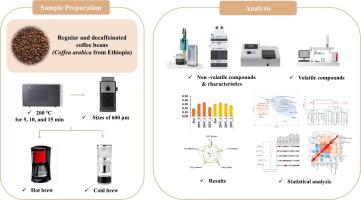
This study investigated the effects of caffeine in coffee extract (CE) prepared under various roasting and brewing conditions on non-volatile characteristics (antioxidant activity, caffeine contents, chlorogenic acid contents, and taste patterns) and volatile compounds. The representative taste of coffee is bitter taste, and it was mainly influenced by roasting processes compared with the contents of caffeine. Non-volatile compounds were influenced by the bean types (regular and decaffeinated beans) and brewing methods, whereas volatile compounds were mainly affected by the brewing methods and roasting processes. In chemometrics approaches, the correlation between caffeine and bitterness (−0.003) and sourness (0.549) was identified. The correlation between chlorogenic acid and bitterness (0.399) and sourness (0.693) was identified. This study is expected to serve as a basis for understanding changes in bitterness and the generation of volatile compounds according to the contents of caffeine.
期刊介绍:
Food Chemistry publishes original research papers dealing with the advancement of the chemistry and biochemistry of foods or the analytical methods/ approach used. All papers should focus on the novelty of the research carried out.





 京公网安备 11010802042870号
京ICP备2023020795号-1
京公网安备 11010802042870号
京ICP备2023020795号-1

 分享
分享
 求助内容:
求助内容: 应助结果提醒方式:
 扫码关注我们
