{"title":"工业废水处理的生命周期评价:评价电絮凝技术对环境的影响","authors":"Omid Sedaghat , Nader Bahramifar , Mohsen Nowrouzi , Habibollah Younesi","doi":"10.1016/j.jwpe.2025.107257","DOIUrl":null,"url":null,"abstract":"<div><div>Discharging textile industry wastewater with high pollutant content and implementing treatment systems with minimal environmental impact are critical challenges. Therefore, this study was conducted to evaluate the life cycle assessment (LCA) of the applied electrocoagulation (EC) process, to optimize the EC process and advance knowledge about the potential environmental impacts of textile wastewater treatment. The ReCiPe midpoint and endpoint (H) methods were chosen for their reliability and comprehensive scope. Accordingly, optimizing key parameters was investigated to achieve maximum chemical oxygen demand (COD) removal using response surface methodology. The results indicated that 96.6 % COD removal was achieved under optimal conditions of pH 6, current density of 10 mA/cm<sup>2</sup>, and an operation time of 25 min. The LCA results showed that global warming (18.13 kg CO₂-eq, 40 %), terrestrial ecotoxicity (14.74 kg 1,4-DCB-eq, 33 %), and fossil resource scarcity (6.28 kg oil-eq, 14 %) were the most impacted categories by the EC process. Electricity consumption in the EC system was identified as the primary contributor to global warming, leading to 18.13 kg CO<sub>2</sub>-equivalent emissions. Additionally, using a cathode-anode switcher significantly reduced water consumption from 0.5 to 0.22 m<sup>3</sup>. Endpoint results highlighted the substantial impact of the EC process on human health (93.77 %). Sensitivity analysis revealed that a 20 % increase in electricity consumption affected all impact categories, ranging from 1.49 % to 5.52 %. The LCC analysis revealed that the largest cost burdens were associated with construction costs (31.9 %), equipment (7.3 %), and energy expenses (4.7 %). The cumulative energy demand assessment indicated that 306 MJ of energy consumption was related to electricity generation, which could be reduced by utilizing solar and renewable energy sources. In conclusion, incorporating green alternatives for energy production can be proposed as an eco-friendly solution, offering valuable insights for sustainable wastewater management in the textile industry.</div></div>","PeriodicalId":17528,"journal":{"name":"Journal of water process engineering","volume":"71 ","pages":"Article 107257"},"PeriodicalIF":6.6000,"publicationDate":"2025-03-01","publicationTypes":"Journal Article","fieldsOfStudy":null,"isOpenAccess":false,"openAccessPdf":"","citationCount":"0","resultStr":"{\"title\":\"Life cycle assessment of industrial wastewater treatment: Evaluating the environmental impact of electrocoagulation technologies\",\"authors\":\"Omid Sedaghat , Nader Bahramifar , Mohsen Nowrouzi , Habibollah Younesi\",\"doi\":\"10.1016/j.jwpe.2025.107257\",\"DOIUrl\":null,\"url\":null,\"abstract\":\"<div><div>Discharging textile industry wastewater with high pollutant content and implementing treatment systems with minimal environmental impact are critical challenges. Therefore, this study was conducted to evaluate the life cycle assessment (LCA) of the applied electrocoagulation (EC) process, to optimize the EC process and advance knowledge about the potential environmental impacts of textile wastewater treatment. The ReCiPe midpoint and endpoint (H) methods were chosen for their reliability and comprehensive scope. Accordingly, optimizing key parameters was investigated to achieve maximum chemical oxygen demand (COD) removal using response surface methodology. The results indicated that 96.6 % COD removal was achieved under optimal conditions of pH 6, current density of 10 mA/cm<sup>2</sup>, and an operation time of 25 min. The LCA results showed that global warming (18.13 kg CO₂-eq, 40 %), terrestrial ecotoxicity (14.74 kg 1,4-DCB-eq, 33 %), and fossil resource scarcity (6.28 kg oil-eq, 14 %) were the most impacted categories by the EC process. Electricity consumption in the EC system was identified as the primary contributor to global warming, leading to 18.13 kg CO<sub>2</sub>-equivalent emissions. Additionally, using a cathode-anode switcher significantly reduced water consumption from 0.5 to 0.22 m<sup>3</sup>. Endpoint results highlighted the substantial impact of the EC process on human health (93.77 %). Sensitivity analysis revealed that a 20 % increase in electricity consumption affected all impact categories, ranging from 1.49 % to 5.52 %. The LCC analysis revealed that the largest cost burdens were associated with construction costs (31.9 %), equipment (7.3 %), and energy expenses (4.7 %). The cumulative energy demand assessment indicated that 306 MJ of energy consumption was related to electricity generation, which could be reduced by utilizing solar and renewable energy sources. In conclusion, incorporating green alternatives for energy production can be proposed as an eco-friendly solution, offering valuable insights for sustainable wastewater management in the textile industry.</div></div>\",\"PeriodicalId\":17528,\"journal\":{\"name\":\"Journal of water process engineering\",\"volume\":\"71 \",\"pages\":\"Article 107257\"},\"PeriodicalIF\":6.6000,\"publicationDate\":\"2025-03-01\",\"publicationTypes\":\"Journal Article\",\"fieldsOfStudy\":null,\"isOpenAccess\":false,\"openAccessPdf\":\"\",\"citationCount\":\"0\",\"resultStr\":null,\"platform\":\"Semanticscholar\",\"paperid\":null,\"PeriodicalName\":\"Journal of water process engineering\",\"FirstCategoryId\":\"5\",\"ListUrlMain\":\"https://www.sciencedirect.com/science/article/pii/S2214714425003290\",\"RegionNum\":2,\"RegionCategory\":\"工程技术\",\"ArticlePicture\":[],\"TitleCN\":null,\"AbstractTextCN\":null,\"PMCID\":null,\"EPubDate\":\"2025/2/15 0:00:00\",\"PubModel\":\"Epub\",\"JCR\":\"Q1\",\"JCRName\":\"ENGINEERING, CHEMICAL\",\"Score\":null,\"Total\":0}","platform":"Semanticscholar","paperid":null,"PeriodicalName":"Journal of water process engineering","FirstCategoryId":"5","ListUrlMain":"https://www.sciencedirect.com/science/article/pii/S2214714425003290","RegionNum":2,"RegionCategory":"工程技术","ArticlePicture":[],"TitleCN":null,"AbstractTextCN":null,"PMCID":null,"EPubDate":"2025/2/15 0:00:00","PubModel":"Epub","JCR":"Q1","JCRName":"ENGINEERING, CHEMICAL","Score":null,"Total":0}
引用次数: 0
摘要
排放高污染物含量的纺织工业废水并实施对环境影响最小的处理系统是关键的挑战。因此,本研究旨在对应用电絮凝(EC)工艺的生命周期评价(LCA)进行评价,以优化EC工艺,提高对纺织废水处理潜在环境影响的认识。选择ReCiPe中点法和终点(H)法是考虑到它们的可靠性和综合范围。在此基础上,利用响应面法对关键参数进行优化,以达到最大化学需氧量(COD)去除效果。结果表明,在pH为6、电流密度为10 mA/cm2、运行时间为25 min的最佳条件下,COD去除率可达96.6%。LCA结果表明,全球变暖(18.13 kg CO₂-eq, 40%)、陆地生态毒性(14.74 kg 1,4- dcb -eq, 33%)和化石资源稀缺性(6.28 kg oil-eq, 14%)是EC工艺影响最大的类别。EC系统的电力消耗被确定为全球变暖的主要原因,导致18.13公斤二氧化碳当量的排放。此外,使用阴极-阳极开关可以将用水量从0.5立方米显著降低到0.22立方米。终点结果强调了EC过程对人类健康的重大影响(93.77%)。敏感性分析显示,电力消耗增加20%影响所有影响类别,范围从1.49%到5.52%。LCC分析显示,最大的费用负担是建筑费用(31.9%)、设备费用(7.3%)、能源费用(4.7%)。累计能源需求评价表明,306兆焦耳的能源消耗与发电有关,利用太阳能和可再生能源可以减少这些能源消耗。总之,将绿色替代能源纳入能源生产可以作为一种环保的解决方案,为纺织工业的可持续废水管理提供有价值的见解。
Life cycle assessment of industrial wastewater treatment: Evaluating the environmental impact of electrocoagulation technologies
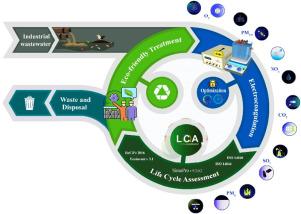
Discharging textile industry wastewater with high pollutant content and implementing treatment systems with minimal environmental impact are critical challenges. Therefore, this study was conducted to evaluate the life cycle assessment (LCA) of the applied electrocoagulation (EC) process, to optimize the EC process and advance knowledge about the potential environmental impacts of textile wastewater treatment. The ReCiPe midpoint and endpoint (H) methods were chosen for their reliability and comprehensive scope. Accordingly, optimizing key parameters was investigated to achieve maximum chemical oxygen demand (COD) removal using response surface methodology. The results indicated that 96.6 % COD removal was achieved under optimal conditions of pH 6, current density of 10 mA/cm2, and an operation time of 25 min. The LCA results showed that global warming (18.13 kg CO₂-eq, 40 %), terrestrial ecotoxicity (14.74 kg 1,4-DCB-eq, 33 %), and fossil resource scarcity (6.28 kg oil-eq, 14 %) were the most impacted categories by the EC process. Electricity consumption in the EC system was identified as the primary contributor to global warming, leading to 18.13 kg CO2-equivalent emissions. Additionally, using a cathode-anode switcher significantly reduced water consumption from 0.5 to 0.22 m3. Endpoint results highlighted the substantial impact of the EC process on human health (93.77 %). Sensitivity analysis revealed that a 20 % increase in electricity consumption affected all impact categories, ranging from 1.49 % to 5.52 %. The LCC analysis revealed that the largest cost burdens were associated with construction costs (31.9 %), equipment (7.3 %), and energy expenses (4.7 %). The cumulative energy demand assessment indicated that 306 MJ of energy consumption was related to electricity generation, which could be reduced by utilizing solar and renewable energy sources. In conclusion, incorporating green alternatives for energy production can be proposed as an eco-friendly solution, offering valuable insights for sustainable wastewater management in the textile industry.
期刊介绍:
The Journal of Water Process Engineering aims to publish refereed, high-quality research papers with significant novelty and impact in all areas of the engineering of water and wastewater processing . Papers on advanced and novel treatment processes and technologies are particularly welcome. The Journal considers papers in areas such as nanotechnology and biotechnology applications in water, novel oxidation and separation processes, membrane processes (except those for desalination) , catalytic processes for the removal of water contaminants, sustainable processes, water reuse and recycling, water use and wastewater minimization, integrated/hybrid technology, process modeling of water treatment and novel treatment processes. Submissions on the subject of adsorbents, including standard measurements of adsorption kinetics and equilibrium will only be considered if there is a genuine case for novelty and contribution, for example highly novel, sustainable adsorbents and their use: papers on activated carbon-type materials derived from natural matter, or surfactant-modified clays and related minerals, would not fulfil this criterion. The Journal particularly welcomes contributions involving environmentally, economically and socially sustainable technology for water treatment, including those which are energy-efficient, with minimal or no chemical consumption, and capable of water recycling and reuse that minimizes the direct disposal of wastewater to the aquatic environment. Papers that describe novel ideas for solving issues related to water quality and availability are also welcome, as are those that show the transfer of techniques from other disciplines. The Journal will consider papers dealing with processes for various water matrices including drinking water (except desalination), domestic, urban and industrial wastewaters, in addition to their residues. It is expected that the journal will be of particular relevance to chemical and process engineers working in the field. The Journal welcomes Full Text papers, Short Communications, State-of-the-Art Reviews and Letters to Editors and Case Studies




 京公网安备 11010802042870号
京ICP备2023020795号-1
京公网安备 11010802042870号
京ICP备2023020795号-1

 分享
分享
 求助内容:
求助内容: 应助结果提醒方式:
 扫码关注我们
