Pia Scheufele , Katy Horner , Clare Corish , Marjolein Visser , Anja Rappl , Brian Mullen , Anna Quinn , Federica Gonnelli , Matteo Bozzato , Dorothee Volkert
{"title":"appetite研究中老年人食欲评估方法的比较。","authors":"Pia Scheufele , Katy Horner , Clare Corish , Marjolein Visser , Anja Rappl , Brian Mullen , Anna Quinn , Federica Gonnelli , Matteo Bozzato , Dorothee Volkert","doi":"10.1016/j.appet.2025.107909","DOIUrl":null,"url":null,"abstract":"<div><div>Poor appetite is an important health concern in older adults. Numerous methods exist for appetite assessment, without a consensual gold standard. This study aims to compare Simplified Nutritional Appetite Questionnaire (SNAQ) and two single-item appetite questions with appetite ratings from visual analogue scales (VAS) and energy intake (EI). In 126 community-dwelling adults aged ≥65 years from the APPETITE trial, appetite was assessed using SNAQ, SNAQ 1st item, Center for Epidemiologic Studies-Depression scale (CES-D) 2nd item and using VAS appetite ratings (fasting, 0, 30, 60, 120, 180 min post-breakfast, post-lunch) and EI (<em>ad libitum</em> lunch) in a test meal setting. Spearman correlations were calculated between SNAQ, single-items, VAS-fasting, and EI. Differences in VAS-fasting and EI between normal and poor appetite groups (based on SNAQ, single-items) were examined using Mann-Whitney-<em>U</em>-test. Repeated measures Generalized Linear Models were used to compare all VAS ratings across the test morning and post-breakfast response ratings with VAS-fasting as a covariate between appetite groups. SNAQ score was correlated with VAS-fasting (<em>r</em> = 0.26, <em>p</em> < 0.001) and EI (<em>r</em> = 0.22, <em>p</em> < 0.05). VAS-fasting was lower in the SNAQ-based poor appetite group (<em>p</em> = 0.01). Time/group interaction effects (SNAQ, η<sub>p</sub><sup>2</sup> = 0.02; CES-D-item, η<sub>p</sub><sup>2</sup> = 0.02) for all VAS ratings, and group (SNAQ-item, η<sub>p</sub><sup>2</sup> = 0.04) and interaction effects (CES-D-item, η<sub>p</sub><sup>2</sup> = 0.03) for post-breakfast ratings were observed (<em>p</em> < 0.05, respectively). SNAQ identified differences in VAS-fasting, possibly reflecting processes related to the drive to eat, while the two single-items identified appetite differences in response to a standardised breakfast. Different methods appear to capture different aspects of appetite, which should be considered when choosing an assessment method.</div></div>","PeriodicalId":242,"journal":{"name":"Appetite","volume":"208 ","pages":"Article 107909"},"PeriodicalIF":4.2000,"publicationDate":"2025-04-01","publicationTypes":"Journal Article","fieldsOfStudy":null,"isOpenAccess":false,"openAccessPdf":"","citationCount":"0","resultStr":"{\"title\":\"Comparison of appetite assessment methods in older adults from the APPETITE study\",\"authors\":\"Pia Scheufele , Katy Horner , Clare Corish , Marjolein Visser , Anja Rappl , Brian Mullen , Anna Quinn , Federica Gonnelli , Matteo Bozzato , Dorothee Volkert\",\"doi\":\"10.1016/j.appet.2025.107909\",\"DOIUrl\":null,\"url\":null,\"abstract\":\"<div><div>Poor appetite is an important health concern in older adults. Numerous methods exist for appetite assessment, without a consensual gold standard. This study aims to compare Simplified Nutritional Appetite Questionnaire (SNAQ) and two single-item appetite questions with appetite ratings from visual analogue scales (VAS) and energy intake (EI). In 126 community-dwelling adults aged ≥65 years from the APPETITE trial, appetite was assessed using SNAQ, SNAQ 1st item, Center for Epidemiologic Studies-Depression scale (CES-D) 2nd item and using VAS appetite ratings (fasting, 0, 30, 60, 120, 180 min post-breakfast, post-lunch) and EI (<em>ad libitum</em> lunch) in a test meal setting. Spearman correlations were calculated between SNAQ, single-items, VAS-fasting, and EI. Differences in VAS-fasting and EI between normal and poor appetite groups (based on SNAQ, single-items) were examined using Mann-Whitney-<em>U</em>-test. Repeated measures Generalized Linear Models were used to compare all VAS ratings across the test morning and post-breakfast response ratings with VAS-fasting as a covariate between appetite groups. SNAQ score was correlated with VAS-fasting (<em>r</em> = 0.26, <em>p</em> < 0.001) and EI (<em>r</em> = 0.22, <em>p</em> < 0.05). VAS-fasting was lower in the SNAQ-based poor appetite group (<em>p</em> = 0.01). Time/group interaction effects (SNAQ, η<sub>p</sub><sup>2</sup> = 0.02; CES-D-item, η<sub>p</sub><sup>2</sup> = 0.02) for all VAS ratings, and group (SNAQ-item, η<sub>p</sub><sup>2</sup> = 0.04) and interaction effects (CES-D-item, η<sub>p</sub><sup>2</sup> = 0.03) for post-breakfast ratings were observed (<em>p</em> < 0.05, respectively). SNAQ identified differences in VAS-fasting, possibly reflecting processes related to the drive to eat, while the two single-items identified appetite differences in response to a standardised breakfast. Different methods appear to capture different aspects of appetite, which should be considered when choosing an assessment method.</div></div>\",\"PeriodicalId\":242,\"journal\":{\"name\":\"Appetite\",\"volume\":\"208 \",\"pages\":\"Article 107909\"},\"PeriodicalIF\":4.2000,\"publicationDate\":\"2025-04-01\",\"publicationTypes\":\"Journal Article\",\"fieldsOfStudy\":null,\"isOpenAccess\":false,\"openAccessPdf\":\"\",\"citationCount\":\"0\",\"resultStr\":null,\"platform\":\"Semanticscholar\",\"paperid\":null,\"PeriodicalName\":\"Appetite\",\"FirstCategoryId\":\"3\",\"ListUrlMain\":\"https://www.sciencedirect.com/science/article/pii/S0195666325000625\",\"RegionNum\":2,\"RegionCategory\":\"医学\",\"ArticlePicture\":[],\"TitleCN\":null,\"AbstractTextCN\":null,\"PMCID\":null,\"EPubDate\":\"2025/2/13 0:00:00\",\"PubModel\":\"Epub\",\"JCR\":\"Q1\",\"JCRName\":\"BEHAVIORAL SCIENCES\",\"Score\":null,\"Total\":0}","platform":"Semanticscholar","paperid":null,"PeriodicalName":"Appetite","FirstCategoryId":"3","ListUrlMain":"https://www.sciencedirect.com/science/article/pii/S0195666325000625","RegionNum":2,"RegionCategory":"医学","ArticlePicture":[],"TitleCN":null,"AbstractTextCN":null,"PMCID":null,"EPubDate":"2025/2/13 0:00:00","PubModel":"Epub","JCR":"Q1","JCRName":"BEHAVIORAL SCIENCES","Score":null,"Total":0}
引用次数: 0
摘要
食欲不振是老年人的一个重要健康问题。有许多方法可以评估食欲,但没有一个公认的黄金标准。本研究旨在比较简易营养食欲问卷(SNAQ)和两个单题食欲问卷与视觉模拟量表(VAS)和能量摄入量表(EI)的食欲评分。对来自APPETITE试验的126名年龄≥65岁的社区居民进行食欲评估,采用SNAQ、SNAQ第一项、流行病学研究中心抑郁量表(ce -d)第二项和VAS食欲评分(早餐后、午餐后禁食、0、30、60、120、180分钟)和EI(随意午餐)。计算SNAQ、单项、vas禁食和EI之间的Spearman相关性。采用Mann-Whitney-U-test检验正常组和食欲不良组之间vas -空腹和EI的差异(基于SNAQ,单项)。使用重复测量广义线性模型(Generalized Linear Models)来比较所有的VAS评分,包括早晨和早餐后的反应评分,并将VAS禁食作为食欲组之间的协变量。SNAQ评分与vas -空腹相关(r=0.26, pp2=0.02;观察所有VAS评分的分组效应(SNAQ-item, ηp2=0.04)和早餐后评分的组效应(ses - d -item, ηp2=0.03)和交互效应(ses - d -item, ηp2=0.03) (p
Comparison of appetite assessment methods in older adults from the APPETITE study
Poor appetite is an important health concern in older adults. Numerous methods exist for appetite assessment, without a consensual gold standard. This study aims to compare Simplified Nutritional Appetite Questionnaire (SNAQ) and two single-item appetite questions with appetite ratings from visual analogue scales (VAS) and energy intake (EI). In 126 community-dwelling adults aged ≥65 years from the APPETITE trial, appetite was assessed using SNAQ, SNAQ 1st item, Center for Epidemiologic Studies-Depression scale (CES-D) 2nd item and using VAS appetite ratings (fasting, 0, 30, 60, 120, 180 min post-breakfast, post-lunch) and EI (ad libitum lunch) in a test meal setting. Spearman correlations were calculated between SNAQ, single-items, VAS-fasting, and EI. Differences in VAS-fasting and EI between normal and poor appetite groups (based on SNAQ, single-items) were examined using Mann-Whitney-U-test. Repeated measures Generalized Linear Models were used to compare all VAS ratings across the test morning and post-breakfast response ratings with VAS-fasting as a covariate between appetite groups. SNAQ score was correlated with VAS-fasting (r = 0.26, p < 0.001) and EI (r = 0.22, p < 0.05). VAS-fasting was lower in the SNAQ-based poor appetite group (p = 0.01). Time/group interaction effects (SNAQ, ηp2 = 0.02; CES-D-item, ηp2 = 0.02) for all VAS ratings, and group (SNAQ-item, ηp2 = 0.04) and interaction effects (CES-D-item, ηp2 = 0.03) for post-breakfast ratings were observed (p < 0.05, respectively). SNAQ identified differences in VAS-fasting, possibly reflecting processes related to the drive to eat, while the two single-items identified appetite differences in response to a standardised breakfast. Different methods appear to capture different aspects of appetite, which should be considered when choosing an assessment method.
期刊介绍:
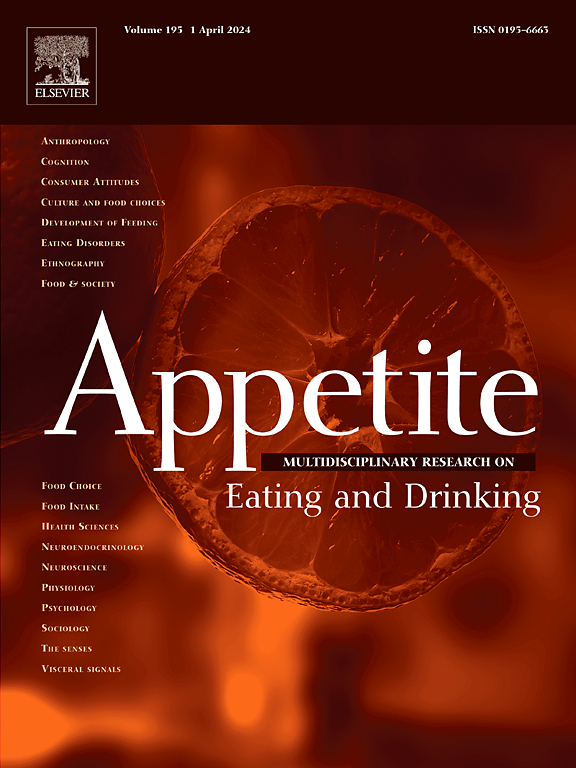
Appetite is an international research journal specializing in cultural, social, psychological, sensory and physiological influences on the selection and intake of foods and drinks. It covers normal and disordered eating and drinking and welcomes studies of both human and non-human animal behaviour toward food. Appetite publishes research reports, reviews and commentaries. Thematic special issues appear regularly. From time to time the journal carries abstracts from professional meetings. Submissions to Appetite are expected to be based primarily on observations directly related to the selection and intake of foods and drinks; papers that are primarily focused on topics such as nutrition or obesity will not be considered unless they specifically make a novel scientific contribution to the understanding of appetite in line with the journal's aims and scope.




 京公网安备 11010802042870号
京ICP备2023020795号-1
京公网安备 11010802042870号
京ICP备2023020795号-1

 分享
分享
 求助内容:
求助内容: 应助结果提醒方式:
 扫码关注我们
