Spence Whittaker, Susan Rasmussen, Nicola Cogan, Dwight Tse, Bethany Martin, Karl Andriessen, Victor Shiramizu, Karolina Krysinska, Yossi Levi-Belz
{"title":"自杀损失幸存者的创伤后成长:更新的系统回顾和荟萃分析方案。","authors":"Spence Whittaker, Susan Rasmussen, Nicola Cogan, Dwight Tse, Bethany Martin, Karl Andriessen, Victor Shiramizu, Karolina Krysinska, Yossi Levi-Belz","doi":"10.2196/64615","DOIUrl":null,"url":null,"abstract":"<p><strong>Background: </strong>Losing a loved one to suicide is an event that can have strong and potentially traumatic impacts on the lives of the bereaved survivors, especially regarding their grief, which can be complicated. These bereaved individuals are also less likely to receive social support following their bereavement. However, besides these adverse impacts, growing evidence supports the concept of posttraumatic growth following suicide bereavement. Posttraumatic growth is the personal improvement that occurs as a consequence of experiencing a traumatic or extremely challenging event or crisis. Only 1 systematic review and meta-analysis on posttraumatic growth following suicide bereavement has been conducted; this protocol is for the planned systematic review and meta-analysis update of the original systematic review and meta-analysis, as the original review collected its data in 2018.</p><p><strong>Objective: </strong>This review aims to investigate demographic characteristics, correlational relationships, and facilitative factors of posttraumatic growth in individuals bereaved by suicide. In addition, as this is an update of a previous systematic review and meta-analysis, we aim to compare our findings with the original review and to identify any similarities or differences.</p><p><strong>Methods: </strong>This protocol outlines the planned procedures of the updated systematic review and meta-analysis. MEDLINE, PsycINFO, Embase, CINAHL, Scopus, and Web of Science (Core Collection) were examined, and the search results were imported to Covidence, where title and abstract screenings and full-text screenings occurred. The inclusion and exclusion criteria for this updated review match those in the original review: (1) the study population must contain participants bereaved by suicide, (2) the study data must be quantitative, and (3) the study must report data on posttraumatic or stress-related growth. The original review conducted its search before 2019; thus, this updated review searched databases for the timeframe of January 2019 to January 2024. The updated meta-analysis will synthesize data from both the original and updated reviews to examine trends over time. The Newcastle-Ottawa Scale (NOS) will be used to assess publication quality. Random-effects meta-analyses will be conducted using RStudio (R Foundation for Statistical Computing).</p><p><strong>Results: </strong>The review was funded in October 2023 and is currently in progress. Results are expected to be finalized in October 2024. There are 21 articles that have been included in the review and are being analyzed at this time. We aim to submit the full article for publication in December 2024.</p><p><strong>Conclusions: </strong>The results of this updated systematic review and meta-analysis will be used to examine key relationships and findings regarding posttraumatic growth in individuals bereaved by suicide. The discussion will also investigate the findings of this updated review in comparison to the findings of the original review. Any differences would be highlighted. Limitations of the current review will be discussed, such as the quality of the articles included.</p><p><strong>Trial registration: </strong>PROSPERO CRD42024485421; https://tinyurl.com/3hzpnzr3.</p><p><strong>International registered report identifier (irrid): </strong>DERR1-10.2196/64615.</p>","PeriodicalId":14755,"journal":{"name":"JMIR Research Protocols","volume":"14 ","pages":"e64615"},"PeriodicalIF":1.6000,"publicationDate":"2025-02-14","publicationTypes":"Journal Article","fieldsOfStudy":null,"isOpenAccess":false,"openAccessPdf":"https://www.ncbi.nlm.nih.gov/pmc/articles/PMC11888060/pdf/","citationCount":"0","resultStr":"{\"title\":\"Posttraumatic Growth Among Suicide-Loss Survivors: Protocol for an Updated Systematic Review and Meta-Analysis.\",\"authors\":\"Spence Whittaker, Susan Rasmussen, Nicola Cogan, Dwight Tse, Bethany Martin, Karl Andriessen, Victor Shiramizu, Karolina Krysinska, Yossi Levi-Belz\",\"doi\":\"10.2196/64615\",\"DOIUrl\":null,\"url\":null,\"abstract\":\"<p><strong>Background: </strong>Losing a loved one to suicide is an event that can have strong and potentially traumatic impacts on the lives of the bereaved survivors, especially regarding their grief, which can be complicated. These bereaved individuals are also less likely to receive social support following their bereavement. However, besides these adverse impacts, growing evidence supports the concept of posttraumatic growth following suicide bereavement. Posttraumatic growth is the personal improvement that occurs as a consequence of experiencing a traumatic or extremely challenging event or crisis. Only 1 systematic review and meta-analysis on posttraumatic growth following suicide bereavement has been conducted; this protocol is for the planned systematic review and meta-analysis update of the original systematic review and meta-analysis, as the original review collected its data in 2018.</p><p><strong>Objective: </strong>This review aims to investigate demographic characteristics, correlational relationships, and facilitative factors of posttraumatic growth in individuals bereaved by suicide. In addition, as this is an update of a previous systematic review and meta-analysis, we aim to compare our findings with the original review and to identify any similarities or differences.</p><p><strong>Methods: </strong>This protocol outlines the planned procedures of the updated systematic review and meta-analysis. MEDLINE, PsycINFO, Embase, CINAHL, Scopus, and Web of Science (Core Collection) were examined, and the search results were imported to Covidence, where title and abstract screenings and full-text screenings occurred. The inclusion and exclusion criteria for this updated review match those in the original review: (1) the study population must contain participants bereaved by suicide, (2) the study data must be quantitative, and (3) the study must report data on posttraumatic or stress-related growth. The original review conducted its search before 2019; thus, this updated review searched databases for the timeframe of January 2019 to January 2024. The updated meta-analysis will synthesize data from both the original and updated reviews to examine trends over time. The Newcastle-Ottawa Scale (NOS) will be used to assess publication quality. Random-effects meta-analyses will be conducted using RStudio (R Foundation for Statistical Computing).</p><p><strong>Results: </strong>The review was funded in October 2023 and is currently in progress. Results are expected to be finalized in October 2024. There are 21 articles that have been included in the review and are being analyzed at this time. We aim to submit the full article for publication in December 2024.</p><p><strong>Conclusions: </strong>The results of this updated systematic review and meta-analysis will be used to examine key relationships and findings regarding posttraumatic growth in individuals bereaved by suicide. The discussion will also investigate the findings of this updated review in comparison to the findings of the original review. Any differences would be highlighted. Limitations of the current review will be discussed, such as the quality of the articles included.</p><p><strong>Trial registration: </strong>PROSPERO CRD42024485421; https://tinyurl.com/3hzpnzr3.</p><p><strong>International registered report identifier (irrid): </strong>DERR1-10.2196/64615.</p>\",\"PeriodicalId\":14755,\"journal\":{\"name\":\"JMIR Research Protocols\",\"volume\":\"14 \",\"pages\":\"e64615\"},\"PeriodicalIF\":1.6000,\"publicationDate\":\"2025-02-14\",\"publicationTypes\":\"Journal Article\",\"fieldsOfStudy\":null,\"isOpenAccess\":false,\"openAccessPdf\":\"https://www.ncbi.nlm.nih.gov/pmc/articles/PMC11888060/pdf/\",\"citationCount\":\"0\",\"resultStr\":null,\"platform\":\"Semanticscholar\",\"paperid\":null,\"PeriodicalName\":\"JMIR Research Protocols\",\"FirstCategoryId\":\"1085\",\"ListUrlMain\":\"https://doi.org/10.2196/64615\",\"RegionNum\":0,\"RegionCategory\":null,\"ArticlePicture\":[],\"TitleCN\":null,\"AbstractTextCN\":null,\"PMCID\":null,\"EPubDate\":\"\",\"PubModel\":\"\",\"JCR\":\"Q3\",\"JCRName\":\"HEALTH CARE SCIENCES & SERVICES\",\"Score\":null,\"Total\":0}","platform":"Semanticscholar","paperid":null,"PeriodicalName":"JMIR Research Protocols","FirstCategoryId":"1085","ListUrlMain":"https://doi.org/10.2196/64615","RegionNum":0,"RegionCategory":null,"ArticlePicture":[],"TitleCN":null,"AbstractTextCN":null,"PMCID":null,"EPubDate":"","PubModel":"","JCR":"Q3","JCRName":"HEALTH CARE SCIENCES & SERVICES","Score":null,"Total":0}
引用次数: 0
摘要
背景:因自杀而失去所爱的人是一件可能对失去亲人的幸存者的生活产生强烈和潜在创伤性影响的事件,特别是关于他们的悲伤,这可能是复杂的。这些失去亲人的人也不太可能在他们失去亲人后得到社会支持。然而,除了这些不利影响,越来越多的证据支持自杀丧亲后创伤后成长的概念。创伤后成长是由于经历创伤性或极具挑战性的事件或危机而发生的个人进步。只有1篇关于自杀丧亲后创伤后成长的系统综述和荟萃分析;本方案用于原系统评价和荟萃分析的计划系统评价和荟萃分析更新,因为原综述在2018年收集了其数据。目的:探讨自杀遗属创伤后成长的人口学特征、相关关系及促进因素。此外,由于这是对先前系统综述和荟萃分析的更新,我们的目标是将我们的发现与原始综述进行比较,并确定任何相似或差异。方法:本方案概述了更新的系统评价和荟萃分析的计划程序。对MEDLINE、PsycINFO、Embase、CINAHL、Scopus和Web of Science (Core Collection)进行检索,并将检索结果导入covid,进行标题和摘要筛选以及全文筛选。本更新综述的纳入和排除标准与原始综述相符:(1)研究人群必须包含因自杀而失去生命的参与者;(2)研究数据必须是定量的;(3)研究必须报告创伤后或压力相关成长的数据。最初的审查是在2019年之前进行的;因此,本次更新的综述检索了2019年1月至2024年1月期间的数据库。更新后的荟萃分析将综合来自原始和更新的综述的数据,以检查随时间变化的趋势。纽卡斯尔-渥太华标准(NOS)将用于评估出版质量。随机效应荟萃分析将使用RStudio (R Foundation for Statistical Computing)进行。结果:该审查于2023年10月获得资助,目前正在进行中。选举结果预计将于2024年10月最终确定。共有21篇文章被纳入审查,目前正在进行分析。我们的目标是在2024年12月提交全文发表。结论:这一更新的系统综述和荟萃分析的结果将用于检查自杀丧亲者创伤后成长的关键关系和发现。讨论还将调查这一更新综述的发现,并将其与原始综述的发现进行比较。任何差异都会被突出显示。本综述的局限性将被讨论,例如所纳入文章的质量。试验注册:PROSPERO CRD42024485421;https://tinyurl.com/3hzpnzr3.International注册报告标识符(irrid): DERR1-10.2196/64615。
Posttraumatic Growth Among Suicide-Loss Survivors: Protocol for an Updated Systematic Review and Meta-Analysis.
Background: Losing a loved one to suicide is an event that can have strong and potentially traumatic impacts on the lives of the bereaved survivors, especially regarding their grief, which can be complicated. These bereaved individuals are also less likely to receive social support following their bereavement. However, besides these adverse impacts, growing evidence supports the concept of posttraumatic growth following suicide bereavement. Posttraumatic growth is the personal improvement that occurs as a consequence of experiencing a traumatic or extremely challenging event or crisis. Only 1 systematic review and meta-analysis on posttraumatic growth following suicide bereavement has been conducted; this protocol is for the planned systematic review and meta-analysis update of the original systematic review and meta-analysis, as the original review collected its data in 2018.
Objective: This review aims to investigate demographic characteristics, correlational relationships, and facilitative factors of posttraumatic growth in individuals bereaved by suicide. In addition, as this is an update of a previous systematic review and meta-analysis, we aim to compare our findings with the original review and to identify any similarities or differences.
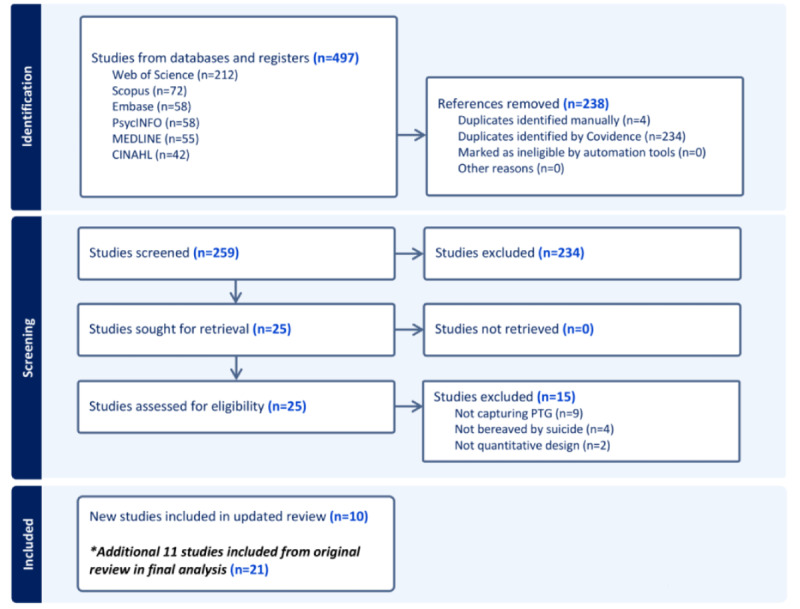
Methods: This protocol outlines the planned procedures of the updated systematic review and meta-analysis. MEDLINE, PsycINFO, Embase, CINAHL, Scopus, and Web of Science (Core Collection) were examined, and the search results were imported to Covidence, where title and abstract screenings and full-text screenings occurred. The inclusion and exclusion criteria for this updated review match those in the original review: (1) the study population must contain participants bereaved by suicide, (2) the study data must be quantitative, and (3) the study must report data on posttraumatic or stress-related growth. The original review conducted its search before 2019; thus, this updated review searched databases for the timeframe of January 2019 to January 2024. The updated meta-analysis will synthesize data from both the original and updated reviews to examine trends over time. The Newcastle-Ottawa Scale (NOS) will be used to assess publication quality. Random-effects meta-analyses will be conducted using RStudio (R Foundation for Statistical Computing).
Results: The review was funded in October 2023 and is currently in progress. Results are expected to be finalized in October 2024. There are 21 articles that have been included in the review and are being analyzed at this time. We aim to submit the full article for publication in December 2024.
Conclusions: The results of this updated systematic review and meta-analysis will be used to examine key relationships and findings regarding posttraumatic growth in individuals bereaved by suicide. The discussion will also investigate the findings of this updated review in comparison to the findings of the original review. Any differences would be highlighted. Limitations of the current review will be discussed, such as the quality of the articles included.





 京公网安备 11010802042870号
京ICP备2023020795号-1
京公网安备 11010802042870号
京ICP备2023020795号-1

 分享
分享
 求助内容:
求助内容: 应助结果提醒方式:
 扫码关注我们
