Long-Jie Xu , Qing-Qing Cao , Si-Han Deng , Wen-Jiang Dong , Qian Zou , Yong-Quan Xu , Xing-Hui Li
{"title":"钙离子对绿茶冲剂和没食子儿茶素没食子酸酯溶液收敛性的影响及其机制:体外口腔软摩擦学研究","authors":"Long-Jie Xu , Qing-Qing Cao , Si-Han Deng , Wen-Jiang Dong , Qian Zou , Yong-Quan Xu , Xing-Hui Li","doi":"10.1016/j.foodchem.2025.143442","DOIUrl":null,"url":null,"abstract":"<div><div>In this study, the effect of calcium ions (Ca<sup>2+</sup>) on the astringency sensation in green tea infusion was explored using sensory evaluation, <em>in vitro</em> oral soft tribology, and targeted metabolomics. Ca<sup>2+</sup> enhanced the astringency intensity (from 2 to 6) and the turbidity (from 10.0 to 83.3), and decreased the particle size (from 1468.0 to 817.65) in cold-brewing tea. Catechins influenced the astringent sensation in the presence of Ca<sup>2+</sup> and the content of (−)-Epicatechin, (−)-Epigallocatechin, and (−)-Epigallocatechin gallate (EGCG) solution in green tea infusion after oral processing all reduced. The friction coefficient of hot-brewed tea (μ, 1.6–2.8) was greater than that of cold-brewed tea (μ, 1.0–2.6), and EGCG increased with the enlarged Ca<sup>2+</sup> concentrations. Ca<sup>2+</sup> increased the astringency mainly through catechins and saliva lubrication. The <em>in vitro</em> soft oral tribology could be usefully explored the enlarged astringency sensation by Ca<sup>2+</sup>, and applied to the astringency regulation of beverages.</div></div>","PeriodicalId":318,"journal":{"name":"Food Chemistry","volume":"477 ","pages":"Article 143442"},"PeriodicalIF":10.4000,"publicationDate":"2025-06-15","publicationTypes":"Journal Article","fieldsOfStudy":null,"isOpenAccess":false,"openAccessPdf":"","citationCount":"0","resultStr":"{\"title\":\"Effect and mechanism of calcium ions on the astringency in green tea infusion and epigallocatechin gallate solution: An in vitro oral soft tribology study\",\"authors\":\"Long-Jie Xu , Qing-Qing Cao , Si-Han Deng , Wen-Jiang Dong , Qian Zou , Yong-Quan Xu , Xing-Hui Li\",\"doi\":\"10.1016/j.foodchem.2025.143442\",\"DOIUrl\":null,\"url\":null,\"abstract\":\"<div><div>In this study, the effect of calcium ions (Ca<sup>2+</sup>) on the astringency sensation in green tea infusion was explored using sensory evaluation, <em>in vitro</em> oral soft tribology, and targeted metabolomics. Ca<sup>2+</sup> enhanced the astringency intensity (from 2 to 6) and the turbidity (from 10.0 to 83.3), and decreased the particle size (from 1468.0 to 817.65) in cold-brewing tea. Catechins influenced the astringent sensation in the presence of Ca<sup>2+</sup> and the content of (−)-Epicatechin, (−)-Epigallocatechin, and (−)-Epigallocatechin gallate (EGCG) solution in green tea infusion after oral processing all reduced. The friction coefficient of hot-brewed tea (μ, 1.6–2.8) was greater than that of cold-brewed tea (μ, 1.0–2.6), and EGCG increased with the enlarged Ca<sup>2+</sup> concentrations. Ca<sup>2+</sup> increased the astringency mainly through catechins and saliva lubrication. The <em>in vitro</em> soft oral tribology could be usefully explored the enlarged astringency sensation by Ca<sup>2+</sup>, and applied to the astringency regulation of beverages.</div></div>\",\"PeriodicalId\":318,\"journal\":{\"name\":\"Food Chemistry\",\"volume\":\"477 \",\"pages\":\"Article 143442\"},\"PeriodicalIF\":10.4000,\"publicationDate\":\"2025-06-15\",\"publicationTypes\":\"Journal Article\",\"fieldsOfStudy\":null,\"isOpenAccess\":false,\"openAccessPdf\":\"\",\"citationCount\":\"0\",\"resultStr\":null,\"platform\":\"Semanticscholar\",\"paperid\":null,\"PeriodicalName\":\"Food Chemistry\",\"FirstCategoryId\":\"97\",\"ListUrlMain\":\"https://www.sciencedirect.com/science/article/pii/S0308814625006934\",\"RegionNum\":1,\"RegionCategory\":\"农林科学\",\"ArticlePicture\":[],\"TitleCN\":null,\"AbstractTextCN\":null,\"PMCID\":null,\"EPubDate\":\"2025/2/17 0:00:00\",\"PubModel\":\"Epub\",\"JCR\":\"Q1\",\"JCRName\":\"CHEMISTRY, APPLIED\",\"Score\":null,\"Total\":0}","platform":"Semanticscholar","paperid":null,"PeriodicalName":"Food Chemistry","FirstCategoryId":"97","ListUrlMain":"https://www.sciencedirect.com/science/article/pii/S0308814625006934","RegionNum":1,"RegionCategory":"农林科学","ArticlePicture":[],"TitleCN":null,"AbstractTextCN":null,"PMCID":null,"EPubDate":"2025/2/17 0:00:00","PubModel":"Epub","JCR":"Q1","JCRName":"CHEMISTRY, APPLIED","Score":null,"Total":0}
Effect and mechanism of calcium ions on the astringency in green tea infusion and epigallocatechin gallate solution: An in vitro oral soft tribology study
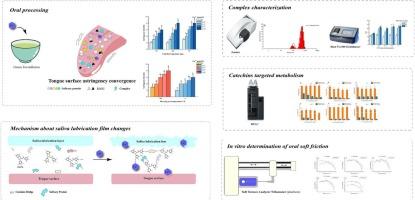
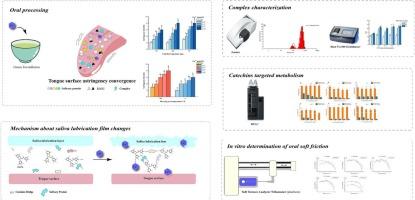
In this study, the effect of calcium ions (Ca2+) on the astringency sensation in green tea infusion was explored using sensory evaluation, in vitro oral soft tribology, and targeted metabolomics. Ca2+ enhanced the astringency intensity (from 2 to 6) and the turbidity (from 10.0 to 83.3), and decreased the particle size (from 1468.0 to 817.65) in cold-brewing tea. Catechins influenced the astringent sensation in the presence of Ca2+ and the content of (−)-Epicatechin, (−)-Epigallocatechin, and (−)-Epigallocatechin gallate (EGCG) solution in green tea infusion after oral processing all reduced. The friction coefficient of hot-brewed tea (μ, 1.6–2.8) was greater than that of cold-brewed tea (μ, 1.0–2.6), and EGCG increased with the enlarged Ca2+ concentrations. Ca2+ increased the astringency mainly through catechins and saliva lubrication. The in vitro soft oral tribology could be usefully explored the enlarged astringency sensation by Ca2+, and applied to the astringency regulation of beverages.
期刊介绍:
Food Chemistry publishes original research papers dealing with the advancement of the chemistry and biochemistry of foods or the analytical methods/ approach used. All papers should focus on the novelty of the research carried out.




 京公网安备 11010802042870号
京ICP备2023020795号-1
京公网安备 11010802042870号
京ICP备2023020795号-1

 分享
分享
 求助内容:
求助内容: 应助结果提醒方式:
 扫码关注我们
