Bio-based two-dimensional amphiphile with hierarchical self-assembly for enhancing pesticide utilization and reducing environmental risks
BACKGROUND
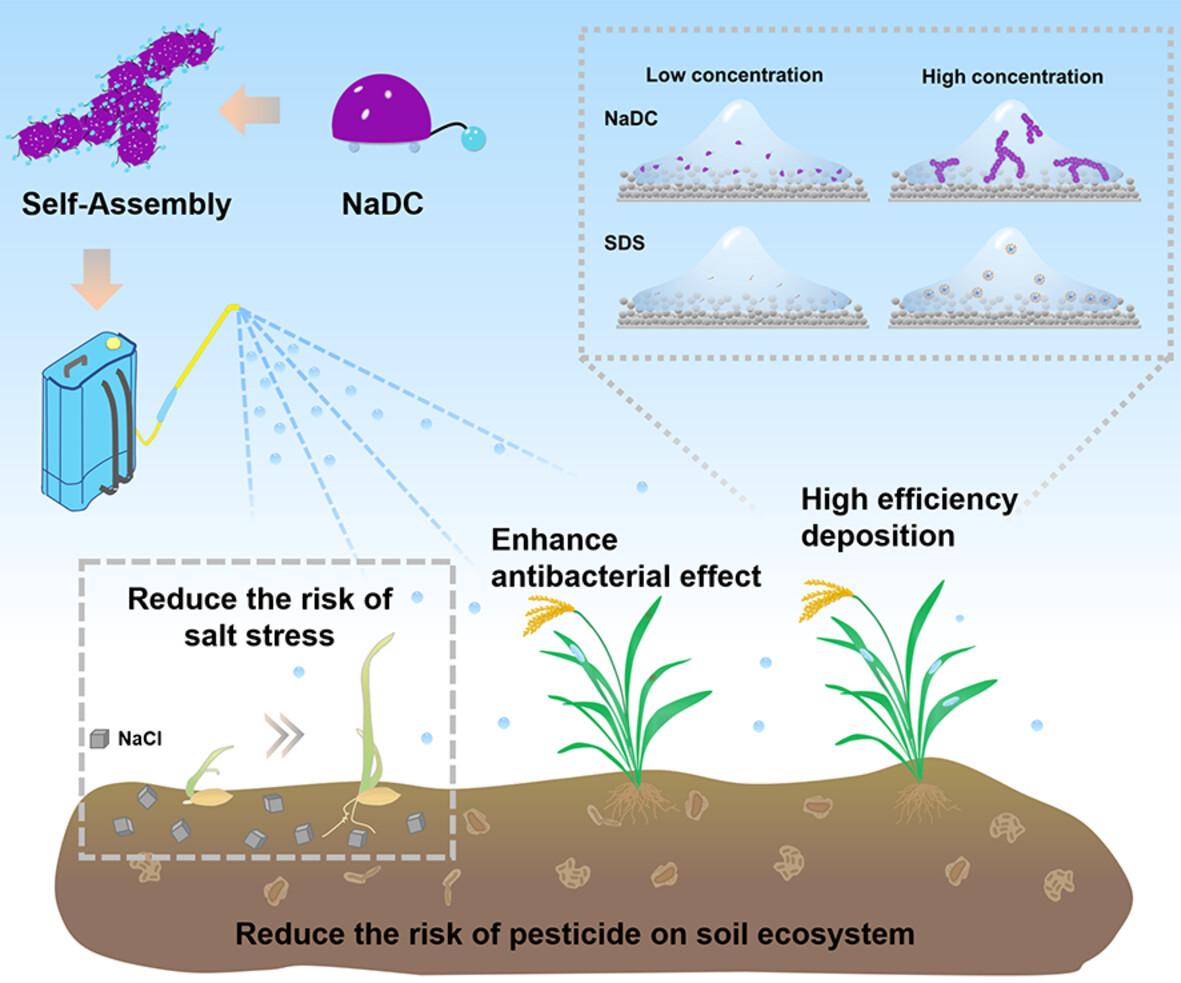
Biotic and abiotic stresses threaten crop growth and yield. Agrochemicals are an important way to mitigate biotic stress, while frequent low utilization and potential environmental risk affect their sustainable use. In order to improve pesticide utilization, it is common practice to add tank-mix adjuvants by reducing surface tension or forming spherical self-assembly. However, there is a lack of quantitative indicators to screen suitable molecules for sustainable application. In this work, critical factors based on physicochemical properties, and kinetic and thermodynamic parameters are applied to analyze regulatory mechanisms in dynamic processes, and ultimately to establish an integrated strategy for the management of stresses.
RESULTS
Compared with traditional one-dimensional linear amphiphilic molecules, two-dimensional bio-based amphiphilic molecules, especially sodium deoxycholate (NaDC), form self-assembly and could significantly promote the deposition of agrochemical droplets due to maximum energy dissipation. Meanwhile, NaDC increased the inhibition rate of pyraclostrobin against Rhizoctonia solani from 24.4% to about 100.0%, which was beneficial for pesticide resistance to biotic stress. In addition, NaDC could significantly mitigate the harmful effects of salt stress on Oryza sativa by increasing the germination rate of salt-stressed seeds by about 30%, and reducing the environmental risk of pesticides to soil microbial communities for eco-friendly crop protection.
期刊介绍:
Pest Management Science is the international journal of research and development in crop protection and pest control. Since its launch in 1970, the journal has become the premier forum for papers on the discovery, application, and impact on the environment of products and strategies designed for pest management.
Published for SCI by John Wiley & Sons Ltd.







 京公网安备 11010802042870号
京ICP备2023020795号-1
京公网安备 11010802042870号
京ICP备2023020795号-1

 分享
分享
 求助内容:
求助内容: 应助结果提醒方式:
 扫码关注我们
