{"title":"阳离子木聚糖改性沉淀型碳酸钙填料的制备、造纸用及对纸张性能影响的评价","authors":"Onur Unlu, Celil Atik, Ayse Aytac","doi":"10.1007/s10570-024-06357-y","DOIUrl":null,"url":null,"abstract":"<div><p>The use of mineral-based fillers in papermaking is a widely studied area due to their ability to enhance paper properties and reduce steam consumption during the drying stage of paper production. However, a significant challenge with high filler addition rates is the poor retention of these fillers within cellulose fibers. To address this issue, various studies have explored filler surface modifications. In this study, xylan (XS), which is readily available from pulp refining and is also environmentally friendly, renewable, sustainable, biodegradable, and biocompatible and is applied as a chemomechanical pulp-strengthening agent for papermaking was cationized through quaternization, and the surface of precipitated calcium carbonate (PCC) was modified accordingly for use in papermaking. The physical and chemical properties of paper samples containing modified PCC were compared to those with unmodified PCC. Results showed that the filler retention capability of the modified PCC was superior to that of unmodified PCC in cellulose fibers. The mechanical and optical properties of hand-sheet papers were also enhanced when filled with modified PCC, which is attributed to the improved compatibility between the cationic XS on the PCC surface and the cellulosic fibers. Enhanced mechanical and optical properties in the paper samples confirmed these improvements. Additionally, Fourier Transform Infrared Spectroscopy (FT-IR), Thermogravimetry (TG), X-ray Diffraction (XRD), X-ray Photoelectron Spectroscopy (XPS), and Field-Emission Scanning Electron Microscopy (FESEM) were employed to characterize the samples, verifying the successful attachment of XS to the PCC surface. This study proposes a novel approach to filler modification that mitigates the negative interactions between cellulosic fibers and fillers, offering a promising alternative for papermaking applications.</p></div>","PeriodicalId":511,"journal":{"name":"Cellulose","volume":"32 3","pages":"1867 - 1891"},"PeriodicalIF":4.8000,"publicationDate":"2024-12-31","publicationTypes":"Journal Article","fieldsOfStudy":null,"isOpenAccess":false,"openAccessPdf":"","citationCount":"0","resultStr":"{\"title\":\"Cationic xylan modified precipitated calcium carbonate filler: preparation, its use in papermaking and evaluation of influence on paper properties\",\"authors\":\"Onur Unlu, Celil Atik, Ayse Aytac\",\"doi\":\"10.1007/s10570-024-06357-y\",\"DOIUrl\":null,\"url\":null,\"abstract\":\"<div><p>The use of mineral-based fillers in papermaking is a widely studied area due to their ability to enhance paper properties and reduce steam consumption during the drying stage of paper production. However, a significant challenge with high filler addition rates is the poor retention of these fillers within cellulose fibers. To address this issue, various studies have explored filler surface modifications. In this study, xylan (XS), which is readily available from pulp refining and is also environmentally friendly, renewable, sustainable, biodegradable, and biocompatible and is applied as a chemomechanical pulp-strengthening agent for papermaking was cationized through quaternization, and the surface of precipitated calcium carbonate (PCC) was modified accordingly for use in papermaking. The physical and chemical properties of paper samples containing modified PCC were compared to those with unmodified PCC. Results showed that the filler retention capability of the modified PCC was superior to that of unmodified PCC in cellulose fibers. The mechanical and optical properties of hand-sheet papers were also enhanced when filled with modified PCC, which is attributed to the improved compatibility between the cationic XS on the PCC surface and the cellulosic fibers. Enhanced mechanical and optical properties in the paper samples confirmed these improvements. Additionally, Fourier Transform Infrared Spectroscopy (FT-IR), Thermogravimetry (TG), X-ray Diffraction (XRD), X-ray Photoelectron Spectroscopy (XPS), and Field-Emission Scanning Electron Microscopy (FESEM) were employed to characterize the samples, verifying the successful attachment of XS to the PCC surface. This study proposes a novel approach to filler modification that mitigates the negative interactions between cellulosic fibers and fillers, offering a promising alternative for papermaking applications.</p></div>\",\"PeriodicalId\":511,\"journal\":{\"name\":\"Cellulose\",\"volume\":\"32 3\",\"pages\":\"1867 - 1891\"},\"PeriodicalIF\":4.8000,\"publicationDate\":\"2024-12-31\",\"publicationTypes\":\"Journal Article\",\"fieldsOfStudy\":null,\"isOpenAccess\":false,\"openAccessPdf\":\"\",\"citationCount\":\"0\",\"resultStr\":null,\"platform\":\"Semanticscholar\",\"paperid\":null,\"PeriodicalName\":\"Cellulose\",\"FirstCategoryId\":\"88\",\"ListUrlMain\":\"https://link.springer.com/article/10.1007/s10570-024-06357-y\",\"RegionNum\":2,\"RegionCategory\":\"工程技术\",\"ArticlePicture\":[],\"TitleCN\":null,\"AbstractTextCN\":null,\"PMCID\":null,\"EPubDate\":\"\",\"PubModel\":\"\",\"JCR\":\"Q1\",\"JCRName\":\"MATERIALS SCIENCE, PAPER & WOOD\",\"Score\":null,\"Total\":0}","platform":"Semanticscholar","paperid":null,"PeriodicalName":"Cellulose","FirstCategoryId":"88","ListUrlMain":"https://link.springer.com/article/10.1007/s10570-024-06357-y","RegionNum":2,"RegionCategory":"工程技术","ArticlePicture":[],"TitleCN":null,"AbstractTextCN":null,"PMCID":null,"EPubDate":"","PubModel":"","JCR":"Q1","JCRName":"MATERIALS SCIENCE, PAPER & WOOD","Score":null,"Total":0}
Cationic xylan modified precipitated calcium carbonate filler: preparation, its use in papermaking and evaluation of influence on paper properties
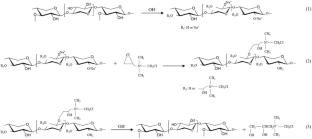
The use of mineral-based fillers in papermaking is a widely studied area due to their ability to enhance paper properties and reduce steam consumption during the drying stage of paper production. However, a significant challenge with high filler addition rates is the poor retention of these fillers within cellulose fibers. To address this issue, various studies have explored filler surface modifications. In this study, xylan (XS), which is readily available from pulp refining and is also environmentally friendly, renewable, sustainable, biodegradable, and biocompatible and is applied as a chemomechanical pulp-strengthening agent for papermaking was cationized through quaternization, and the surface of precipitated calcium carbonate (PCC) was modified accordingly for use in papermaking. The physical and chemical properties of paper samples containing modified PCC were compared to those with unmodified PCC. Results showed that the filler retention capability of the modified PCC was superior to that of unmodified PCC in cellulose fibers. The mechanical and optical properties of hand-sheet papers were also enhanced when filled with modified PCC, which is attributed to the improved compatibility between the cationic XS on the PCC surface and the cellulosic fibers. Enhanced mechanical and optical properties in the paper samples confirmed these improvements. Additionally, Fourier Transform Infrared Spectroscopy (FT-IR), Thermogravimetry (TG), X-ray Diffraction (XRD), X-ray Photoelectron Spectroscopy (XPS), and Field-Emission Scanning Electron Microscopy (FESEM) were employed to characterize the samples, verifying the successful attachment of XS to the PCC surface. This study proposes a novel approach to filler modification that mitigates the negative interactions between cellulosic fibers and fillers, offering a promising alternative for papermaking applications.
期刊介绍:
Cellulose is an international journal devoted to the dissemination of research and scientific and technological progress in the field of cellulose and related naturally occurring polymers. The journal is concerned with the pure and applied science of cellulose and related materials, and also with the development of relevant new technologies. This includes the chemistry, biochemistry, physics and materials science of cellulose and its sources, including wood and other biomass resources, and their derivatives. Coverage extends to the conversion of these polymers and resources into manufactured goods, such as pulp, paper, textiles, and manufactured as well natural fibers, and to the chemistry of materials used in their processing. Cellulose publishes review articles, research papers, and technical notes.




 京公网安备 11010802042870号
京ICP备2023020795号-1
京公网安备 11010802042870号
京ICP备2023020795号-1

 分享
分享
 求助内容:
求助内容: 应助结果提醒方式:
 扫码关注我们
