Senwei Jiang, Minjuan Ye, Jing Wan, Qingjian Ye, Suli Qiu, Yuebo Yang, Xiaomao Li
{"title":"Gelsolin超家族基因在子宫内膜癌诊断、预后及免疫微环境调控中的意义","authors":"Senwei Jiang, Minjuan Ye, Jing Wan, Qingjian Ye, Suli Qiu, Yuebo Yang, Xiaomao Li","doi":"10.1002/cam4.70584","DOIUrl":null,"url":null,"abstract":"<div>\n \n \n <section>\n \n <h3> Background</h3>\n \n <p>Previously, anti-CTLA4 and anti-PD-1/PD-L1 immunotherapies have shown limited efficacy in MSI-H/MMR-D endometrial cancer, leading to poor clinical outcomes. The gelsolin superfamily, which includes <i>GSN</i>, <i>SCIN</i>, <i>VILL</i>, <i>VIL1</i>, <i>CAPG</i>, <i>AVIL</i>, <i>SVIL</i>, and <i>FLII</i>, plays crucial roles in cell motility and gene regulation.</p>\n </section>\n \n <section>\n \n <h3> Aims</h3>\n \n <p>The objective of this study is to explore the potential therapeutic and prognostic implications of the gelsolin superfamily in EC.</p>\n </section>\n \n <section>\n \n <h3> Materials & Methods</h3>\n \n <p>Data from TCGA, GEPIA, THPA, UALCAN, and Kaplan–Meier plotter databases were analyzed to investigate the expression and clinical relevance of gelsolin superfamily members. Co-expression networks of the gelsolin superfamily were assessed using LinkedOmics, GeneMANIA, and NetworkAnalyst. The relationship between gelsolin superfamily and immune cell infiltration was investigated using TIMER, ImmuCellAI, and GEPIA.</p>\n </section>\n \n <section>\n \n <h3> Results</h3>\n \n <p>We found that high expressions of <i>CAPG</i>, <i>AVIL</i>, and <i>SVIL</i> were associated with poor prognosis, while high expressions of <i>GSN</i> and <i>FLII</i> were linked to better outcomes in EC. Functional enrichment analysis indicated the involvement of gelsolin superfamily members in pathways related to estrogen response, MYC targets, epithelial–mesenchymal transition, TGF beta signaling, MTORC1 signaling, oxidative phosphorylation, inflammatory response, and IL6-JAK-STAT3 signaling. Furthermore, gelsolin superfamily members demonstrated strong correlations with the levels of monocytes, natural killer T, naive CD4+ T, follicular helper T, and central memory T in EC. In vitro studies showed that silencing CAPG and FLII could inhibit proliferation and metastasis in endometrial cancer cell lines.</p>\n </section>\n \n <section>\n \n <h3> Conclusion</h3>\n \n <p>These findings indicate the significant association of gelsolin superfamily members with prognosis and immunological status in endometrial cancer.</p>\n </section>\n </div>","PeriodicalId":139,"journal":{"name":"Cancer Medicine","volume":"14 4","pages":""},"PeriodicalIF":3.5000,"publicationDate":"2025-02-18","publicationTypes":"Journal Article","fieldsOfStudy":null,"isOpenAccess":false,"openAccessPdf":"https://onlinelibrary.wiley.com/doi/epdf/10.1002/cam4.70584","citationCount":"0","resultStr":"{\"title\":\"Significance of Gelsolin Superfamily Genes in Diagnosis, Prognosis and Immune Microenvironment Regulation for Endometrial Cancer\",\"authors\":\"Senwei Jiang, Minjuan Ye, Jing Wan, Qingjian Ye, Suli Qiu, Yuebo Yang, Xiaomao Li\",\"doi\":\"10.1002/cam4.70584\",\"DOIUrl\":null,\"url\":null,\"abstract\":\"<div>\\n \\n \\n <section>\\n \\n <h3> Background</h3>\\n \\n <p>Previously, anti-CTLA4 and anti-PD-1/PD-L1 immunotherapies have shown limited efficacy in MSI-H/MMR-D endometrial cancer, leading to poor clinical outcomes. The gelsolin superfamily, which includes <i>GSN</i>, <i>SCIN</i>, <i>VILL</i>, <i>VIL1</i>, <i>CAPG</i>, <i>AVIL</i>, <i>SVIL</i>, and <i>FLII</i>, plays crucial roles in cell motility and gene regulation.</p>\\n </section>\\n \\n <section>\\n \\n <h3> Aims</h3>\\n \\n <p>The objective of this study is to explore the potential therapeutic and prognostic implications of the gelsolin superfamily in EC.</p>\\n </section>\\n \\n <section>\\n \\n <h3> Materials & Methods</h3>\\n \\n <p>Data from TCGA, GEPIA, THPA, UALCAN, and Kaplan–Meier plotter databases were analyzed to investigate the expression and clinical relevance of gelsolin superfamily members. Co-expression networks of the gelsolin superfamily were assessed using LinkedOmics, GeneMANIA, and NetworkAnalyst. The relationship between gelsolin superfamily and immune cell infiltration was investigated using TIMER, ImmuCellAI, and GEPIA.</p>\\n </section>\\n \\n <section>\\n \\n <h3> Results</h3>\\n \\n <p>We found that high expressions of <i>CAPG</i>, <i>AVIL</i>, and <i>SVIL</i> were associated with poor prognosis, while high expressions of <i>GSN</i> and <i>FLII</i> were linked to better outcomes in EC. Functional enrichment analysis indicated the involvement of gelsolin superfamily members in pathways related to estrogen response, MYC targets, epithelial–mesenchymal transition, TGF beta signaling, MTORC1 signaling, oxidative phosphorylation, inflammatory response, and IL6-JAK-STAT3 signaling. Furthermore, gelsolin superfamily members demonstrated strong correlations with the levels of monocytes, natural killer T, naive CD4+ T, follicular helper T, and central memory T in EC. In vitro studies showed that silencing CAPG and FLII could inhibit proliferation and metastasis in endometrial cancer cell lines.</p>\\n </section>\\n \\n <section>\\n \\n <h3> Conclusion</h3>\\n \\n <p>These findings indicate the significant association of gelsolin superfamily members with prognosis and immunological status in endometrial cancer.</p>\\n </section>\\n </div>\",\"PeriodicalId\":139,\"journal\":{\"name\":\"Cancer Medicine\",\"volume\":\"14 4\",\"pages\":\"\"},\"PeriodicalIF\":3.5000,\"publicationDate\":\"2025-02-18\",\"publicationTypes\":\"Journal Article\",\"fieldsOfStudy\":null,\"isOpenAccess\":false,\"openAccessPdf\":\"https://onlinelibrary.wiley.com/doi/epdf/10.1002/cam4.70584\",\"citationCount\":\"0\",\"resultStr\":null,\"platform\":\"Semanticscholar\",\"paperid\":null,\"PeriodicalName\":\"Cancer Medicine\",\"FirstCategoryId\":\"3\",\"ListUrlMain\":\"https://onlinelibrary.wiley.com/doi/10.1002/cam4.70584\",\"RegionNum\":2,\"RegionCategory\":\"医学\",\"ArticlePicture\":[],\"TitleCN\":null,\"AbstractTextCN\":null,\"PMCID\":null,\"EPubDate\":\"\",\"PubModel\":\"\",\"JCR\":\"Q2\",\"JCRName\":\"ONCOLOGY\",\"Score\":null,\"Total\":0}","platform":"Semanticscholar","paperid":null,"PeriodicalName":"Cancer Medicine","FirstCategoryId":"3","ListUrlMain":"https://onlinelibrary.wiley.com/doi/10.1002/cam4.70584","RegionNum":2,"RegionCategory":"医学","ArticlePicture":[],"TitleCN":null,"AbstractTextCN":null,"PMCID":null,"EPubDate":"","PubModel":"","JCR":"Q2","JCRName":"ONCOLOGY","Score":null,"Total":0}
Significance of Gelsolin Superfamily Genes in Diagnosis, Prognosis and Immune Microenvironment Regulation for Endometrial Cancer
Background
Previously, anti-CTLA4 and anti-PD-1/PD-L1 immunotherapies have shown limited efficacy in MSI-H/MMR-D endometrial cancer, leading to poor clinical outcomes. The gelsolin superfamily, which includes GSN, SCIN, VILL, VIL1, CAPG, AVIL, SVIL, and FLII, plays crucial roles in cell motility and gene regulation.
Aims
The objective of this study is to explore the potential therapeutic and prognostic implications of the gelsolin superfamily in EC.
Materials & Methods
Data from TCGA, GEPIA, THPA, UALCAN, and Kaplan–Meier plotter databases were analyzed to investigate the expression and clinical relevance of gelsolin superfamily members. Co-expression networks of the gelsolin superfamily were assessed using LinkedOmics, GeneMANIA, and NetworkAnalyst. The relationship between gelsolin superfamily and immune cell infiltration was investigated using TIMER, ImmuCellAI, and GEPIA.
Results
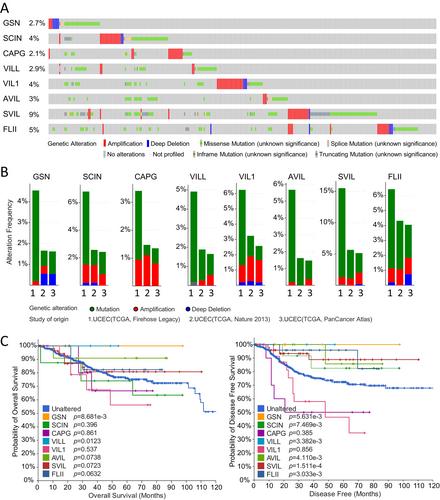
We found that high expressions of CAPG, AVIL, and SVIL were associated with poor prognosis, while high expressions of GSN and FLII were linked to better outcomes in EC. Functional enrichment analysis indicated the involvement of gelsolin superfamily members in pathways related to estrogen response, MYC targets, epithelial–mesenchymal transition, TGF beta signaling, MTORC1 signaling, oxidative phosphorylation, inflammatory response, and IL6-JAK-STAT3 signaling. Furthermore, gelsolin superfamily members demonstrated strong correlations with the levels of monocytes, natural killer T, naive CD4+ T, follicular helper T, and central memory T in EC. In vitro studies showed that silencing CAPG and FLII could inhibit proliferation and metastasis in endometrial cancer cell lines.
Conclusion
These findings indicate the significant association of gelsolin superfamily members with prognosis and immunological status in endometrial cancer.
期刊介绍:
Cancer Medicine is a peer-reviewed, open access, interdisciplinary journal providing rapid publication of research from global biomedical researchers across the cancer sciences. The journal will consider submissions from all oncologic specialties, including, but not limited to, the following areas:
Clinical Cancer Research
Translational research ∙ clinical trials ∙ chemotherapy ∙ radiation therapy ∙ surgical therapy ∙ clinical observations ∙ clinical guidelines ∙ genetic consultation ∙ ethical considerations
Cancer Biology:
Molecular biology ∙ cellular biology ∙ molecular genetics ∙ genomics ∙ immunology ∙ epigenetics ∙ metabolic studies ∙ proteomics ∙ cytopathology ∙ carcinogenesis ∙ drug discovery and delivery.
Cancer Prevention:
Behavioral science ∙ psychosocial studies ∙ screening ∙ nutrition ∙ epidemiology and prevention ∙ community outreach.
Bioinformatics:
Gene expressions profiles ∙ gene regulation networks ∙ genome bioinformatics ∙ pathwayanalysis ∙ prognostic biomarkers.
Cancer Medicine publishes original research articles, systematic reviews, meta-analyses, and research methods papers, along with invited editorials and commentaries. Original research papers must report well-conducted research with conclusions supported by the data presented in the paper.




 京公网安备 11010802042870号
京ICP备2023020795号-1
京公网安备 11010802042870号
京ICP备2023020795号-1

 分享
分享
 求助内容:
求助内容: 应助结果提醒方式:
 扫码关注我们
