Xinlei Lu, Kaiyu Chen, Ye Xuan, Mengting Shen, Weiping Lei, Yaqin Huang, Jianliang Sun
{"title":"测定羟考酮预防经轴向麻醉剖宫产孕妇围手术期寒战的MEC90:一项偏置硬币上下序贯分配试验","authors":"Xinlei Lu, Kaiyu Chen, Ye Xuan, Mengting Shen, Weiping Lei, Yaqin Huang, Jianliang Sun","doi":"10.2147/DDDT.S497239","DOIUrl":null,"url":null,"abstract":"<p><strong>Background: </strong>Perioperative shivering is a common adverse reaction to neuraxial anaesthesia. Intravenous oxycodone can be used to prevent shivering. However, few trials have been conducted on the use of oxycodone to prevent shivering, and the optimal dose is unknown. This study aimed to determine the optimal dose (90% minimum effective concentration [MEC90]) of intraoperative oxycodone to prevent shivering during caesarean section.</p><p><strong>Methods: </strong>This study was designed by the biased-coin up-and-down method. We recruited pregnant women who underwent caesarean section under combined spinal-epidural anaesthesia. Oxycodone was administered intravenously after the delivery of the foetus. The initial dose was 80 µg/kg, and subsequent dose adjustments were determined by up-and-down sequential allocation using a biased-coin design based on the response of the previous patient. The primary outcome was the MEC90 for oxycodone injection based on the success or failure of the shivering-preventing dose.</p><p><strong>Results: </strong>Fifty patients were enrolled in the study. The oxycodone dose ranged from 80 to 95 µg/kg. The estimated MEC90 (95% confidence interval [CI]) for preventing shivering was 88.1 µg/kg (81.5-92.5 µg/kg). The patient's postoperative temperature was 36.5 ± 0.2 °C. The incidence of intraoperative traction pain was 12%. The 5-min and 30-min Ramsay sedation scores were 3 (3-4) and 3 (3-3), respectively. The 2-h and 6-h postoperative VAS scores were 3 (2-3) and 4 (3-5), respectively. The patient's anaesthesia satisfaction score was 5 (4-5). The incidence of respiratory depression was 2%, and the incidence of nausea and vomiting was 16%.</p><p><strong>Conclusion: </strong>The MEC90 of intraoperative intravenous oxycodone for the prevention of shivering in women undergoing caesarean section with neuraxial anaesthesia was 88.1 µg/kg (95% CI: 81.5-92.5 µg/kg).</p>","PeriodicalId":11290,"journal":{"name":"Drug Design, Development and Therapy","volume":"19 ","pages":"945-954"},"PeriodicalIF":5.1000,"publicationDate":"2025-02-11","publicationTypes":"Journal Article","fieldsOfStudy":null,"isOpenAccess":false,"openAccessPdf":"https://www.ncbi.nlm.nih.gov/pmc/articles/PMC11829597/pdf/","citationCount":"0","resultStr":"{\"title\":\"Determination of the MEC90 of Oxycodone for Preventing Perioperative Shivering in Pregnant Patients Undergoing Caesarean Delivery with Neuraxial Anaesthesia: A Biased-Coin up-and-Down Sequential Allocation Trial.\",\"authors\":\"Xinlei Lu, Kaiyu Chen, Ye Xuan, Mengting Shen, Weiping Lei, Yaqin Huang, Jianliang Sun\",\"doi\":\"10.2147/DDDT.S497239\",\"DOIUrl\":null,\"url\":null,\"abstract\":\"<p><strong>Background: </strong>Perioperative shivering is a common adverse reaction to neuraxial anaesthesia. Intravenous oxycodone can be used to prevent shivering. However, few trials have been conducted on the use of oxycodone to prevent shivering, and the optimal dose is unknown. This study aimed to determine the optimal dose (90% minimum effective concentration [MEC90]) of intraoperative oxycodone to prevent shivering during caesarean section.</p><p><strong>Methods: </strong>This study was designed by the biased-coin up-and-down method. We recruited pregnant women who underwent caesarean section under combined spinal-epidural anaesthesia. Oxycodone was administered intravenously after the delivery of the foetus. The initial dose was 80 µg/kg, and subsequent dose adjustments were determined by up-and-down sequential allocation using a biased-coin design based on the response of the previous patient. The primary outcome was the MEC90 for oxycodone injection based on the success or failure of the shivering-preventing dose.</p><p><strong>Results: </strong>Fifty patients were enrolled in the study. The oxycodone dose ranged from 80 to 95 µg/kg. The estimated MEC90 (95% confidence interval [CI]) for preventing shivering was 88.1 µg/kg (81.5-92.5 µg/kg). The patient's postoperative temperature was 36.5 ± 0.2 °C. The incidence of intraoperative traction pain was 12%. The 5-min and 30-min Ramsay sedation scores were 3 (3-4) and 3 (3-3), respectively. The 2-h and 6-h postoperative VAS scores were 3 (2-3) and 4 (3-5), respectively. The patient's anaesthesia satisfaction score was 5 (4-5). The incidence of respiratory depression was 2%, and the incidence of nausea and vomiting was 16%.</p><p><strong>Conclusion: </strong>The MEC90 of intraoperative intravenous oxycodone for the prevention of shivering in women undergoing caesarean section with neuraxial anaesthesia was 88.1 µg/kg (95% CI: 81.5-92.5 µg/kg).</p>\",\"PeriodicalId\":11290,\"journal\":{\"name\":\"Drug Design, Development and Therapy\",\"volume\":\"19 \",\"pages\":\"945-954\"},\"PeriodicalIF\":5.1000,\"publicationDate\":\"2025-02-11\",\"publicationTypes\":\"Journal Article\",\"fieldsOfStudy\":null,\"isOpenAccess\":false,\"openAccessPdf\":\"https://www.ncbi.nlm.nih.gov/pmc/articles/PMC11829597/pdf/\",\"citationCount\":\"0\",\"resultStr\":null,\"platform\":\"Semanticscholar\",\"paperid\":null,\"PeriodicalName\":\"Drug Design, Development and Therapy\",\"FirstCategoryId\":\"3\",\"ListUrlMain\":\"https://doi.org/10.2147/DDDT.S497239\",\"RegionNum\":2,\"RegionCategory\":\"医学\",\"ArticlePicture\":[],\"TitleCN\":null,\"AbstractTextCN\":null,\"PMCID\":null,\"EPubDate\":\"2025/1/1 0:00:00\",\"PubModel\":\"eCollection\",\"JCR\":\"Q1\",\"JCRName\":\"CHEMISTRY, MEDICINAL\",\"Score\":null,\"Total\":0}","platform":"Semanticscholar","paperid":null,"PeriodicalName":"Drug Design, Development and Therapy","FirstCategoryId":"3","ListUrlMain":"https://doi.org/10.2147/DDDT.S497239","RegionNum":2,"RegionCategory":"医学","ArticlePicture":[],"TitleCN":null,"AbstractTextCN":null,"PMCID":null,"EPubDate":"2025/1/1 0:00:00","PubModel":"eCollection","JCR":"Q1","JCRName":"CHEMISTRY, MEDICINAL","Score":null,"Total":0}
引用次数: 0
摘要
背景:围手术期寒战是轴突麻醉的常见不良反应。静脉注射羟考酮可以防止发抖。然而,很少有关于使用羟考酮预防寒战的试验,最佳剂量也是未知的。本研究旨在确定术中羟考酮预防剖宫产术中寒战的最佳剂量(90%最小有效浓度[MEC90])。方法:采用投币上下法设计。我们招募了在脊髓-硬膜外联合麻醉下剖宫产的孕妇。胎儿分娩后静脉注射羟考酮。初始剂量为80µg/kg,后续剂量调整采用基于前一位患者反应的偏硬币设计,通过上下顺序分配确定。主要观察指标是羟考酮注射液的MEC90评分,以预防寒颤剂量的成功或失败为基础。结果:50例患者入组研究。羟考酮剂量范围为80 ~ 95µg/kg。预防寒战的估计MEC90(95%置信区间[CI])为88.1µg/kg(81.5-92.5µg/kg)。患者术后体温为36.5±0.2℃。术中牵引疼痛发生率为12%。5 min和30 min Ramsay镇静评分分别为3(3-4)和3(3-3)。术后2 h和6 h VAS评分分别为3(2-3)和4(3-5)。患者麻醉满意度评分为5分(4-5分)。呼吸抑制发生率为2%,恶心呕吐发生率为16%。结论:术中静脉注射羟考酮预防剖宫产经轴麻患者寒战的MEC90为88.1µg/kg (95% CI: 81.5 ~ 92.5µg/kg)。
Determination of the MEC90 of Oxycodone for Preventing Perioperative Shivering in Pregnant Patients Undergoing Caesarean Delivery with Neuraxial Anaesthesia: A Biased-Coin up-and-Down Sequential Allocation Trial.
Background: Perioperative shivering is a common adverse reaction to neuraxial anaesthesia. Intravenous oxycodone can be used to prevent shivering. However, few trials have been conducted on the use of oxycodone to prevent shivering, and the optimal dose is unknown. This study aimed to determine the optimal dose (90% minimum effective concentration [MEC90]) of intraoperative oxycodone to prevent shivering during caesarean section.
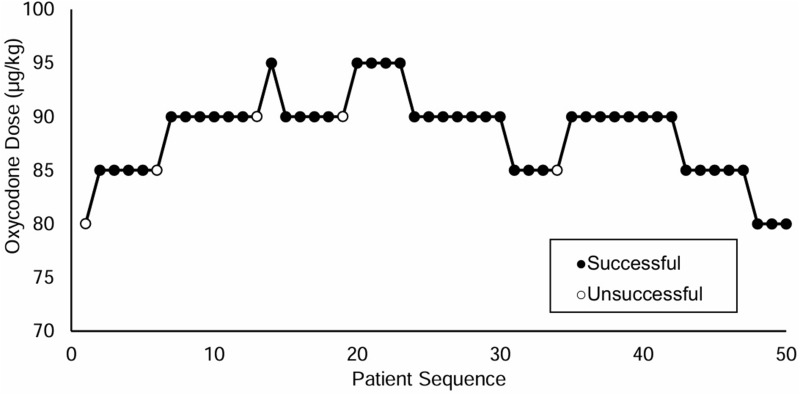
Methods: This study was designed by the biased-coin up-and-down method. We recruited pregnant women who underwent caesarean section under combined spinal-epidural anaesthesia. Oxycodone was administered intravenously after the delivery of the foetus. The initial dose was 80 µg/kg, and subsequent dose adjustments were determined by up-and-down sequential allocation using a biased-coin design based on the response of the previous patient. The primary outcome was the MEC90 for oxycodone injection based on the success or failure of the shivering-preventing dose.
Results: Fifty patients were enrolled in the study. The oxycodone dose ranged from 80 to 95 µg/kg. The estimated MEC90 (95% confidence interval [CI]) for preventing shivering was 88.1 µg/kg (81.5-92.5 µg/kg). The patient's postoperative temperature was 36.5 ± 0.2 °C. The incidence of intraoperative traction pain was 12%. The 5-min and 30-min Ramsay sedation scores were 3 (3-4) and 3 (3-3), respectively. The 2-h and 6-h postoperative VAS scores were 3 (2-3) and 4 (3-5), respectively. The patient's anaesthesia satisfaction score was 5 (4-5). The incidence of respiratory depression was 2%, and the incidence of nausea and vomiting was 16%.
Conclusion: The MEC90 of intraoperative intravenous oxycodone for the prevention of shivering in women undergoing caesarean section with neuraxial anaesthesia was 88.1 µg/kg (95% CI: 81.5-92.5 µg/kg).
期刊介绍:
Drug Design, Development and Therapy is an international, peer-reviewed, open access journal that spans the spectrum of drug design, discovery and development through to clinical applications.
The journal is characterized by the rapid reporting of high-quality original research, reviews, expert opinions, commentary and clinical studies in all therapeutic areas.
Specific topics covered by the journal include:
Drug target identification and validation
Phenotypic screening and target deconvolution
Biochemical analyses of drug targets and their pathways
New methods or relevant applications in molecular/drug design and computer-aided drug discovery*
Design, synthesis, and biological evaluation of novel biologically active compounds (including diagnostics or chemical probes)
Structural or molecular biological studies elucidating molecular recognition processes
Fragment-based drug discovery
Pharmaceutical/red biotechnology
Isolation, structural characterization, (bio)synthesis, bioengineering and pharmacological evaluation of natural products**
Distribution, pharmacokinetics and metabolic transformations of drugs or biologically active compounds in drug development
Drug delivery and formulation (design and characterization of dosage forms, release mechanisms and in vivo testing)
Preclinical development studies
Translational animal models
Mechanisms of action and signalling pathways
Toxicology
Gene therapy, cell therapy and immunotherapy
Personalized medicine and pharmacogenomics
Clinical drug evaluation
Patient safety and sustained use of medicines.






 京公网安备 11010802042870号
京ICP备2023020795号-1
京公网安备 11010802042870号
京ICP备2023020795号-1

 分享
分享
 求助内容:
求助内容: 应助结果提醒方式:
 扫码关注我们
