Chiara Giordano, Simona Carlomagno, Michela Falco, Claudia Cantoni, Massimo Vitale, Ignazio Caruana, Johannes Dirks, Alberto Serio, Letizia Muccio, Giulia Bartalucci, Alessandra Bo, Franco Locatelli, Cristina Bottino, Simona Sivori, Mariella Della Chiesa
{"title":"cd94驱动的高功能适应性NKG2C+ NKG2A- CD57+ NK细胞的体外扩增","authors":"Chiara Giordano, Simona Carlomagno, Michela Falco, Claudia Cantoni, Massimo Vitale, Ignazio Caruana, Johannes Dirks, Alberto Serio, Letizia Muccio, Giulia Bartalucci, Alessandra Bo, Franco Locatelli, Cristina Bottino, Simona Sivori, Mariella Della Chiesa","doi":"10.3389/fimmu.2025.1481745","DOIUrl":null,"url":null,"abstract":"<p><strong>Background: </strong>Adaptive human natural killer (NK) cells are an NK cell subpopulation arising upon cytomegalovirus (CMV) infection. They are characterized by CD94/NKG2C expression, a mature CD57<sup>+</sup>KIR<sup>+</sup>NKG2A<sup>-</sup> phenotype, a prolonged lifespan, and remarkable antitumor functions. In light of these features, adaptive NK cells represent suitable candidate to design next-generation therapies, based on their enhanced effector function which could be further boosted by Chimeric Antigen Receptors-engineering, or the combination with cell engagers. For therapeutic approaches, however, it is key to generate large numbers of functional cells.</p><p><strong>Purpose: </strong>We developed a method to efficiently expand adaptive NK cells from NK-enriched cell preparations derived from the peripheral blood of selected CMV-seropositive healthy donors. The method is based on the use of an anti-CD94 monoclonal antibody (mAb) combined with IL-2 or IL-15.</p><p><strong>Results: </strong>By setting this method we were able to expand high numbers of NK cells showing the typical adaptive phenotype, CD94/NKG2C<sup>+</sup> CD94/NKG2A<sup>-</sup> CD57<sup>+</sup>, and expressing a single self-inhibitory KIR. Expanded cells maintained the CMV-induced molecular signature, exhibited high ADCC capabilities and degranulation against a HLA-E<sup>+</sup> target. Importantly, mAb-expanded adaptive NK cells did not upregulate PD-1 or other regulatory immune checkpoints that could dampen their function.</p><p><strong>Conclusions: </strong>By this study we provide hints to improve previous expansion methods, by eliminating the use of genetically modified cells as stimulators, and obtaining effectors not expressing unwanted inhibitory receptors. This new protocol for expanding functional adaptive NK cells is safe, cost-effective and easily implementable in a GMP context, suitable for innovative immunotherapeutic purposes.</p>","PeriodicalId":12622,"journal":{"name":"Frontiers in Immunology","volume":"16 ","pages":"1481745"},"PeriodicalIF":5.9000,"publicationDate":"2025-01-31","publicationTypes":"Journal Article","fieldsOfStudy":null,"isOpenAccess":false,"openAccessPdf":"https://www.ncbi.nlm.nih.gov/pmc/articles/PMC11825780/pdf/","citationCount":"0","resultStr":"{\"title\":\"CD94-driven <i>in vitro</i> expansion of highly functional adaptive NKG2C<sup>+</sup> NKG2A<sup>-</sup> CD57<sup>+</sup> NK cells from CMV<sup>+</sup> healthy donors.\",\"authors\":\"Chiara Giordano, Simona Carlomagno, Michela Falco, Claudia Cantoni, Massimo Vitale, Ignazio Caruana, Johannes Dirks, Alberto Serio, Letizia Muccio, Giulia Bartalucci, Alessandra Bo, Franco Locatelli, Cristina Bottino, Simona Sivori, Mariella Della Chiesa\",\"doi\":\"10.3389/fimmu.2025.1481745\",\"DOIUrl\":null,\"url\":null,\"abstract\":\"<p><strong>Background: </strong>Adaptive human natural killer (NK) cells are an NK cell subpopulation arising upon cytomegalovirus (CMV) infection. They are characterized by CD94/NKG2C expression, a mature CD57<sup>+</sup>KIR<sup>+</sup>NKG2A<sup>-</sup> phenotype, a prolonged lifespan, and remarkable antitumor functions. In light of these features, adaptive NK cells represent suitable candidate to design next-generation therapies, based on their enhanced effector function which could be further boosted by Chimeric Antigen Receptors-engineering, or the combination with cell engagers. For therapeutic approaches, however, it is key to generate large numbers of functional cells.</p><p><strong>Purpose: </strong>We developed a method to efficiently expand adaptive NK cells from NK-enriched cell preparations derived from the peripheral blood of selected CMV-seropositive healthy donors. The method is based on the use of an anti-CD94 monoclonal antibody (mAb) combined with IL-2 or IL-15.</p><p><strong>Results: </strong>By setting this method we were able to expand high numbers of NK cells showing the typical adaptive phenotype, CD94/NKG2C<sup>+</sup> CD94/NKG2A<sup>-</sup> CD57<sup>+</sup>, and expressing a single self-inhibitory KIR. Expanded cells maintained the CMV-induced molecular signature, exhibited high ADCC capabilities and degranulation against a HLA-E<sup>+</sup> target. Importantly, mAb-expanded adaptive NK cells did not upregulate PD-1 or other regulatory immune checkpoints that could dampen their function.</p><p><strong>Conclusions: </strong>By this study we provide hints to improve previous expansion methods, by eliminating the use of genetically modified cells as stimulators, and obtaining effectors not expressing unwanted inhibitory receptors. This new protocol for expanding functional adaptive NK cells is safe, cost-effective and easily implementable in a GMP context, suitable for innovative immunotherapeutic purposes.</p>\",\"PeriodicalId\":12622,\"journal\":{\"name\":\"Frontiers in Immunology\",\"volume\":\"16 \",\"pages\":\"1481745\"},\"PeriodicalIF\":5.9000,\"publicationDate\":\"2025-01-31\",\"publicationTypes\":\"Journal Article\",\"fieldsOfStudy\":null,\"isOpenAccess\":false,\"openAccessPdf\":\"https://www.ncbi.nlm.nih.gov/pmc/articles/PMC11825780/pdf/\",\"citationCount\":\"0\",\"resultStr\":null,\"platform\":\"Semanticscholar\",\"paperid\":null,\"PeriodicalName\":\"Frontiers in Immunology\",\"FirstCategoryId\":\"3\",\"ListUrlMain\":\"https://doi.org/10.3389/fimmu.2025.1481745\",\"RegionNum\":2,\"RegionCategory\":\"医学\",\"ArticlePicture\":[],\"TitleCN\":null,\"AbstractTextCN\":null,\"PMCID\":null,\"EPubDate\":\"2025/1/1 0:00:00\",\"PubModel\":\"eCollection\",\"JCR\":\"Q1\",\"JCRName\":\"IMMUNOLOGY\",\"Score\":null,\"Total\":0}","platform":"Semanticscholar","paperid":null,"PeriodicalName":"Frontiers in Immunology","FirstCategoryId":"3","ListUrlMain":"https://doi.org/10.3389/fimmu.2025.1481745","RegionNum":2,"RegionCategory":"医学","ArticlePicture":[],"TitleCN":null,"AbstractTextCN":null,"PMCID":null,"EPubDate":"2025/1/1 0:00:00","PubModel":"eCollection","JCR":"Q1","JCRName":"IMMUNOLOGY","Score":null,"Total":0}
CD94-driven in vitro expansion of highly functional adaptive NKG2C+ NKG2A- CD57+ NK cells from CMV+ healthy donors.
Background: Adaptive human natural killer (NK) cells are an NK cell subpopulation arising upon cytomegalovirus (CMV) infection. They are characterized by CD94/NKG2C expression, a mature CD57+KIR+NKG2A- phenotype, a prolonged lifespan, and remarkable antitumor functions. In light of these features, adaptive NK cells represent suitable candidate to design next-generation therapies, based on their enhanced effector function which could be further boosted by Chimeric Antigen Receptors-engineering, or the combination with cell engagers. For therapeutic approaches, however, it is key to generate large numbers of functional cells.
Purpose: We developed a method to efficiently expand adaptive NK cells from NK-enriched cell preparations derived from the peripheral blood of selected CMV-seropositive healthy donors. The method is based on the use of an anti-CD94 monoclonal antibody (mAb) combined with IL-2 or IL-15.
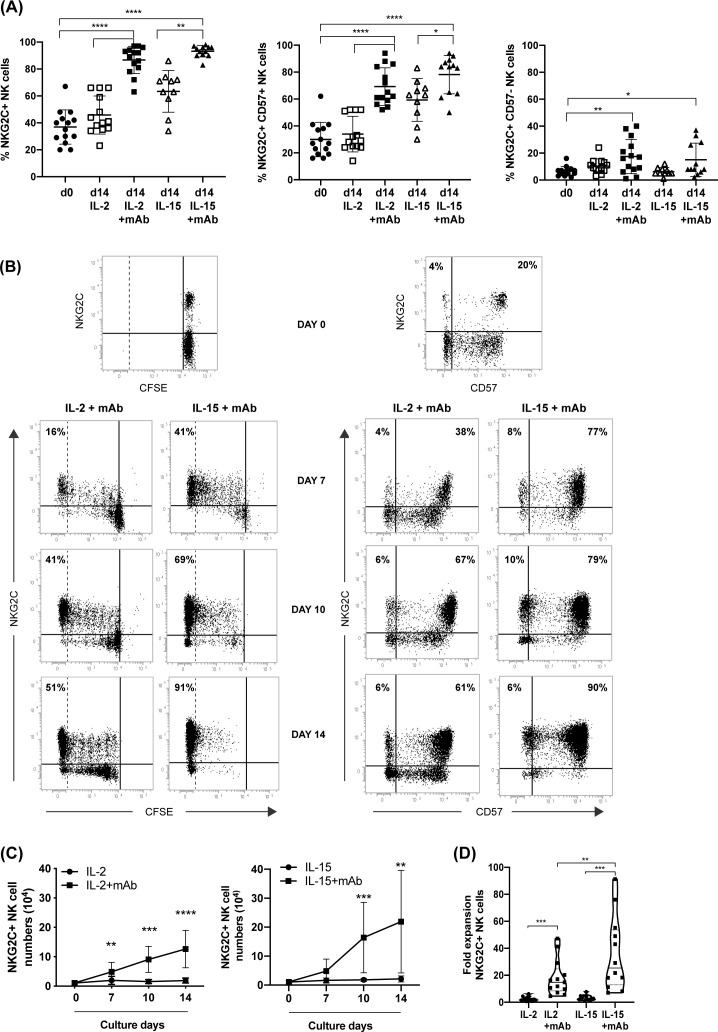
Results: By setting this method we were able to expand high numbers of NK cells showing the typical adaptive phenotype, CD94/NKG2C+ CD94/NKG2A- CD57+, and expressing a single self-inhibitory KIR. Expanded cells maintained the CMV-induced molecular signature, exhibited high ADCC capabilities and degranulation against a HLA-E+ target. Importantly, mAb-expanded adaptive NK cells did not upregulate PD-1 or other regulatory immune checkpoints that could dampen their function.
Conclusions: By this study we provide hints to improve previous expansion methods, by eliminating the use of genetically modified cells as stimulators, and obtaining effectors not expressing unwanted inhibitory receptors. This new protocol for expanding functional adaptive NK cells is safe, cost-effective and easily implementable in a GMP context, suitable for innovative immunotherapeutic purposes.
期刊介绍:
Frontiers in Immunology is a leading journal in its field, publishing rigorously peer-reviewed research across basic, translational and clinical immunology. This multidisciplinary open-access journal is at the forefront of disseminating and communicating scientific knowledge and impactful discoveries to researchers, academics, clinicians and the public worldwide.
Frontiers in Immunology is the official Journal of the International Union of Immunological Societies (IUIS). Encompassing the entire field of Immunology, this journal welcomes papers that investigate basic mechanisms of immune system development and function, with a particular emphasis given to the description of the clinical and immunological phenotype of human immune disorders, and on the definition of their molecular basis.






 京公网安备 11010802042870号
京ICP备2023020795号-1
京公网安备 11010802042870号
京ICP备2023020795号-1

 分享
分享
 求助内容:
求助内容: 应助结果提醒方式:
 扫码关注我们
