Yong Hui Nies, Wei Ling Lim, Norwahidah Abd Karim, Mohamad Fairuz Yahaya, Seong Lin Teoh
{"title":"金属硫蛋白II治疗减轻鱼藤酮诱导的斑马鱼帕金森病模型的神经变性。","authors":"Yong Hui Nies, Wei Ling Lim, Norwahidah Abd Karim, Mohamad Fairuz Yahaya, Seong Lin Teoh","doi":"10.3389/fphar.2025.1478013","DOIUrl":null,"url":null,"abstract":"<p><strong>Introduction: </strong>Parkinson's disease (PD) is a common neurodegenerative disorder primarily affecting motor function due to progressive loss of dopaminergic neurons in the substantia nigra. Current therapies offer symptomatic relief but fail to halt disease progression, highlighting the need for novel therapeutic strategies. This study explores the neuroprotective potential of exogenous human metallothionein 2 (hMT2) peptide in a rotenone-induced PD zebrafish model.</p><p><strong>Methods: </strong>Adult zebrafish were divided into four groups: control, rotenone-treated, hMT2 pre-treatment, and hMT2 co-treatment. PD model was established by exposing zebrafish to 5 µg/L rotenone water for 28 days. hMT2 (0.2 µg) was administered intracranially either one day before or seven days after rotenone exposure.</p><p><strong>Results: </strong>The novel tank test demonstrated that rotenone exposure significantly impaired locomotor activity (<i>p</i> < 0.05) and increased anxiety-like behavior (<i>p</i> < 0.001). Additionally, PD model zebrafish exhibited reduced dopamine levels, decreased dopaminergic neuron population, elevated oxidative stress, heightened inflammatory response and mitochondrial dysfunction. Treatment with hMT2, especially in the co-treatment group, ameliorated these deficits by restoring locomotor activity, dopamine levels, and dopaminergic neuron counts while reducing oxidative stress and inflammation, and improving mitochondrial function.</p><p><strong>Discussion: </strong>These results suggest that hMT2 exhibited neuroprotective effect in the PD model zebrafish. These findings support the potential of MT as a therapeutic agent for PD.</p>","PeriodicalId":12491,"journal":{"name":"Frontiers in Pharmacology","volume":"16 ","pages":"1478013"},"PeriodicalIF":4.8000,"publicationDate":"2025-01-31","publicationTypes":"Journal Article","fieldsOfStudy":null,"isOpenAccess":false,"openAccessPdf":"https://www.ncbi.nlm.nih.gov/pmc/articles/PMC11825519/pdf/","citationCount":"0","resultStr":"{\"title\":\"Metallothionein II treatment mitigates rotenone-induced neurodegeneration in zebrafish models of Parkinson's disease.\",\"authors\":\"Yong Hui Nies, Wei Ling Lim, Norwahidah Abd Karim, Mohamad Fairuz Yahaya, Seong Lin Teoh\",\"doi\":\"10.3389/fphar.2025.1478013\",\"DOIUrl\":null,\"url\":null,\"abstract\":\"<p><strong>Introduction: </strong>Parkinson's disease (PD) is a common neurodegenerative disorder primarily affecting motor function due to progressive loss of dopaminergic neurons in the substantia nigra. Current therapies offer symptomatic relief but fail to halt disease progression, highlighting the need for novel therapeutic strategies. This study explores the neuroprotective potential of exogenous human metallothionein 2 (hMT2) peptide in a rotenone-induced PD zebrafish model.</p><p><strong>Methods: </strong>Adult zebrafish were divided into four groups: control, rotenone-treated, hMT2 pre-treatment, and hMT2 co-treatment. PD model was established by exposing zebrafish to 5 µg/L rotenone water for 28 days. hMT2 (0.2 µg) was administered intracranially either one day before or seven days after rotenone exposure.</p><p><strong>Results: </strong>The novel tank test demonstrated that rotenone exposure significantly impaired locomotor activity (<i>p</i> < 0.05) and increased anxiety-like behavior (<i>p</i> < 0.001). Additionally, PD model zebrafish exhibited reduced dopamine levels, decreased dopaminergic neuron population, elevated oxidative stress, heightened inflammatory response and mitochondrial dysfunction. Treatment with hMT2, especially in the co-treatment group, ameliorated these deficits by restoring locomotor activity, dopamine levels, and dopaminergic neuron counts while reducing oxidative stress and inflammation, and improving mitochondrial function.</p><p><strong>Discussion: </strong>These results suggest that hMT2 exhibited neuroprotective effect in the PD model zebrafish. These findings support the potential of MT as a therapeutic agent for PD.</p>\",\"PeriodicalId\":12491,\"journal\":{\"name\":\"Frontiers in Pharmacology\",\"volume\":\"16 \",\"pages\":\"1478013\"},\"PeriodicalIF\":4.8000,\"publicationDate\":\"2025-01-31\",\"publicationTypes\":\"Journal Article\",\"fieldsOfStudy\":null,\"isOpenAccess\":false,\"openAccessPdf\":\"https://www.ncbi.nlm.nih.gov/pmc/articles/PMC11825519/pdf/\",\"citationCount\":\"0\",\"resultStr\":null,\"platform\":\"Semanticscholar\",\"paperid\":null,\"PeriodicalName\":\"Frontiers in Pharmacology\",\"FirstCategoryId\":\"3\",\"ListUrlMain\":\"https://doi.org/10.3389/fphar.2025.1478013\",\"RegionNum\":2,\"RegionCategory\":\"医学\",\"ArticlePicture\":[],\"TitleCN\":null,\"AbstractTextCN\":null,\"PMCID\":null,\"EPubDate\":\"2025/1/1 0:00:00\",\"PubModel\":\"eCollection\",\"JCR\":\"Q1\",\"JCRName\":\"PHARMACOLOGY & PHARMACY\",\"Score\":null,\"Total\":0}","platform":"Semanticscholar","paperid":null,"PeriodicalName":"Frontiers in Pharmacology","FirstCategoryId":"3","ListUrlMain":"https://doi.org/10.3389/fphar.2025.1478013","RegionNum":2,"RegionCategory":"医学","ArticlePicture":[],"TitleCN":null,"AbstractTextCN":null,"PMCID":null,"EPubDate":"2025/1/1 0:00:00","PubModel":"eCollection","JCR":"Q1","JCRName":"PHARMACOLOGY & PHARMACY","Score":null,"Total":0}
Metallothionein II treatment mitigates rotenone-induced neurodegeneration in zebrafish models of Parkinson's disease.
Introduction: Parkinson's disease (PD) is a common neurodegenerative disorder primarily affecting motor function due to progressive loss of dopaminergic neurons in the substantia nigra. Current therapies offer symptomatic relief but fail to halt disease progression, highlighting the need for novel therapeutic strategies. This study explores the neuroprotective potential of exogenous human metallothionein 2 (hMT2) peptide in a rotenone-induced PD zebrafish model.
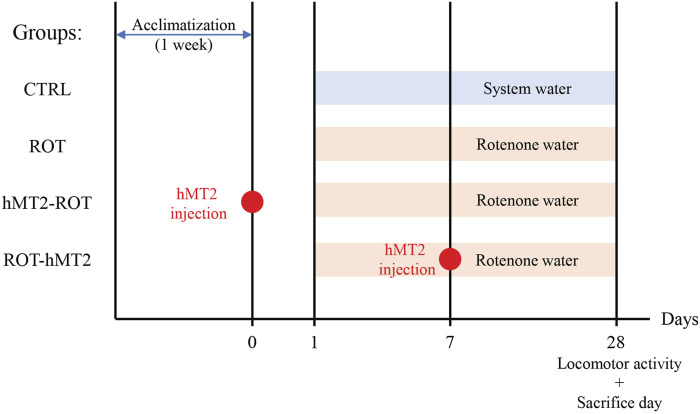
Methods: Adult zebrafish were divided into four groups: control, rotenone-treated, hMT2 pre-treatment, and hMT2 co-treatment. PD model was established by exposing zebrafish to 5 µg/L rotenone water for 28 days. hMT2 (0.2 µg) was administered intracranially either one day before or seven days after rotenone exposure.
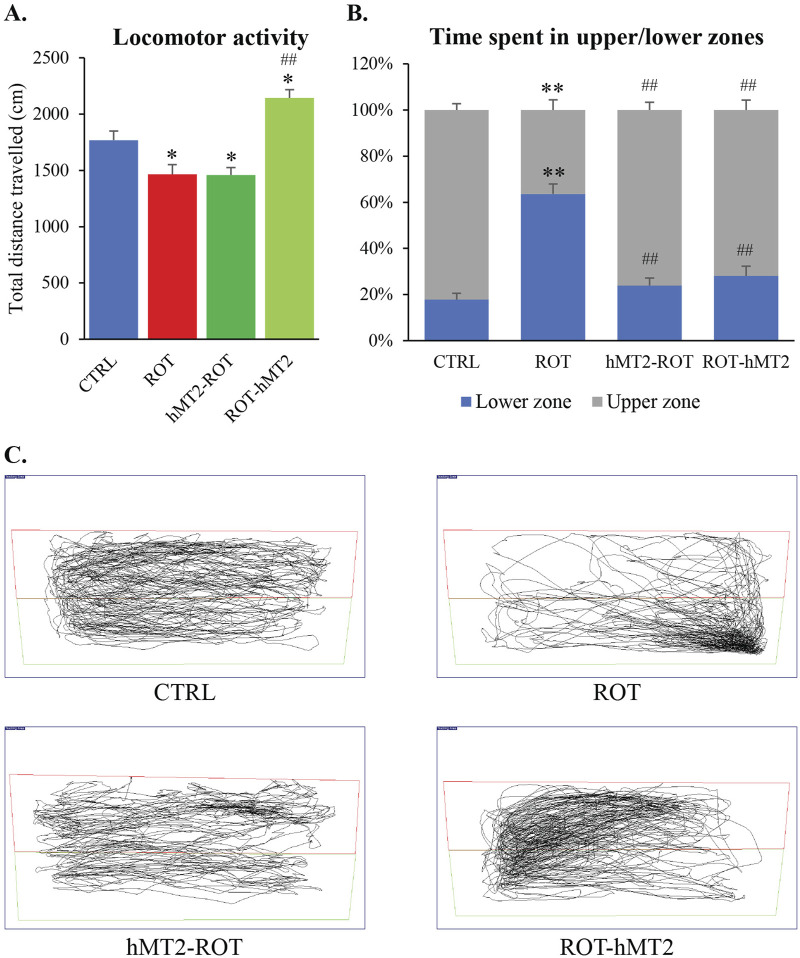
Results: The novel tank test demonstrated that rotenone exposure significantly impaired locomotor activity (p < 0.05) and increased anxiety-like behavior (p < 0.001). Additionally, PD model zebrafish exhibited reduced dopamine levels, decreased dopaminergic neuron population, elevated oxidative stress, heightened inflammatory response and mitochondrial dysfunction. Treatment with hMT2, especially in the co-treatment group, ameliorated these deficits by restoring locomotor activity, dopamine levels, and dopaminergic neuron counts while reducing oxidative stress and inflammation, and improving mitochondrial function.
Discussion: These results suggest that hMT2 exhibited neuroprotective effect in the PD model zebrafish. These findings support the potential of MT as a therapeutic agent for PD.
期刊介绍:
Frontiers in Pharmacology is a leading journal in its field, publishing rigorously peer-reviewed research across disciplines, including basic and clinical pharmacology, medicinal chemistry, pharmacy and toxicology. Field Chief Editor Heike Wulff at UC Davis is supported by an outstanding Editorial Board of international researchers. This multidisciplinary open-access journal is at the forefront of disseminating and communicating scientific knowledge and impactful discoveries to researchers, academics, clinicians and the public worldwide.





 京公网安备 11010802042870号
京ICP备2023020795号-1
京公网安备 11010802042870号
京ICP备2023020795号-1

 分享
分享
 求助内容:
求助内容: 应助结果提醒方式:
 扫码关注我们
