{"title":"[儿童隐睾:喀麦隆杜阿拉市三家转诊医院的流行病学、诊断和治疗特点]。","authors":"Frantz Guy Epoupa Ngalle, Axel Stéphane Nwaha Makon, Willy Elysée Kana, Landry Oriole Mbouché, Armel Quentin Essomba, Pauline Mantho, Dieudonné Feukam, Edouard Hervé Moby Mpah, Faustin Mouafo Tambo, Marcellin Ngowe Ngowe","doi":"10.11604/pamj.2024.49.70.40517","DOIUrl":null,"url":null,"abstract":"<p><strong>Introduction: </strong>Undescended testis (UDT) refers to the actual absence of one or both testicles from their normal position in the scrotum. It can lead to testicular atrophy, malignancy and male infertility. Our study highlights the epidemiological, diagnostic and therapeutic aspects of UDT in 3 referral hospitals in Douala.</p><p><strong>Methods: </strong>we conducted a descriptive and retrospective study over 10 years (January 1, 2012 to December 31, 2021). We collected data from the medical records of patients aged 1 to 15 years, who underwent surgery for UDT. The sociodemographic, clinical, paraclinical and therapeutic data were collected, recorded and analyzed using CS Pro 7.3 and SPSS 23 software.</p><p><strong>Results: </strong>we reviewed 741 records, excluding 595 that were not managed during our study period, leaving 105 cases included. UDT accounted for 1.39% (741 out of 53,431 cases) of urological consultations. The average age was 6.65±3.13 years. Scrotal emptiness was the main reason for consultation (81.9%), discovered by a parent at home in 76.7% of cases (n=66). Six point seven percent of the patients (n=7) had a brother with a history of UDT and 2.8% (n=3) a father. The left testis was most commonly affected: 44.8% (n=47). The testis was palpable in the inguinal region in 91.4% of cases (n=96). The diagnosis was mainly clinical, with ultrasound performed in 14 patients (13.4%). Cryptorchidism was the most diagnosed condition: 85.7% (n=90). The average hospital stay was 1.85±0.74 days. Two surgical approaches were used: inguinal in 99 patients (94.3%) and laparoscopic in 6 patients (5.7%).</p><p><strong>Conclusion: </strong>from our study, we can conclude that UDT is a relatively uncommon condition in urological consultations, emphasizing the importance of proper diagnosis and management. Surgically, two approaches are available: the inguinal approach, which is the most commonly used, and laparoscopy, which is essential when the testicles are intra-abdominal or non-palpable in the inguinal region.</p>","PeriodicalId":48190,"journal":{"name":"Pan African Medical Journal","volume":"49 ","pages":"70"},"PeriodicalIF":0.9000,"publicationDate":"2024-11-08","publicationTypes":"Journal Article","fieldsOfStudy":null,"isOpenAccess":false,"openAccessPdf":"https://www.ncbi.nlm.nih.gov/pmc/articles/PMC11827701/pdf/","citationCount":"0","resultStr":"{\"title\":\"[Undescended testicle in children: epidemiological, diagnostic and therapeutic features in three referral hospitals in the city of Douala, Cameroon].\",\"authors\":\"Frantz Guy Epoupa Ngalle, Axel Stéphane Nwaha Makon, Willy Elysée Kana, Landry Oriole Mbouché, Armel Quentin Essomba, Pauline Mantho, Dieudonné Feukam, Edouard Hervé Moby Mpah, Faustin Mouafo Tambo, Marcellin Ngowe Ngowe\",\"doi\":\"10.11604/pamj.2024.49.70.40517\",\"DOIUrl\":null,\"url\":null,\"abstract\":\"<p><strong>Introduction: </strong>Undescended testis (UDT) refers to the actual absence of one or both testicles from their normal position in the scrotum. It can lead to testicular atrophy, malignancy and male infertility. Our study highlights the epidemiological, diagnostic and therapeutic aspects of UDT in 3 referral hospitals in Douala.</p><p><strong>Methods: </strong>we conducted a descriptive and retrospective study over 10 years (January 1, 2012 to December 31, 2021). We collected data from the medical records of patients aged 1 to 15 years, who underwent surgery for UDT. The sociodemographic, clinical, paraclinical and therapeutic data were collected, recorded and analyzed using CS Pro 7.3 and SPSS 23 software.</p><p><strong>Results: </strong>we reviewed 741 records, excluding 595 that were not managed during our study period, leaving 105 cases included. UDT accounted for 1.39% (741 out of 53,431 cases) of urological consultations. The average age was 6.65±3.13 years. Scrotal emptiness was the main reason for consultation (81.9%), discovered by a parent at home in 76.7% of cases (n=66). Six point seven percent of the patients (n=7) had a brother with a history of UDT and 2.8% (n=3) a father. The left testis was most commonly affected: 44.8% (n=47). The testis was palpable in the inguinal region in 91.4% of cases (n=96). The diagnosis was mainly clinical, with ultrasound performed in 14 patients (13.4%). Cryptorchidism was the most diagnosed condition: 85.7% (n=90). The average hospital stay was 1.85±0.74 days. Two surgical approaches were used: inguinal in 99 patients (94.3%) and laparoscopic in 6 patients (5.7%).</p><p><strong>Conclusion: </strong>from our study, we can conclude that UDT is a relatively uncommon condition in urological consultations, emphasizing the importance of proper diagnosis and management. Surgically, two approaches are available: the inguinal approach, which is the most commonly used, and laparoscopy, which is essential when the testicles are intra-abdominal or non-palpable in the inguinal region.</p>\",\"PeriodicalId\":48190,\"journal\":{\"name\":\"Pan African Medical Journal\",\"volume\":\"49 \",\"pages\":\"70\"},\"PeriodicalIF\":0.9000,\"publicationDate\":\"2024-11-08\",\"publicationTypes\":\"Journal Article\",\"fieldsOfStudy\":null,\"isOpenAccess\":false,\"openAccessPdf\":\"https://www.ncbi.nlm.nih.gov/pmc/articles/PMC11827701/pdf/\",\"citationCount\":\"0\",\"resultStr\":null,\"platform\":\"Semanticscholar\",\"paperid\":null,\"PeriodicalName\":\"Pan African Medical Journal\",\"FirstCategoryId\":\"1085\",\"ListUrlMain\":\"https://doi.org/10.11604/pamj.2024.49.70.40517\",\"RegionNum\":0,\"RegionCategory\":null,\"ArticlePicture\":[],\"TitleCN\":null,\"AbstractTextCN\":null,\"PMCID\":null,\"EPubDate\":\"2024/1/1 0:00:00\",\"PubModel\":\"eCollection\",\"JCR\":\"Q4\",\"JCRName\":\"PUBLIC, ENVIRONMENTAL & OCCUPATIONAL HEALTH\",\"Score\":null,\"Total\":0}","platform":"Semanticscholar","paperid":null,"PeriodicalName":"Pan African Medical Journal","FirstCategoryId":"1085","ListUrlMain":"https://doi.org/10.11604/pamj.2024.49.70.40517","RegionNum":0,"RegionCategory":null,"ArticlePicture":[],"TitleCN":null,"AbstractTextCN":null,"PMCID":null,"EPubDate":"2024/1/1 0:00:00","PubModel":"eCollection","JCR":"Q4","JCRName":"PUBLIC, ENVIRONMENTAL & OCCUPATIONAL HEALTH","Score":null,"Total":0}
引用次数: 0
摘要
简介:隐睾(UDT)是指一个或两个睾丸从阴囊的正常位置实际缺失。它会导致睾丸萎缩、恶性肿瘤和男性不育。我们的研究强调了杜阿拉3家转诊医院UDT的流行病学、诊断和治疗方面。方法:我们进行了为期10年(2012年1月1日至2021年12月31日)的描述性和回顾性研究。我们收集了1至15岁因UDT接受手术的患者的医疗记录数据。采用CS Pro 7.3和SPSS 23软件收集、记录和分析社会人口学、临床、临床旁和治疗资料。结果:我们回顾了741例记录,排除了研究期间未处理的595例,共纳入105例。泌尿外科会诊中UDT占1.39%(53431例中741例)。平均年龄6.65±3.13岁。阴囊空性是就诊的主要原因(81.9%),其中由家长在家发现的占76.7% (n=66)。6.7%的患者(n=7)有一个兄弟有UDT病史,2.8% (n=3)有一个父亲。左侧睾丸最常见:44.8% (n=47)。91.4%的病例(96例)在腹股沟区可触及睾丸。诊断以临床为主,超声检查14例(13.4%)。隐睾是诊断最多的疾病,占85.7% (n=90)。平均住院时间1.85±0.74 d。采用两种手术入路:腹股沟入路99例(94.3%),腹腔镜入路6例(5.7%)。结论:从我们的研究中,我们可以得出结论,UDT在泌尿科会诊中是一种相对罕见的疾病,强调了正确诊断和处理的重要性。手术上有两种方法:最常用的腹股沟入路和腹腔镜手术,当睾丸在腹股沟内或在腹股沟区不可触及时,腹腔镜手术是必不可少的。
[Undescended testicle in children: epidemiological, diagnostic and therapeutic features in three referral hospitals in the city of Douala, Cameroon].
Introduction: Undescended testis (UDT) refers to the actual absence of one or both testicles from their normal position in the scrotum. It can lead to testicular atrophy, malignancy and male infertility. Our study highlights the epidemiological, diagnostic and therapeutic aspects of UDT in 3 referral hospitals in Douala.
Methods: we conducted a descriptive and retrospective study over 10 years (January 1, 2012 to December 31, 2021). We collected data from the medical records of patients aged 1 to 15 years, who underwent surgery for UDT. The sociodemographic, clinical, paraclinical and therapeutic data were collected, recorded and analyzed using CS Pro 7.3 and SPSS 23 software.
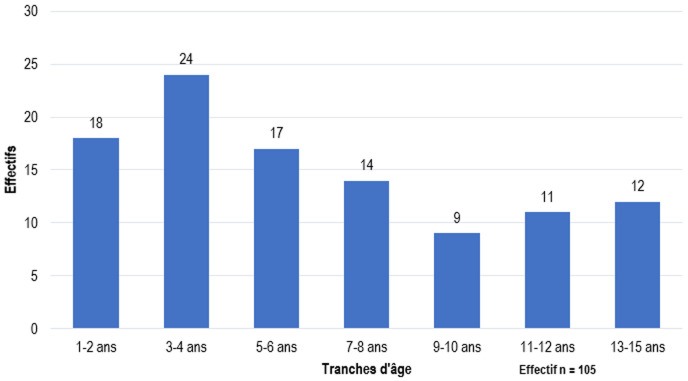
Results: we reviewed 741 records, excluding 595 that were not managed during our study period, leaving 105 cases included. UDT accounted for 1.39% (741 out of 53,431 cases) of urological consultations. The average age was 6.65±3.13 years. Scrotal emptiness was the main reason for consultation (81.9%), discovered by a parent at home in 76.7% of cases (n=66). Six point seven percent of the patients (n=7) had a brother with a history of UDT and 2.8% (n=3) a father. The left testis was most commonly affected: 44.8% (n=47). The testis was palpable in the inguinal region in 91.4% of cases (n=96). The diagnosis was mainly clinical, with ultrasound performed in 14 patients (13.4%). Cryptorchidism was the most diagnosed condition: 85.7% (n=90). The average hospital stay was 1.85±0.74 days. Two surgical approaches were used: inguinal in 99 patients (94.3%) and laparoscopic in 6 patients (5.7%).
Conclusion: from our study, we can conclude that UDT is a relatively uncommon condition in urological consultations, emphasizing the importance of proper diagnosis and management. Surgically, two approaches are available: the inguinal approach, which is the most commonly used, and laparoscopy, which is essential when the testicles are intra-abdominal or non-palpable in the inguinal region.







 京公网安备 11010802042870号
京ICP备2023020795号-1
京公网安备 11010802042870号
京ICP备2023020795号-1

 分享
分享
 求助内容:
求助内容: 应助结果提醒方式:
 扫码关注我们
