Hunter Smith, David Travis Thomas, Gabriela Nicole Vázquez-Morales, Lakin Puckett, María Del Mar Rodriguez, Arnold Stromberg, Luciana Macchion Shaddox, Mauro Pedrine Santamaria, Kevin Pearce, Oelisoa Mireille Andriankaja
{"title":"西班牙裔患者饮食习惯、牙周炎和未控制糖尿病的横断面关联:lipds研究","authors":"Hunter Smith, David Travis Thomas, Gabriela Nicole Vázquez-Morales, Lakin Puckett, María Del Mar Rodriguez, Arnold Stromberg, Luciana Macchion Shaddox, Mauro Pedrine Santamaria, Kevin Pearce, Oelisoa Mireille Andriankaja","doi":"10.3389/froh.2025.1468995","DOIUrl":null,"url":null,"abstract":"<p><strong>Objectives: </strong>Type 2 Diabetes (T2D) is recognized as a risk factor for periodontal disease (PD), with evidence supporting a bidirectional relationship. Food choices are thought to influence both conditions, but research on their impact specifically on PD remains limited. This study aimed to explore whether food choices were linked to higher prevalence of adverse periodontal parameters and poorly controlled glucose levels among Hispanic adults with T2D.</p><p><strong>Methods: </strong>A cross-sectional study was conducted with 260 Puerto Rican adults aged 40-65 years, all diagnosed with T2D. Dietary habits were assessed by weekly frequencies of food choices deemed healthy or unhealthy over the past year. Periodontal health was evaluated by the percentage of sites with probing pocket depth (PPD) ≥4 mm and bleeding on probing (BOP) at corresponding teeth. Glucose control was measured by glycated hemoglobin (HbA1c) levels, with uncontrolled glucose defined as HbA1c ≥ 7%. Linear regression models adjusted for demographic and clinical variables estimated associations with PD. Logistic regression assessed associations with glucose control.</p><p><strong>Results: </strong>The median Healthy Eating Score was 0.5 (Q1, Q3: -3.9, 4.5). A higher Healthy Eating Score was significantly associated with fewer sites exhibiting PPD ≥ 4 mm and BOP (adjusted β: -0.02; SE: 0.01; <i>p</i> = 0.035), and reduced odds of uncontrolled glucose (adjusted odds ratio: 0.94; 95% CI: 0.89-0.98; <i>p</i> = 0.007).</p><p><strong>Conclusions: </strong>Adherence to a healthier dietary pattern appears to correlate with lower periodontal inflammation and greater glucose control among Hispanics with T2D. Prospective studies are needed to confirm causality and long-term effects.</p>","PeriodicalId":94016,"journal":{"name":"Frontiers in oral health","volume":"6 ","pages":"1468995"},"PeriodicalIF":3.1000,"publicationDate":"2025-01-31","publicationTypes":"Journal Article","fieldsOfStudy":null,"isOpenAccess":false,"openAccessPdf":"https://www.ncbi.nlm.nih.gov/pmc/articles/PMC11825391/pdf/","citationCount":"0","resultStr":"{\"title\":\"Cross-sectional association among dietary habits, periodontitis, and uncontrolled diabetes in Hispanics: the LLIPDS study.\",\"authors\":\"Hunter Smith, David Travis Thomas, Gabriela Nicole Vázquez-Morales, Lakin Puckett, María Del Mar Rodriguez, Arnold Stromberg, Luciana Macchion Shaddox, Mauro Pedrine Santamaria, Kevin Pearce, Oelisoa Mireille Andriankaja\",\"doi\":\"10.3389/froh.2025.1468995\",\"DOIUrl\":null,\"url\":null,\"abstract\":\"<p><strong>Objectives: </strong>Type 2 Diabetes (T2D) is recognized as a risk factor for periodontal disease (PD), with evidence supporting a bidirectional relationship. Food choices are thought to influence both conditions, but research on their impact specifically on PD remains limited. This study aimed to explore whether food choices were linked to higher prevalence of adverse periodontal parameters and poorly controlled glucose levels among Hispanic adults with T2D.</p><p><strong>Methods: </strong>A cross-sectional study was conducted with 260 Puerto Rican adults aged 40-65 years, all diagnosed with T2D. Dietary habits were assessed by weekly frequencies of food choices deemed healthy or unhealthy over the past year. Periodontal health was evaluated by the percentage of sites with probing pocket depth (PPD) ≥4 mm and bleeding on probing (BOP) at corresponding teeth. Glucose control was measured by glycated hemoglobin (HbA1c) levels, with uncontrolled glucose defined as HbA1c ≥ 7%. Linear regression models adjusted for demographic and clinical variables estimated associations with PD. Logistic regression assessed associations with glucose control.</p><p><strong>Results: </strong>The median Healthy Eating Score was 0.5 (Q1, Q3: -3.9, 4.5). A higher Healthy Eating Score was significantly associated with fewer sites exhibiting PPD ≥ 4 mm and BOP (adjusted β: -0.02; SE: 0.01; <i>p</i> = 0.035), and reduced odds of uncontrolled glucose (adjusted odds ratio: 0.94; 95% CI: 0.89-0.98; <i>p</i> = 0.007).</p><p><strong>Conclusions: </strong>Adherence to a healthier dietary pattern appears to correlate with lower periodontal inflammation and greater glucose control among Hispanics with T2D. Prospective studies are needed to confirm causality and long-term effects.</p>\",\"PeriodicalId\":94016,\"journal\":{\"name\":\"Frontiers in oral health\",\"volume\":\"6 \",\"pages\":\"1468995\"},\"PeriodicalIF\":3.1000,\"publicationDate\":\"2025-01-31\",\"publicationTypes\":\"Journal Article\",\"fieldsOfStudy\":null,\"isOpenAccess\":false,\"openAccessPdf\":\"https://www.ncbi.nlm.nih.gov/pmc/articles/PMC11825391/pdf/\",\"citationCount\":\"0\",\"resultStr\":null,\"platform\":\"Semanticscholar\",\"paperid\":null,\"PeriodicalName\":\"Frontiers in oral health\",\"FirstCategoryId\":\"1085\",\"ListUrlMain\":\"https://doi.org/10.3389/froh.2025.1468995\",\"RegionNum\":0,\"RegionCategory\":null,\"ArticlePicture\":[],\"TitleCN\":null,\"AbstractTextCN\":null,\"PMCID\":null,\"EPubDate\":\"2025/1/1 0:00:00\",\"PubModel\":\"eCollection\",\"JCR\":\"Q1\",\"JCRName\":\"DENTISTRY, ORAL SURGERY & MEDICINE\",\"Score\":null,\"Total\":0}","platform":"Semanticscholar","paperid":null,"PeriodicalName":"Frontiers in oral health","FirstCategoryId":"1085","ListUrlMain":"https://doi.org/10.3389/froh.2025.1468995","RegionNum":0,"RegionCategory":null,"ArticlePicture":[],"TitleCN":null,"AbstractTextCN":null,"PMCID":null,"EPubDate":"2025/1/1 0:00:00","PubModel":"eCollection","JCR":"Q1","JCRName":"DENTISTRY, ORAL SURGERY & MEDICINE","Score":null,"Total":0}
Cross-sectional association among dietary habits, periodontitis, and uncontrolled diabetes in Hispanics: the LLIPDS study.
Objectives: Type 2 Diabetes (T2D) is recognized as a risk factor for periodontal disease (PD), with evidence supporting a bidirectional relationship. Food choices are thought to influence both conditions, but research on their impact specifically on PD remains limited. This study aimed to explore whether food choices were linked to higher prevalence of adverse periodontal parameters and poorly controlled glucose levels among Hispanic adults with T2D.
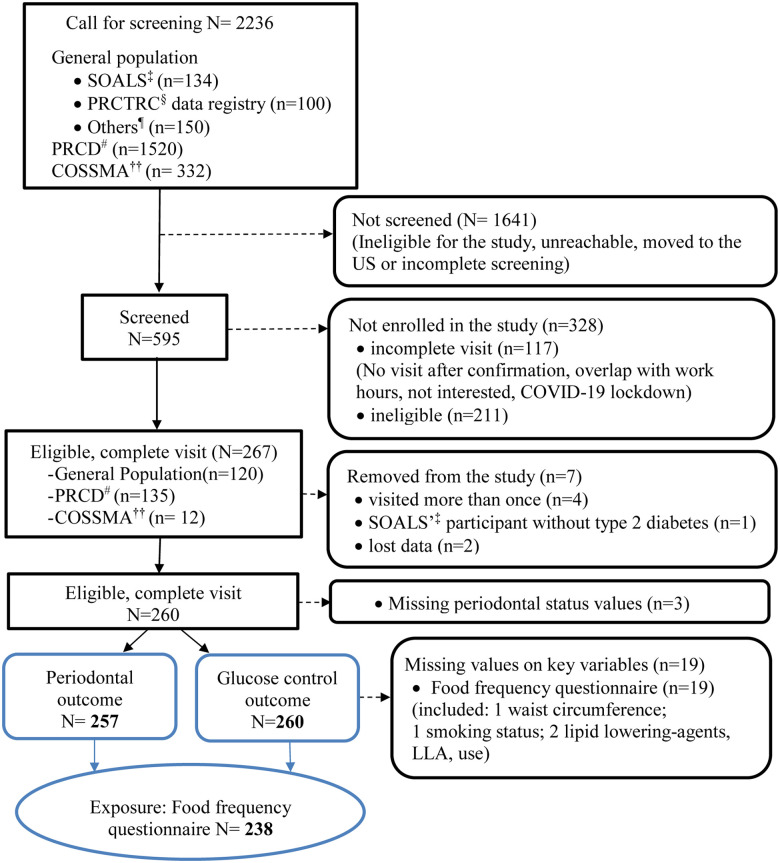
Methods: A cross-sectional study was conducted with 260 Puerto Rican adults aged 40-65 years, all diagnosed with T2D. Dietary habits were assessed by weekly frequencies of food choices deemed healthy or unhealthy over the past year. Periodontal health was evaluated by the percentage of sites with probing pocket depth (PPD) ≥4 mm and bleeding on probing (BOP) at corresponding teeth. Glucose control was measured by glycated hemoglobin (HbA1c) levels, with uncontrolled glucose defined as HbA1c ≥ 7%. Linear regression models adjusted for demographic and clinical variables estimated associations with PD. Logistic regression assessed associations with glucose control.
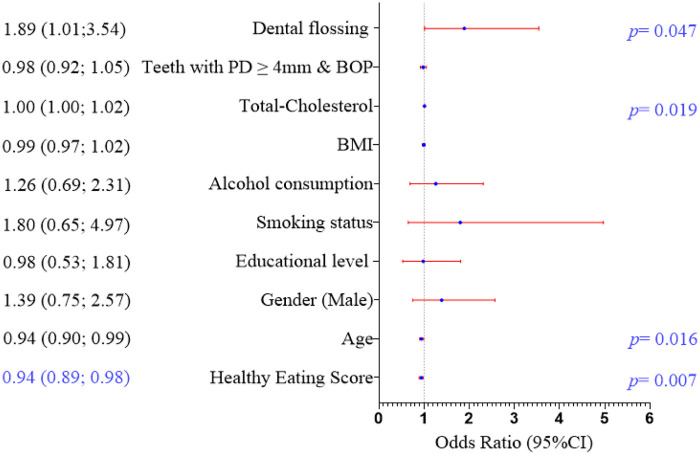
Results: The median Healthy Eating Score was 0.5 (Q1, Q3: -3.9, 4.5). A higher Healthy Eating Score was significantly associated with fewer sites exhibiting PPD ≥ 4 mm and BOP (adjusted β: -0.02; SE: 0.01; p = 0.035), and reduced odds of uncontrolled glucose (adjusted odds ratio: 0.94; 95% CI: 0.89-0.98; p = 0.007).
Conclusions: Adherence to a healthier dietary pattern appears to correlate with lower periodontal inflammation and greater glucose control among Hispanics with T2D. Prospective studies are needed to confirm causality and long-term effects.




 京公网安备 11010802042870号
京ICP备2023020795号-1
京公网安备 11010802042870号
京ICP备2023020795号-1

 分享
分享

 求助内容:
求助内容: 应助结果提醒方式:
 扫码关注我们
