Md Tamzid Islam, Md Saiful Islam Saif, Naima Alam, Sam Pepper, Isuru Ratnayake, Dinesh Pal Mudaranthakam
{"title":"评估老年癌症诊断后并发疾病的风险。","authors":"Md Tamzid Islam, Md Saiful Islam Saif, Naima Alam, Sam Pepper, Isuru Ratnayake, Dinesh Pal Mudaranthakam","doi":"10.1186/s12889-025-21784-7","DOIUrl":null,"url":null,"abstract":"<p><strong>Background: </strong>Cancer is a critical disease that affects a person physically, mentally, socially, and in many other aspects. During the treatment stage of cancer, patients suffer from various health complexities, especially elderly people, which might result in the onset of other diseases development of a comorbid condition. Several studies have shown comorbidity plays a crucial role in cancer survival. However, there remains a lack of comprehensive statistical techniques at the national level studies to assess the significance of comorbidities development in cancer. Our research aims to address this gap by comparing cancer and non-cancer individuals over four years' time period.</p><p><strong>Methods: </strong>The Health Retirement Study (HRS) data was used to extract information from 6651 participants aged more than 50. Within a 4-year time span, cross-sectional observations were created whether comorbidities or not based on the development of diseases such as high blood pressure, diabetes, heart disease, stroke, lung disease, and psychological disease.</p><p><strong>Results: </strong>In the multivariable regression model, we observed higher chances of developing comorbidity (OR = 1.321, p-value 0.0051) among the cancer group compared to the non-cancer group, adjusting the socio-economic factors. Moreover, the socio-economic factors were found to be significantly associated with cancer leading to applying the propensity score matching with (1:3 matching). Finally, the balanced data also showed significantly higher chances of developing comorbidity (OR = 1.294, p-value 0.0207) among cancer patients.</p><p><strong>Conclusions: </strong>The above findings demonstrated the imperative development of enhanced treatment protocols, which prioritize the overall health of cancer patients, thereby reducing their susceptibility to additional illnesses.</p>","PeriodicalId":9039,"journal":{"name":"BMC Public Health","volume":"25 1","pages":"640"},"PeriodicalIF":3.6000,"publicationDate":"2025-02-17","publicationTypes":"Journal Article","fieldsOfStudy":null,"isOpenAccess":false,"openAccessPdf":"https://www.ncbi.nlm.nih.gov/pmc/articles/PMC11834647/pdf/","citationCount":"0","resultStr":"{\"title\":\"Evaluating the risk of comorbidity onset in elderly patients after a cancer diagnosis.\",\"authors\":\"Md Tamzid Islam, Md Saiful Islam Saif, Naima Alam, Sam Pepper, Isuru Ratnayake, Dinesh Pal Mudaranthakam\",\"doi\":\"10.1186/s12889-025-21784-7\",\"DOIUrl\":null,\"url\":null,\"abstract\":\"<p><strong>Background: </strong>Cancer is a critical disease that affects a person physically, mentally, socially, and in many other aspects. During the treatment stage of cancer, patients suffer from various health complexities, especially elderly people, which might result in the onset of other diseases development of a comorbid condition. Several studies have shown comorbidity plays a crucial role in cancer survival. However, there remains a lack of comprehensive statistical techniques at the national level studies to assess the significance of comorbidities development in cancer. Our research aims to address this gap by comparing cancer and non-cancer individuals over four years' time period.</p><p><strong>Methods: </strong>The Health Retirement Study (HRS) data was used to extract information from 6651 participants aged more than 50. Within a 4-year time span, cross-sectional observations were created whether comorbidities or not based on the development of diseases such as high blood pressure, diabetes, heart disease, stroke, lung disease, and psychological disease.</p><p><strong>Results: </strong>In the multivariable regression model, we observed higher chances of developing comorbidity (OR = 1.321, p-value 0.0051) among the cancer group compared to the non-cancer group, adjusting the socio-economic factors. Moreover, the socio-economic factors were found to be significantly associated with cancer leading to applying the propensity score matching with (1:3 matching). Finally, the balanced data also showed significantly higher chances of developing comorbidity (OR = 1.294, p-value 0.0207) among cancer patients.</p><p><strong>Conclusions: </strong>The above findings demonstrated the imperative development of enhanced treatment protocols, which prioritize the overall health of cancer patients, thereby reducing their susceptibility to additional illnesses.</p>\",\"PeriodicalId\":9039,\"journal\":{\"name\":\"BMC Public Health\",\"volume\":\"25 1\",\"pages\":\"640\"},\"PeriodicalIF\":3.6000,\"publicationDate\":\"2025-02-17\",\"publicationTypes\":\"Journal Article\",\"fieldsOfStudy\":null,\"isOpenAccess\":false,\"openAccessPdf\":\"https://www.ncbi.nlm.nih.gov/pmc/articles/PMC11834647/pdf/\",\"citationCount\":\"0\",\"resultStr\":null,\"platform\":\"Semanticscholar\",\"paperid\":null,\"PeriodicalName\":\"BMC Public Health\",\"FirstCategoryId\":\"3\",\"ListUrlMain\":\"https://doi.org/10.1186/s12889-025-21784-7\",\"RegionNum\":2,\"RegionCategory\":\"医学\",\"ArticlePicture\":[],\"TitleCN\":null,\"AbstractTextCN\":null,\"PMCID\":null,\"EPubDate\":\"\",\"PubModel\":\"\",\"JCR\":\"Q1\",\"JCRName\":\"PUBLIC, ENVIRONMENTAL & OCCUPATIONAL HEALTH\",\"Score\":null,\"Total\":0}","platform":"Semanticscholar","paperid":null,"PeriodicalName":"BMC Public Health","FirstCategoryId":"3","ListUrlMain":"https://doi.org/10.1186/s12889-025-21784-7","RegionNum":2,"RegionCategory":"医学","ArticlePicture":[],"TitleCN":null,"AbstractTextCN":null,"PMCID":null,"EPubDate":"","PubModel":"","JCR":"Q1","JCRName":"PUBLIC, ENVIRONMENTAL & OCCUPATIONAL HEALTH","Score":null,"Total":0}
Evaluating the risk of comorbidity onset in elderly patients after a cancer diagnosis.
Background: Cancer is a critical disease that affects a person physically, mentally, socially, and in many other aspects. During the treatment stage of cancer, patients suffer from various health complexities, especially elderly people, which might result in the onset of other diseases development of a comorbid condition. Several studies have shown comorbidity plays a crucial role in cancer survival. However, there remains a lack of comprehensive statistical techniques at the national level studies to assess the significance of comorbidities development in cancer. Our research aims to address this gap by comparing cancer and non-cancer individuals over four years' time period.
Methods: The Health Retirement Study (HRS) data was used to extract information from 6651 participants aged more than 50. Within a 4-year time span, cross-sectional observations were created whether comorbidities or not based on the development of diseases such as high blood pressure, diabetes, heart disease, stroke, lung disease, and psychological disease.
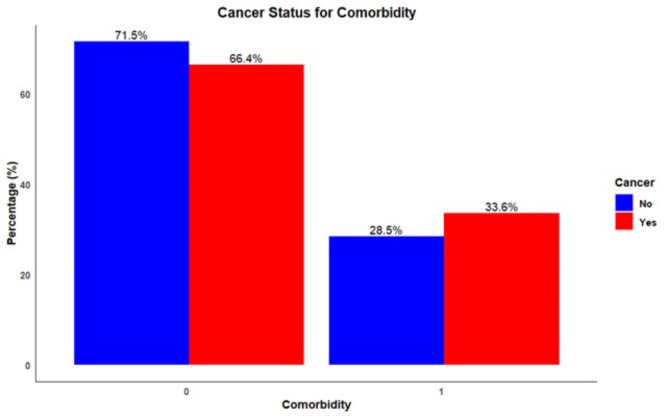
Results: In the multivariable regression model, we observed higher chances of developing comorbidity (OR = 1.321, p-value 0.0051) among the cancer group compared to the non-cancer group, adjusting the socio-economic factors. Moreover, the socio-economic factors were found to be significantly associated with cancer leading to applying the propensity score matching with (1:3 matching). Finally, the balanced data also showed significantly higher chances of developing comorbidity (OR = 1.294, p-value 0.0207) among cancer patients.
Conclusions: The above findings demonstrated the imperative development of enhanced treatment protocols, which prioritize the overall health of cancer patients, thereby reducing their susceptibility to additional illnesses.
期刊介绍:
BMC Public Health is an open access, peer-reviewed journal that considers articles on the epidemiology of disease and the understanding of all aspects of public health. The journal has a special focus on the social determinants of health, the environmental, behavioral, and occupational correlates of health and disease, and the impact of health policies, practices and interventions on the community.





 京公网安备 11010802042870号
京ICP备2023020795号-1
京公网安备 11010802042870号
京ICP备2023020795号-1

 分享
分享
 求助内容:
求助内容: 应助结果提醒方式:
 扫码关注我们
