{"title":"撒哈拉以南非洲地区糖尿病患者外周动脉疾病负担及危险因素:一项系统综述和荟萃分析","authors":"Kirubel Eshetu Haile, Yordanos Sisay Asgedom, Gedion Asnake Azeze, Atitegeb Alebachew Amsalu, Gizachew Ambaw Kassie, Amanuel Yosef Gebrekidan","doi":"10.1186/s12902-025-01866-8","DOIUrl":null,"url":null,"abstract":"<p><strong>Background: </strong>Diabetes is a non-communicable disease that presents a substantial public health challenge on a global scale. Peripheral artery disease is a significant macrovascular problem in diabetes mellitus characterized by atherosclerotic narrowing of the artery in the lower extremities, leading to compromised distal perfusion, primarily caused by atherosclerosis, and resulting in impaired functional capacity. Although existing studies on, peripheral artery disease among patients with diabetes mellitus are available, the results have been inconsistent.</p><p><strong>Objective: </strong>To determine the pooled burden and associated factors of peripheral artery disease among patients with diabetes mellitus in sub-Saharan Africa.</p><p><strong>Methods: </strong>A systematic review and meta-analysis were performed following the guidelines established by the Preferred Reporting Items for Systematic Reviews and Meta-Analyses. To identify papers published in English up to August 10, 2024, the electronic databases of Medline, Science Direct, Excerpta Medica Database, Cochrane Library, African Journals Online, and Google Scholar were searched. A random-effects model was employed to estimate the pooled prevalence and associated factors of peripheral artery disease. To test for heterogeneity between studies and publication bias, forest plots and funnel plots were used.</p><p><strong>Results: </strong>This study revealed that the pooled prevalence of peripheral artery disease among patients with diabetes mellitus was 32.97% (95% CI 29.7, 36.24), reflecting the significant impact of diabetes mellitus on vascular health. Age (OR = 2.51, 95% CI = 3.41-12.09), increased level of low density lipoprotein (OR = 1.64, 95% CI = 1.05-13.09), BMI (OR = 3.03, 95% CI = 1.74-7.56), and illness duration exceeding 10 years (OR = 2.44, 95% CI = 1.12-5.13), were the significant predictors.</p><p><strong>Conclusion: </strong>Despite the alarming prevalence of peripheral artery disease among patients with diabetes in sub-Saharan Africa, it remains underdiagnosed; therefore, increased awareness, proactive screening initiatives, and management strategies within the clinical setting are necessary.</p><p><strong>Clinical trial number: </strong>Not applicable.</p><p><strong>Prospero: </strong>CRD42024594577.</p>","PeriodicalId":9152,"journal":{"name":"BMC Endocrine Disorders","volume":"25 1","pages":"42"},"PeriodicalIF":3.7000,"publicationDate":"2025-02-17","publicationTypes":"Journal Article","fieldsOfStudy":null,"isOpenAccess":false,"openAccessPdf":"https://www.ncbi.nlm.nih.gov/pmc/articles/PMC11831791/pdf/","citationCount":"0","resultStr":"{\"title\":\"Burden of peripheral artery disease and risk factors among patients with diabetes mellitus in sub-Saharan Africa: a systematic review and meta-analysis.\",\"authors\":\"Kirubel Eshetu Haile, Yordanos Sisay Asgedom, Gedion Asnake Azeze, Atitegeb Alebachew Amsalu, Gizachew Ambaw Kassie, Amanuel Yosef Gebrekidan\",\"doi\":\"10.1186/s12902-025-01866-8\",\"DOIUrl\":null,\"url\":null,\"abstract\":\"<p><strong>Background: </strong>Diabetes is a non-communicable disease that presents a substantial public health challenge on a global scale. Peripheral artery disease is a significant macrovascular problem in diabetes mellitus characterized by atherosclerotic narrowing of the artery in the lower extremities, leading to compromised distal perfusion, primarily caused by atherosclerosis, and resulting in impaired functional capacity. Although existing studies on, peripheral artery disease among patients with diabetes mellitus are available, the results have been inconsistent.</p><p><strong>Objective: </strong>To determine the pooled burden and associated factors of peripheral artery disease among patients with diabetes mellitus in sub-Saharan Africa.</p><p><strong>Methods: </strong>A systematic review and meta-analysis were performed following the guidelines established by the Preferred Reporting Items for Systematic Reviews and Meta-Analyses. To identify papers published in English up to August 10, 2024, the electronic databases of Medline, Science Direct, Excerpta Medica Database, Cochrane Library, African Journals Online, and Google Scholar were searched. A random-effects model was employed to estimate the pooled prevalence and associated factors of peripheral artery disease. To test for heterogeneity between studies and publication bias, forest plots and funnel plots were used.</p><p><strong>Results: </strong>This study revealed that the pooled prevalence of peripheral artery disease among patients with diabetes mellitus was 32.97% (95% CI 29.7, 36.24), reflecting the significant impact of diabetes mellitus on vascular health. Age (OR = 2.51, 95% CI = 3.41-12.09), increased level of low density lipoprotein (OR = 1.64, 95% CI = 1.05-13.09), BMI (OR = 3.03, 95% CI = 1.74-7.56), and illness duration exceeding 10 years (OR = 2.44, 95% CI = 1.12-5.13), were the significant predictors.</p><p><strong>Conclusion: </strong>Despite the alarming prevalence of peripheral artery disease among patients with diabetes in sub-Saharan Africa, it remains underdiagnosed; therefore, increased awareness, proactive screening initiatives, and management strategies within the clinical setting are necessary.</p><p><strong>Clinical trial number: </strong>Not applicable.</p><p><strong>Prospero: </strong>CRD42024594577.</p>\",\"PeriodicalId\":9152,\"journal\":{\"name\":\"BMC Endocrine Disorders\",\"volume\":\"25 1\",\"pages\":\"42\"},\"PeriodicalIF\":3.7000,\"publicationDate\":\"2025-02-17\",\"publicationTypes\":\"Journal Article\",\"fieldsOfStudy\":null,\"isOpenAccess\":false,\"openAccessPdf\":\"https://www.ncbi.nlm.nih.gov/pmc/articles/PMC11831791/pdf/\",\"citationCount\":\"0\",\"resultStr\":null,\"platform\":\"Semanticscholar\",\"paperid\":null,\"PeriodicalName\":\"BMC Endocrine Disorders\",\"FirstCategoryId\":\"3\",\"ListUrlMain\":\"https://doi.org/10.1186/s12902-025-01866-8\",\"RegionNum\":3,\"RegionCategory\":\"医学\",\"ArticlePicture\":[],\"TitleCN\":null,\"AbstractTextCN\":null,\"PMCID\":null,\"EPubDate\":\"\",\"PubModel\":\"\",\"JCR\":\"Q3\",\"JCRName\":\"ENDOCRINOLOGY & METABOLISM\",\"Score\":null,\"Total\":0}","platform":"Semanticscholar","paperid":null,"PeriodicalName":"BMC Endocrine Disorders","FirstCategoryId":"3","ListUrlMain":"https://doi.org/10.1186/s12902-025-01866-8","RegionNum":3,"RegionCategory":"医学","ArticlePicture":[],"TitleCN":null,"AbstractTextCN":null,"PMCID":null,"EPubDate":"","PubModel":"","JCR":"Q3","JCRName":"ENDOCRINOLOGY & METABOLISM","Score":null,"Total":0}
引用次数: 0
摘要
背景:糖尿病是一种非传染性疾病,在全球范围内对公共卫生构成重大挑战。外周动脉疾病是糖尿病患者的一个重要大血管问题,其特征是下肢动脉粥样硬化性狭窄,导致远端灌注受损,主要由动脉粥样硬化引起,并导致功能受损。虽然已有关于糖尿病患者外周动脉病变的研究,但结果并不一致。目的:了解撒哈拉以南非洲地区糖尿病患者外周动脉疾病的总体负担及相关因素。方法:根据系统评价和荟萃分析首选报告项目建立的指南进行系统评价和荟萃分析。为了确定2024年8月10日前发表的英文论文,检索了Medline、Science Direct、摘录医学数据库、Cochrane Library、African Journals Online和谷歌Scholar等电子数据库。采用随机效应模型估计外周动脉疾病的总患病率和相关因素。为了检验研究和发表偏倚之间的异质性,使用了森林图和漏斗图。结果:本研究显示糖尿病患者外周动脉病变的总患病率为32.97% (95% CI 29.7, 36.24),反映了糖尿病对血管健康的显著影响。年龄(OR = 2.51, 95% CI = 3.41-12.09)、低密度脂蛋白水平升高(OR = 1.64, 95% CI = 1.05-13.09)、BMI (OR = 3.03, 95% CI = 1.74-7.56)、病程超过10年(OR = 2.44, 95% CI = 1.12-5.13)是显著的预测因素。结论:尽管外周动脉疾病在撒哈拉以南非洲糖尿病患者中的患病率令人担忧,但仍未得到充分诊断;因此,在临床环境中提高认识,积极主动的筛查倡议和管理策略是必要的。临床试验号:不适用。普洛斯彼罗:CRD42024594577。
Burden of peripheral artery disease and risk factors among patients with diabetes mellitus in sub-Saharan Africa: a systematic review and meta-analysis.
Background: Diabetes is a non-communicable disease that presents a substantial public health challenge on a global scale. Peripheral artery disease is a significant macrovascular problem in diabetes mellitus characterized by atherosclerotic narrowing of the artery in the lower extremities, leading to compromised distal perfusion, primarily caused by atherosclerosis, and resulting in impaired functional capacity. Although existing studies on, peripheral artery disease among patients with diabetes mellitus are available, the results have been inconsistent.
Objective: To determine the pooled burden and associated factors of peripheral artery disease among patients with diabetes mellitus in sub-Saharan Africa.
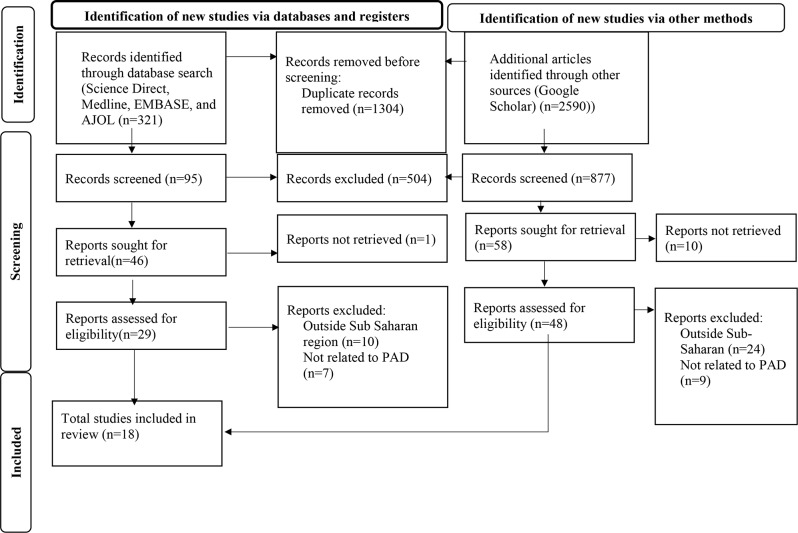
Methods: A systematic review and meta-analysis were performed following the guidelines established by the Preferred Reporting Items for Systematic Reviews and Meta-Analyses. To identify papers published in English up to August 10, 2024, the electronic databases of Medline, Science Direct, Excerpta Medica Database, Cochrane Library, African Journals Online, and Google Scholar were searched. A random-effects model was employed to estimate the pooled prevalence and associated factors of peripheral artery disease. To test for heterogeneity between studies and publication bias, forest plots and funnel plots were used.
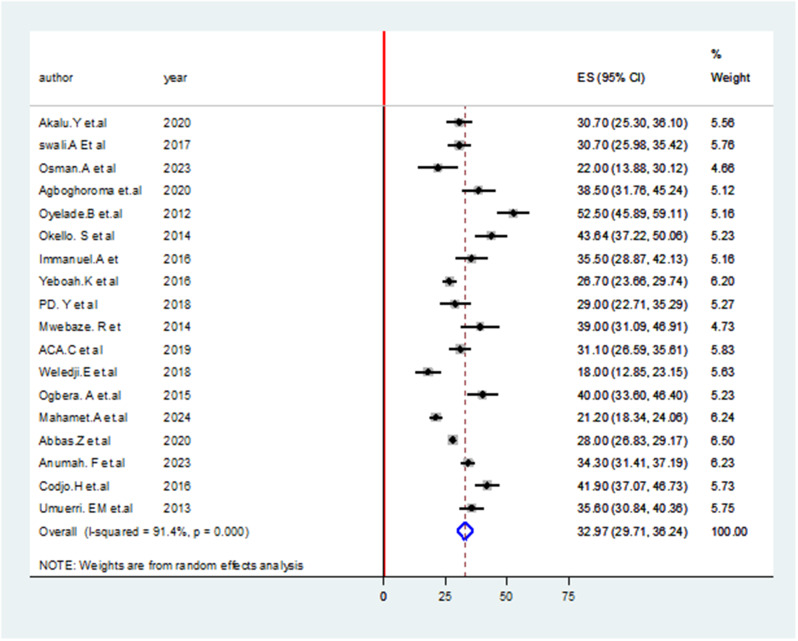
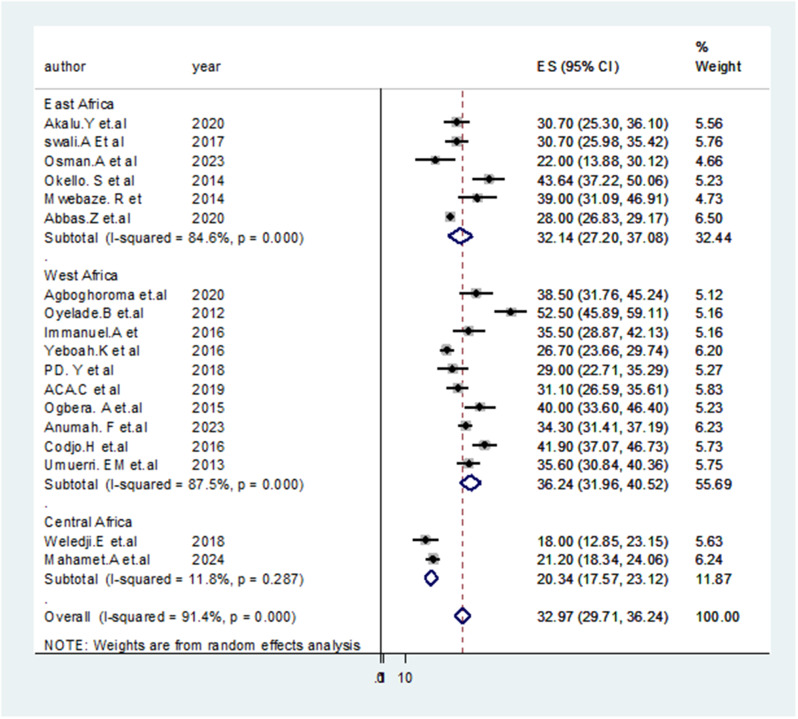
Results: This study revealed that the pooled prevalence of peripheral artery disease among patients with diabetes mellitus was 32.97% (95% CI 29.7, 36.24), reflecting the significant impact of diabetes mellitus on vascular health. Age (OR = 2.51, 95% CI = 3.41-12.09), increased level of low density lipoprotein (OR = 1.64, 95% CI = 1.05-13.09), BMI (OR = 3.03, 95% CI = 1.74-7.56), and illness duration exceeding 10 years (OR = 2.44, 95% CI = 1.12-5.13), were the significant predictors.
Conclusion: Despite the alarming prevalence of peripheral artery disease among patients with diabetes in sub-Saharan Africa, it remains underdiagnosed; therefore, increased awareness, proactive screening initiatives, and management strategies within the clinical setting are necessary.
期刊介绍:
BMC Endocrine Disorders is an open access, peer-reviewed journal that considers articles on all aspects of the prevention, diagnosis and management of endocrine disorders, as well as related molecular genetics, pathophysiology, and epidemiology.





 京公网安备 11010802042870号
京ICP备2023020795号-1
京公网安备 11010802042870号
京ICP备2023020795号-1

 分享
分享
 求助内容:
求助内容: 应助结果提醒方式:
 扫码关注我们
