E. V. Evstyukhina, A. M. Zagrebaev, A. V. Trifonenkov
{"title":"在极端外部效应威胁期间对负荷跟踪核反应堆功率的最优控制","authors":"E. V. Evstyukhina, A. M. Zagrebaev, A. V. Trifonenkov","doi":"10.1134/S1063778824100120","DOIUrl":null,"url":null,"abstract":"<p>The authors consider a situation where a nuclear power plant operating with a variable daily load schedule receives a signal about the likely start of extreme external influences in the immediate future, forcing the shutdown of the reactor. The plant’s personnel are authorized to establish a regime in which the reactors operate during the period of the threat until it materializes or is canceled. A two-level daily graph is presented of the change in the power of the nuclear reactor. It is assumed a threat warning is received at the beginning of the period, and the reactor power is held constant at a level between day and night regimes for the period of the threat. The problem of finding the optimum level of power is noted and solved. The loss function is calculated as the total economic damage, weighted by the probabilities of the materialization and cancellation of the threat, caused by deviating from the consumption schedule in the event of a false alarm and the downtime in the iodine pit in the event of a real threat. Results show that the effect of optimization grows along with the probability of a threat, so the power regime must be changed to appropriate level a. The effect of optimization is estimated.</p>","PeriodicalId":728,"journal":{"name":"Physics of Atomic Nuclei","volume":"87 10","pages":"1383 - 1386"},"PeriodicalIF":0.5000,"publicationDate":"2025-02-19","publicationTypes":"Journal Article","fieldsOfStudy":null,"isOpenAccess":false,"openAccessPdf":"","citationCount":"0","resultStr":"{\"title\":\"Optimum Control over the Power of a Load-Following Nuclear Reactor during a Period of Threatened Extreme External Effects\",\"authors\":\"E. V. Evstyukhina, A. M. Zagrebaev, A. V. Trifonenkov\",\"doi\":\"10.1134/S1063778824100120\",\"DOIUrl\":null,\"url\":null,\"abstract\":\"<p>The authors consider a situation where a nuclear power plant operating with a variable daily load schedule receives a signal about the likely start of extreme external influences in the immediate future, forcing the shutdown of the reactor. The plant’s personnel are authorized to establish a regime in which the reactors operate during the period of the threat until it materializes or is canceled. A two-level daily graph is presented of the change in the power of the nuclear reactor. It is assumed a threat warning is received at the beginning of the period, and the reactor power is held constant at a level between day and night regimes for the period of the threat. The problem of finding the optimum level of power is noted and solved. The loss function is calculated as the total economic damage, weighted by the probabilities of the materialization and cancellation of the threat, caused by deviating from the consumption schedule in the event of a false alarm and the downtime in the iodine pit in the event of a real threat. Results show that the effect of optimization grows along with the probability of a threat, so the power regime must be changed to appropriate level a. The effect of optimization is estimated.</p>\",\"PeriodicalId\":728,\"journal\":{\"name\":\"Physics of Atomic Nuclei\",\"volume\":\"87 10\",\"pages\":\"1383 - 1386\"},\"PeriodicalIF\":0.5000,\"publicationDate\":\"2025-02-19\",\"publicationTypes\":\"Journal Article\",\"fieldsOfStudy\":null,\"isOpenAccess\":false,\"openAccessPdf\":\"\",\"citationCount\":\"0\",\"resultStr\":null,\"platform\":\"Semanticscholar\",\"paperid\":null,\"PeriodicalName\":\"Physics of Atomic Nuclei\",\"FirstCategoryId\":\"101\",\"ListUrlMain\":\"https://link.springer.com/article/10.1134/S1063778824100120\",\"RegionNum\":4,\"RegionCategory\":\"物理与天体物理\",\"ArticlePicture\":[],\"TitleCN\":null,\"AbstractTextCN\":null,\"PMCID\":null,\"EPubDate\":\"\",\"PubModel\":\"\",\"JCR\":\"Q4\",\"JCRName\":\"PHYSICS, NUCLEAR\",\"Score\":null,\"Total\":0}","platform":"Semanticscholar","paperid":null,"PeriodicalName":"Physics of Atomic Nuclei","FirstCategoryId":"101","ListUrlMain":"https://link.springer.com/article/10.1134/S1063778824100120","RegionNum":4,"RegionCategory":"物理与天体物理","ArticlePicture":[],"TitleCN":null,"AbstractTextCN":null,"PMCID":null,"EPubDate":"","PubModel":"","JCR":"Q4","JCRName":"PHYSICS, NUCLEAR","Score":null,"Total":0}
Optimum Control over the Power of a Load-Following Nuclear Reactor during a Period of Threatened Extreme External Effects
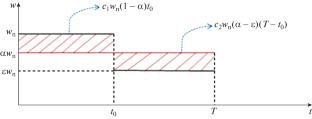
The authors consider a situation where a nuclear power plant operating with a variable daily load schedule receives a signal about the likely start of extreme external influences in the immediate future, forcing the shutdown of the reactor. The plant’s personnel are authorized to establish a regime in which the reactors operate during the period of the threat until it materializes or is canceled. A two-level daily graph is presented of the change in the power of the nuclear reactor. It is assumed a threat warning is received at the beginning of the period, and the reactor power is held constant at a level between day and night regimes for the period of the threat. The problem of finding the optimum level of power is noted and solved. The loss function is calculated as the total economic damage, weighted by the probabilities of the materialization and cancellation of the threat, caused by deviating from the consumption schedule in the event of a false alarm and the downtime in the iodine pit in the event of a real threat. Results show that the effect of optimization grows along with the probability of a threat, so the power regime must be changed to appropriate level a. The effect of optimization is estimated.
期刊介绍:
Physics of Atomic Nuclei is a journal that covers experimental and theoretical studies of nuclear physics: nuclear structure, spectra, and properties; radiation, fission, and nuclear reactions induced by photons, leptons, hadrons, and nuclei; fundamental interactions and symmetries; hadrons (with light, strange, charm, and bottom quarks); particle collisions at high and superhigh energies; gauge and unified quantum field theories, quark models, supersymmetry and supergravity, astrophysics and cosmology.




 京公网安备 11010802042870号
京ICP备2023020795号-1
京公网安备 11010802042870号
京ICP备2023020795号-1

 分享
分享
 求助内容:
求助内容: 应助结果提醒方式:
 扫码关注我们
