Anna Romiti, Mario Del Vecchio, Caterina Cavicchi, Emidia Vagnoni
{"title":"危机背景下的医疗保健组织:决策模型和ceo的角色。","authors":"Anna Romiti, Mario Del Vecchio, Caterina Cavicchi, Emidia Vagnoni","doi":"10.1186/s12913-025-12420-6","DOIUrl":null,"url":null,"abstract":"<p><strong>Background: </strong>In times of crisis, decision-making can become a highly complex process that is shaped differently than in ordinary contexts. The literature presents different decision-making models that have not yet been thoroughly tested in practice. This paper aims to enhance our understanding of the distinctive characteristics of healthcare organizations' decision-making models in crisis contexts, building upon and expanding the framework proposed by Arendt et al. (2005).</p><p><strong>Methods: </strong>Based on a qualitative research design, data were collected through semi-structured interviews with 49 CEOs of Italian healthcare organizations, including both local health authorities and independent hospitals.</p><p><strong>Results: </strong>CEOs' decision-making processes demonstrated several commonalities: a shift from strategic issues to operational issues; a narrowed CEO focus on only a few areas of operations, and a significant concentration of the DMP in time and space. These shared elements provide insights into the nature of the centralization process adopted by CEOs in such situations. Additionally, we identified various decision-making models to manage the same crisis, with each model presenting a different level of involvement of other actors in the decision-making process, reflecting the CEO's unique vision and background.</p><p><strong>Conclusions: </strong>This research makes a significant contribution to the growing literature on crisis management in three key ways. First, it emphasizes the importance of analyzing the decision-making process through the combined lens of different dimensions and phases. Second, it enhances the Arendt et al. (2015) model to include multiple critical dimensions of the decision-making process beyond the initial focus on decentralization, and demonstrates how, in a crisis context, the actors involved by the CEOs diverge from the original framework. Third, it offers new insights into the variables affecting the roles of the CEOs and other key actors in crisis-related decision-making, transcending the boundaries of role theory. In terms of managerial implications, reflecting on and interpreting the core of the organization's decision-making processes, can support top management teams in navigating change, providing them a more robust and rational base for guiding the transition to a post-crisis \"new normal\".</p>","PeriodicalId":9012,"journal":{"name":"BMC Health Services Research","volume":"25 1","pages":"273"},"PeriodicalIF":3.3000,"publicationDate":"2025-02-18","publicationTypes":"Journal Article","fieldsOfStudy":null,"isOpenAccess":false,"openAccessPdf":"https://www.ncbi.nlm.nih.gov/pmc/articles/PMC11837454/pdf/","citationCount":"0","resultStr":"{\"title\":\"Healthcare organizations in crisis context: decision-making models and roles of CEOs.\",\"authors\":\"Anna Romiti, Mario Del Vecchio, Caterina Cavicchi, Emidia Vagnoni\",\"doi\":\"10.1186/s12913-025-12420-6\",\"DOIUrl\":null,\"url\":null,\"abstract\":\"<p><strong>Background: </strong>In times of crisis, decision-making can become a highly complex process that is shaped differently than in ordinary contexts. The literature presents different decision-making models that have not yet been thoroughly tested in practice. This paper aims to enhance our understanding of the distinctive characteristics of healthcare organizations' decision-making models in crisis contexts, building upon and expanding the framework proposed by Arendt et al. (2005).</p><p><strong>Methods: </strong>Based on a qualitative research design, data were collected through semi-structured interviews with 49 CEOs of Italian healthcare organizations, including both local health authorities and independent hospitals.</p><p><strong>Results: </strong>CEOs' decision-making processes demonstrated several commonalities: a shift from strategic issues to operational issues; a narrowed CEO focus on only a few areas of operations, and a significant concentration of the DMP in time and space. These shared elements provide insights into the nature of the centralization process adopted by CEOs in such situations. Additionally, we identified various decision-making models to manage the same crisis, with each model presenting a different level of involvement of other actors in the decision-making process, reflecting the CEO's unique vision and background.</p><p><strong>Conclusions: </strong>This research makes a significant contribution to the growing literature on crisis management in three key ways. First, it emphasizes the importance of analyzing the decision-making process through the combined lens of different dimensions and phases. Second, it enhances the Arendt et al. (2015) model to include multiple critical dimensions of the decision-making process beyond the initial focus on decentralization, and demonstrates how, in a crisis context, the actors involved by the CEOs diverge from the original framework. Third, it offers new insights into the variables affecting the roles of the CEOs and other key actors in crisis-related decision-making, transcending the boundaries of role theory. In terms of managerial implications, reflecting on and interpreting the core of the organization's decision-making processes, can support top management teams in navigating change, providing them a more robust and rational base for guiding the transition to a post-crisis \\\"new normal\\\".</p>\",\"PeriodicalId\":9012,\"journal\":{\"name\":\"BMC Health Services Research\",\"volume\":\"25 1\",\"pages\":\"273\"},\"PeriodicalIF\":3.3000,\"publicationDate\":\"2025-02-18\",\"publicationTypes\":\"Journal Article\",\"fieldsOfStudy\":null,\"isOpenAccess\":false,\"openAccessPdf\":\"https://www.ncbi.nlm.nih.gov/pmc/articles/PMC11837454/pdf/\",\"citationCount\":\"0\",\"resultStr\":null,\"platform\":\"Semanticscholar\",\"paperid\":null,\"PeriodicalName\":\"BMC Health Services Research\",\"FirstCategoryId\":\"3\",\"ListUrlMain\":\"https://doi.org/10.1186/s12913-025-12420-6\",\"RegionNum\":3,\"RegionCategory\":\"医学\",\"ArticlePicture\":[],\"TitleCN\":null,\"AbstractTextCN\":null,\"PMCID\":null,\"EPubDate\":\"\",\"PubModel\":\"\",\"JCR\":\"Q2\",\"JCRName\":\"HEALTH CARE SCIENCES & SERVICES\",\"Score\":null,\"Total\":0}","platform":"Semanticscholar","paperid":null,"PeriodicalName":"BMC Health Services Research","FirstCategoryId":"3","ListUrlMain":"https://doi.org/10.1186/s12913-025-12420-6","RegionNum":3,"RegionCategory":"医学","ArticlePicture":[],"TitleCN":null,"AbstractTextCN":null,"PMCID":null,"EPubDate":"","PubModel":"","JCR":"Q2","JCRName":"HEALTH CARE SCIENCES & SERVICES","Score":null,"Total":0}
Healthcare organizations in crisis context: decision-making models and roles of CEOs.
Background: In times of crisis, decision-making can become a highly complex process that is shaped differently than in ordinary contexts. The literature presents different decision-making models that have not yet been thoroughly tested in practice. This paper aims to enhance our understanding of the distinctive characteristics of healthcare organizations' decision-making models in crisis contexts, building upon and expanding the framework proposed by Arendt et al. (2005).
Methods: Based on a qualitative research design, data were collected through semi-structured interviews with 49 CEOs of Italian healthcare organizations, including both local health authorities and independent hospitals.
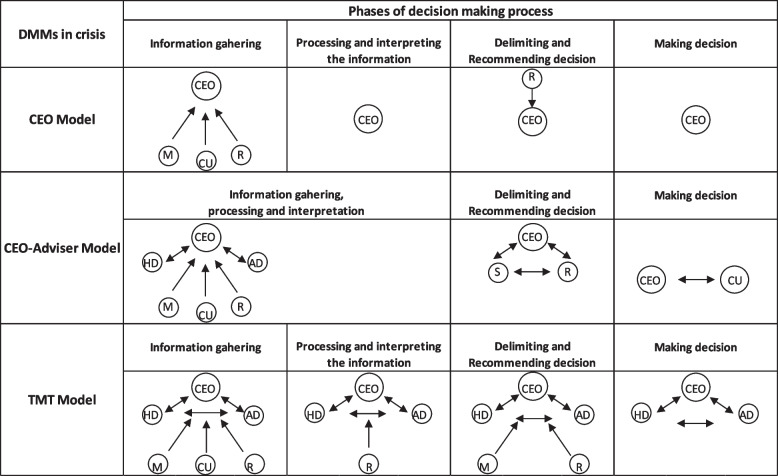
Results: CEOs' decision-making processes demonstrated several commonalities: a shift from strategic issues to operational issues; a narrowed CEO focus on only a few areas of operations, and a significant concentration of the DMP in time and space. These shared elements provide insights into the nature of the centralization process adopted by CEOs in such situations. Additionally, we identified various decision-making models to manage the same crisis, with each model presenting a different level of involvement of other actors in the decision-making process, reflecting the CEO's unique vision and background.
Conclusions: This research makes a significant contribution to the growing literature on crisis management in three key ways. First, it emphasizes the importance of analyzing the decision-making process through the combined lens of different dimensions and phases. Second, it enhances the Arendt et al. (2015) model to include multiple critical dimensions of the decision-making process beyond the initial focus on decentralization, and demonstrates how, in a crisis context, the actors involved by the CEOs diverge from the original framework. Third, it offers new insights into the variables affecting the roles of the CEOs and other key actors in crisis-related decision-making, transcending the boundaries of role theory. In terms of managerial implications, reflecting on and interpreting the core of the organization's decision-making processes, can support top management teams in navigating change, providing them a more robust and rational base for guiding the transition to a post-crisis "new normal".
期刊介绍:
BMC Health Services Research is an open access, peer-reviewed journal that considers articles on all aspects of health services research, including delivery of care, management of health services, assessment of healthcare needs, measurement of outcomes, allocation of healthcare resources, evaluation of different health markets and health services organizations, international comparative analysis of health systems, health economics and the impact of health policies and regulations.





 京公网安备 11010802042870号
京ICP备2023020795号-1
京公网安备 11010802042870号
京ICP备2023020795号-1

 分享
分享
 求助内容:
求助内容: 应助结果提醒方式:
 扫码关注我们
