Polina Specktor, Ronen Spierer, Mark Katson, Moshe Herskovitz
{"title":"局灶性癫痫间期脑电图放电的继发性双侧同步:患病率及相关因素。","authors":"Polina Specktor, Ronen Spierer, Mark Katson, Moshe Herskovitz","doi":"10.3389/fneur.2025.1446471","DOIUrl":null,"url":null,"abstract":"<p><strong>Background: </strong>Epilepsy is commonly categorized based on etiology, treatment, and prognosis. Misclassification can occur due to the presence of interictal secondary bilateral synchronization (SBS) discharges seen on an electroencephalogram (EEG), misleading the classification process.</p><p><strong>Objective: </strong>To examine the prevalence of interictal SBS discharges in patients with focal epilepsy and to identify predictors of these discharges.</p><p><strong>Design: </strong>Retrospective analysis of patients who underwent long-term video EEG monitoring (LTVEM) from August 2001 to May 2014.</p><p><strong>Methods: </strong>We included patients with focal epilepsy. The patients were divided into two groups based on whether or not they had SBS discharges.</p><p><strong>Results: </strong>We found 1,017 patients who underwent LTVEM. Of the 221 patients included in the final analysis, 36 (16%) exhibited SBS discharges. Patients in the SBS group were younger and had an earlier onset age of epilepsy. They also had higher rates of unclear seizure onset zone and focal to bilateral tonic-clonic seizures. In the binary logistic regression analysis, young onset age of epilepsy was the only significant factor.</p><p><strong>Conclusion: </strong>The prevalence of SBS discharges in focal epilepsy is relatively high (16%), emphasizing the importance of cautious interpretation of interictal EEG in epilepsy classification. Young age of disease onset is associated with higher rates of SBS.</p>","PeriodicalId":12575,"journal":{"name":"Frontiers in Neurology","volume":"16 ","pages":"1446471"},"PeriodicalIF":3.3000,"publicationDate":"2025-02-04","publicationTypes":"Journal Article","fieldsOfStudy":null,"isOpenAccess":false,"openAccessPdf":"https://www.ncbi.nlm.nih.gov/pmc/articles/PMC11832370/pdf/","citationCount":"0","resultStr":"{\"title\":\"Secondary bilateral synchronization of interictal EEG discharges in focal epilepsy: prevalence and associated factors.\",\"authors\":\"Polina Specktor, Ronen Spierer, Mark Katson, Moshe Herskovitz\",\"doi\":\"10.3389/fneur.2025.1446471\",\"DOIUrl\":null,\"url\":null,\"abstract\":\"<p><strong>Background: </strong>Epilepsy is commonly categorized based on etiology, treatment, and prognosis. Misclassification can occur due to the presence of interictal secondary bilateral synchronization (SBS) discharges seen on an electroencephalogram (EEG), misleading the classification process.</p><p><strong>Objective: </strong>To examine the prevalence of interictal SBS discharges in patients with focal epilepsy and to identify predictors of these discharges.</p><p><strong>Design: </strong>Retrospective analysis of patients who underwent long-term video EEG monitoring (LTVEM) from August 2001 to May 2014.</p><p><strong>Methods: </strong>We included patients with focal epilepsy. The patients were divided into two groups based on whether or not they had SBS discharges.</p><p><strong>Results: </strong>We found 1,017 patients who underwent LTVEM. Of the 221 patients included in the final analysis, 36 (16%) exhibited SBS discharges. Patients in the SBS group were younger and had an earlier onset age of epilepsy. They also had higher rates of unclear seizure onset zone and focal to bilateral tonic-clonic seizures. In the binary logistic regression analysis, young onset age of epilepsy was the only significant factor.</p><p><strong>Conclusion: </strong>The prevalence of SBS discharges in focal epilepsy is relatively high (16%), emphasizing the importance of cautious interpretation of interictal EEG in epilepsy classification. Young age of disease onset is associated with higher rates of SBS.</p>\",\"PeriodicalId\":12575,\"journal\":{\"name\":\"Frontiers in Neurology\",\"volume\":\"16 \",\"pages\":\"1446471\"},\"PeriodicalIF\":3.3000,\"publicationDate\":\"2025-02-04\",\"publicationTypes\":\"Journal Article\",\"fieldsOfStudy\":null,\"isOpenAccess\":false,\"openAccessPdf\":\"https://www.ncbi.nlm.nih.gov/pmc/articles/PMC11832370/pdf/\",\"citationCount\":\"0\",\"resultStr\":null,\"platform\":\"Semanticscholar\",\"paperid\":null,\"PeriodicalName\":\"Frontiers in Neurology\",\"FirstCategoryId\":\"3\",\"ListUrlMain\":\"https://doi.org/10.3389/fneur.2025.1446471\",\"RegionNum\":3,\"RegionCategory\":\"医学\",\"ArticlePicture\":[],\"TitleCN\":null,\"AbstractTextCN\":null,\"PMCID\":null,\"EPubDate\":\"2025/1/1 0:00:00\",\"PubModel\":\"eCollection\",\"JCR\":\"Q2\",\"JCRName\":\"CLINICAL NEUROLOGY\",\"Score\":null,\"Total\":0}","platform":"Semanticscholar","paperid":null,"PeriodicalName":"Frontiers in Neurology","FirstCategoryId":"3","ListUrlMain":"https://doi.org/10.3389/fneur.2025.1446471","RegionNum":3,"RegionCategory":"医学","ArticlePicture":[],"TitleCN":null,"AbstractTextCN":null,"PMCID":null,"EPubDate":"2025/1/1 0:00:00","PubModel":"eCollection","JCR":"Q2","JCRName":"CLINICAL NEUROLOGY","Score":null,"Total":0}
Secondary bilateral synchronization of interictal EEG discharges in focal epilepsy: prevalence and associated factors.
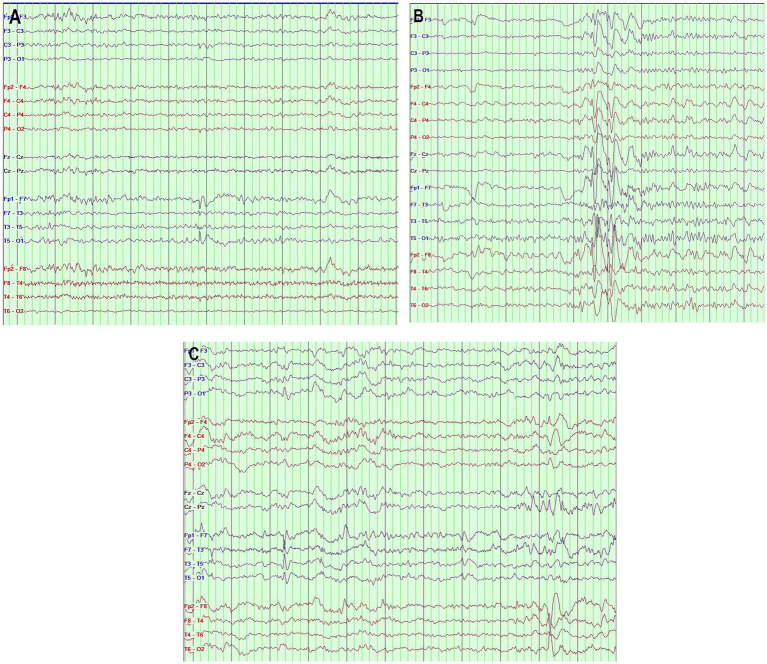
Background: Epilepsy is commonly categorized based on etiology, treatment, and prognosis. Misclassification can occur due to the presence of interictal secondary bilateral synchronization (SBS) discharges seen on an electroencephalogram (EEG), misleading the classification process.
Objective: To examine the prevalence of interictal SBS discharges in patients with focal epilepsy and to identify predictors of these discharges.
Design: Retrospective analysis of patients who underwent long-term video EEG monitoring (LTVEM) from August 2001 to May 2014.
Methods: We included patients with focal epilepsy. The patients were divided into two groups based on whether or not they had SBS discharges.
Results: We found 1,017 patients who underwent LTVEM. Of the 221 patients included in the final analysis, 36 (16%) exhibited SBS discharges. Patients in the SBS group were younger and had an earlier onset age of epilepsy. They also had higher rates of unclear seizure onset zone and focal to bilateral tonic-clonic seizures. In the binary logistic regression analysis, young onset age of epilepsy was the only significant factor.
Conclusion: The prevalence of SBS discharges in focal epilepsy is relatively high (16%), emphasizing the importance of cautious interpretation of interictal EEG in epilepsy classification. Young age of disease onset is associated with higher rates of SBS.
期刊介绍:
The section Stroke aims to quickly and accurately publish important experimental, translational and clinical studies, and reviews that contribute to the knowledge of stroke, its causes, manifestations, diagnosis, and management.





 京公网安备 11010802042870号
京ICP备2023020795号-1
京公网安备 11010802042870号
京ICP备2023020795号-1

 分享
分享
 求助内容:
求助内容: 应助结果提醒方式:
 扫码关注我们
