{"title":"枕动脉-小脑后下动脉旁路术治疗小脑前下动脉狭窄伴反复缺血性脑卒中1例。","authors":"Hiroki Eguchi, Takashi Arai, Takakazu Kawamata","doi":"10.1186/s13256-025-05092-7","DOIUrl":null,"url":null,"abstract":"<p><strong>Background: </strong>Vertebrobasilar insufficiency revascularization has long been a preventive treatment for cerebral infarction. However, no studies have demonstrated the efficacy of revascularization in patients with cerebellar ischemia.</p><p><strong>Case presentation: </strong>We present the case of a 77-year-old Japanese man who experienced seven recurrent cerebellar infarctions over 2 years. Severe stenosis was noted at the origin of the common trunk of the posterior inferior cerebellar artery and anterior inferior cerebellar artery. Patients with cerebral infarctions are resistant to medical treatment. Blood flow evaluation showed that the area of reduced cerebrovascular reactivity corresponded to the area where repeated small infarctions occurred. An occipital artery-posterior inferior cerebellar artery bypass was performed to prevent another infarction. Postoperative single-photon emission computed tomography showed an improved cerebrovascular reactivity. No ischemic events occurred during 2 years of a postoperative follow-up period.</p><p><strong>Conclusion: </strong>Occipital artery-posterior inferior cerebellar artery bypass is an effective treatment method for vascular stenosis and decreased blood circulation due to posterior circulation ischemia.</p>","PeriodicalId":16236,"journal":{"name":"Journal of Medical Case Reports","volume":"19 1","pages":"62"},"PeriodicalIF":0.8000,"publicationDate":"2025-02-18","publicationTypes":"Journal Article","fieldsOfStudy":null,"isOpenAccess":false,"openAccessPdf":"https://www.ncbi.nlm.nih.gov/pmc/articles/PMC11837596/pdf/","citationCount":"0","resultStr":"{\"title\":\"Occipital artery-posterior inferior cerebellar artery bypass for anterior inferior cerebellar artery stenosis with repeated cerebellar ischemic stroke: a case report.\",\"authors\":\"Hiroki Eguchi, Takashi Arai, Takakazu Kawamata\",\"doi\":\"10.1186/s13256-025-05092-7\",\"DOIUrl\":null,\"url\":null,\"abstract\":\"<p><strong>Background: </strong>Vertebrobasilar insufficiency revascularization has long been a preventive treatment for cerebral infarction. However, no studies have demonstrated the efficacy of revascularization in patients with cerebellar ischemia.</p><p><strong>Case presentation: </strong>We present the case of a 77-year-old Japanese man who experienced seven recurrent cerebellar infarctions over 2 years. Severe stenosis was noted at the origin of the common trunk of the posterior inferior cerebellar artery and anterior inferior cerebellar artery. Patients with cerebral infarctions are resistant to medical treatment. Blood flow evaluation showed that the area of reduced cerebrovascular reactivity corresponded to the area where repeated small infarctions occurred. An occipital artery-posterior inferior cerebellar artery bypass was performed to prevent another infarction. Postoperative single-photon emission computed tomography showed an improved cerebrovascular reactivity. No ischemic events occurred during 2 years of a postoperative follow-up period.</p><p><strong>Conclusion: </strong>Occipital artery-posterior inferior cerebellar artery bypass is an effective treatment method for vascular stenosis and decreased blood circulation due to posterior circulation ischemia.</p>\",\"PeriodicalId\":16236,\"journal\":{\"name\":\"Journal of Medical Case Reports\",\"volume\":\"19 1\",\"pages\":\"62\"},\"PeriodicalIF\":0.8000,\"publicationDate\":\"2025-02-18\",\"publicationTypes\":\"Journal Article\",\"fieldsOfStudy\":null,\"isOpenAccess\":false,\"openAccessPdf\":\"https://www.ncbi.nlm.nih.gov/pmc/articles/PMC11837596/pdf/\",\"citationCount\":\"0\",\"resultStr\":null,\"platform\":\"Semanticscholar\",\"paperid\":null,\"PeriodicalName\":\"Journal of Medical Case Reports\",\"FirstCategoryId\":\"1085\",\"ListUrlMain\":\"https://doi.org/10.1186/s13256-025-05092-7\",\"RegionNum\":0,\"RegionCategory\":null,\"ArticlePicture\":[],\"TitleCN\":null,\"AbstractTextCN\":null,\"PMCID\":null,\"EPubDate\":\"\",\"PubModel\":\"\",\"JCR\":\"Q3\",\"JCRName\":\"MEDICINE, GENERAL & INTERNAL\",\"Score\":null,\"Total\":0}","platform":"Semanticscholar","paperid":null,"PeriodicalName":"Journal of Medical Case Reports","FirstCategoryId":"1085","ListUrlMain":"https://doi.org/10.1186/s13256-025-05092-7","RegionNum":0,"RegionCategory":null,"ArticlePicture":[],"TitleCN":null,"AbstractTextCN":null,"PMCID":null,"EPubDate":"","PubModel":"","JCR":"Q3","JCRName":"MEDICINE, GENERAL & INTERNAL","Score":null,"Total":0}
Occipital artery-posterior inferior cerebellar artery bypass for anterior inferior cerebellar artery stenosis with repeated cerebellar ischemic stroke: a case report.
Background: Vertebrobasilar insufficiency revascularization has long been a preventive treatment for cerebral infarction. However, no studies have demonstrated the efficacy of revascularization in patients with cerebellar ischemia.
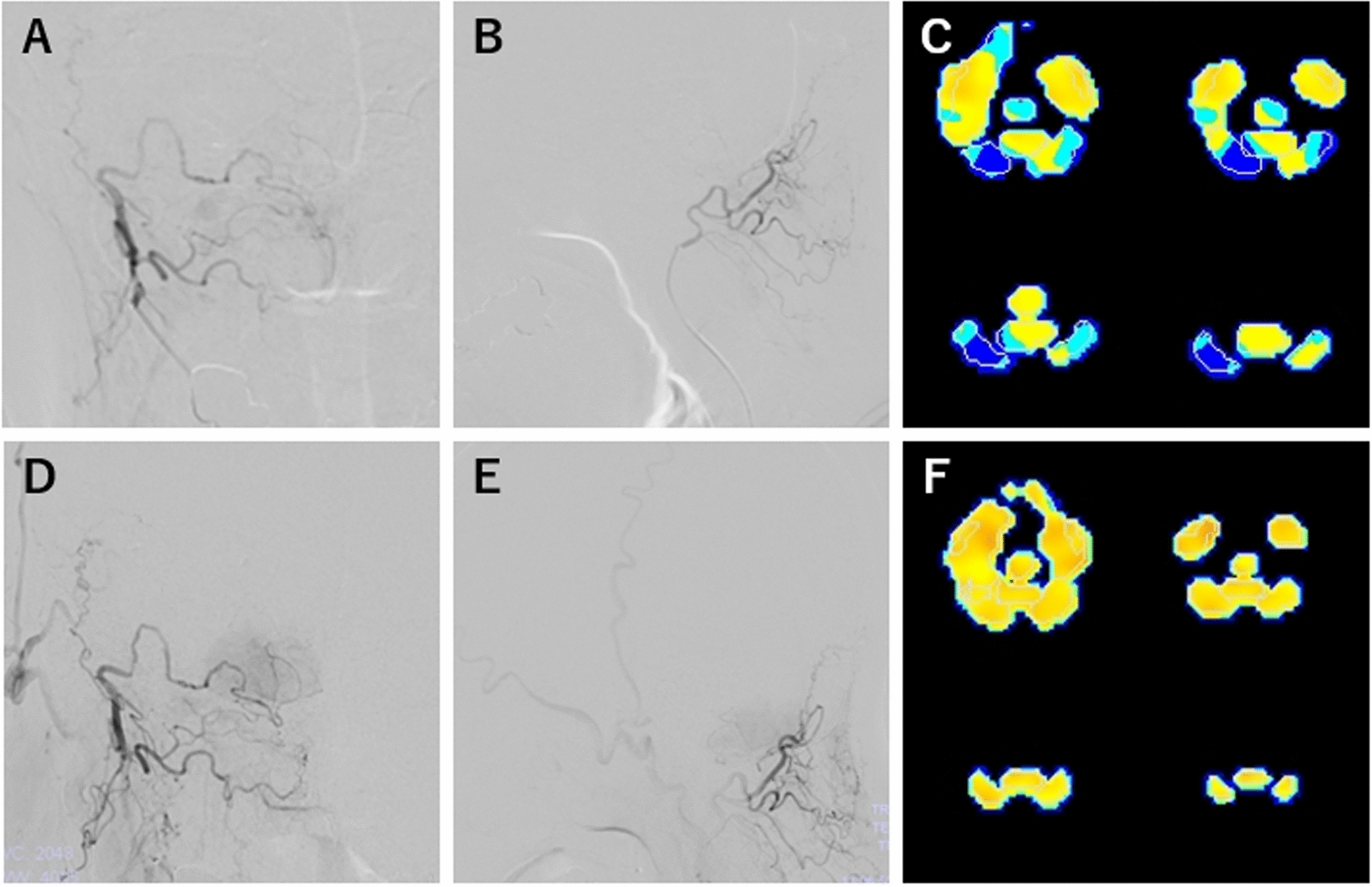
Case presentation: We present the case of a 77-year-old Japanese man who experienced seven recurrent cerebellar infarctions over 2 years. Severe stenosis was noted at the origin of the common trunk of the posterior inferior cerebellar artery and anterior inferior cerebellar artery. Patients with cerebral infarctions are resistant to medical treatment. Blood flow evaluation showed that the area of reduced cerebrovascular reactivity corresponded to the area where repeated small infarctions occurred. An occipital artery-posterior inferior cerebellar artery bypass was performed to prevent another infarction. Postoperative single-photon emission computed tomography showed an improved cerebrovascular reactivity. No ischemic events occurred during 2 years of a postoperative follow-up period.
Conclusion: Occipital artery-posterior inferior cerebellar artery bypass is an effective treatment method for vascular stenosis and decreased blood circulation due to posterior circulation ischemia.
期刊介绍:
JMCR is an open access, peer-reviewed online journal that will consider any original case report that expands the field of general medical knowledge. Reports should show one of the following: 1. Unreported or unusual side effects or adverse interactions involving medications 2. Unexpected or unusual presentations of a disease 3. New associations or variations in disease processes 4. Presentations, diagnoses and/or management of new and emerging diseases 5. An unexpected association between diseases or symptoms 6. An unexpected event in the course of observing or treating a patient 7. Findings that shed new light on the possible pathogenesis of a disease or an adverse effect






 京公网安备 11010802042870号
京ICP备2023020795号-1
京公网安备 11010802042870号
京ICP备2023020795号-1

 分享
分享
 求助内容:
求助内容: 应助结果提醒方式:
 扫码关注我们
