Ramkumar Govindaraj, Courtney Chambers, Marcus Kha, Thomas Sullivan, Sharad Chawla, Andrew Zacest, Peter Gorayski, Daniel Roos
{"title":"前庭神经鞘瘤治疗后耳鸣:显微外科和立体定向放射外科的系统回顾和比较分析。","authors":"Ramkumar Govindaraj, Courtney Chambers, Marcus Kha, Thomas Sullivan, Sharad Chawla, Andrew Zacest, Peter Gorayski, Daniel Roos","doi":"10.1007/s11060-024-04935-5","DOIUrl":null,"url":null,"abstract":"<p><strong>Purpose: </strong>The purpose of this systematic review and meta-analysis was to compare tinnitus outcomes following microsurgery and stereotactic radiosurgery for vestibular schwannoma.</p><p><strong>Methods: </strong>The databases MEDLINE (via Ovid), EMBASE (via Ovid), Cochrane Central Register of Controlled Trials (via Ovid), SCOPUS, CINAHL (EBSCO), and Web of Science were searched for studies comparing microsurgery and radiosurgery treatment, and reporting tinnitus outcomes. Longitudinal tinnitus assessment with pre-treatment evaluation was required for inclusion. Fractionated radiotherapy treatment was excluded. Newcastle-Ottawa scale was used to assess the quality of the included studies. A separate random-effects meta-analysis was performed for the continuous, binary and ordinal tinnitus outcomes, with pooled effects described as a standardised mean difference or a log odds ratio as appropriate.</p><p><strong>Results: </strong>Thirteen studies involving 5814 patients were included in the review; 4 were prospective studies, and the rest were retrospective cohort studies. The median follow-up duration in the microsurgery and radiosurgery groups was 39.5 months and 41.1 months, respectively. Studies were diverse with respect to inclusion criteria and method of tinnitus outcome assessment. Only 4 studies reported tinnitus scores using tinnitus questionnaires, while others used Likert scale, visual analogue scale, binary (present or absent) scale or ordinal (improved, same or worse) scale. Four studies reported better tinnitus outcomes after microsurgery than radiosurgery. However, the overall quality of the studies was low, and most did not control for important confounders, such as age, tumour characteristics, and hearing impairment. Meta-analysis of continuous and binary tinnitus outcomes showed no difference between the interventions (standardised mean difference = -0.04, 95% CI -0.37 to 0.28, p = 0.80; log odds ratio = 0.32, 95% CI -1.11 to 1.74, p = 0.66). Meta-analysis of tinnitus outcomes on an ordinal scale showed microsurgery increased the odds of reporting improved tinnitus compared to radiosurgery (log odds ratio = 0.83, 95% CI 0.01 to 1.64, p = 0.045). Heterogeneity between the studies was high for all outcome measures (I<sup>2</sup> > 56%).</p><p><strong>Conclusion: </strong>Meta-analyses of tinnitus outcomes were largely inconclusive, except when tinnitus was reported as an ordinal outcome, which favoured microsurgery. However, due to the low quality of studies and high heterogeneity, no definitive conclusions could be drawn favouring either treatment.</p>","PeriodicalId":16425,"journal":{"name":"Journal of Neuro-Oncology","volume":" ","pages":"347-359"},"PeriodicalIF":3.1000,"publicationDate":"2025-04-01","publicationTypes":"Journal Article","fieldsOfStudy":null,"isOpenAccess":false,"openAccessPdf":"https://www.ncbi.nlm.nih.gov/pmc/articles/PMC11937193/pdf/","citationCount":"0","resultStr":"{\"title\":\"Tinnitus after treatment of vestibular schwannoma: a systematic review and comparative analysis of microsurgery and stereotactic radiosurgery.\",\"authors\":\"Ramkumar Govindaraj, Courtney Chambers, Marcus Kha, Thomas Sullivan, Sharad Chawla, Andrew Zacest, Peter Gorayski, Daniel Roos\",\"doi\":\"10.1007/s11060-024-04935-5\",\"DOIUrl\":null,\"url\":null,\"abstract\":\"<p><strong>Purpose: </strong>The purpose of this systematic review and meta-analysis was to compare tinnitus outcomes following microsurgery and stereotactic radiosurgery for vestibular schwannoma.</p><p><strong>Methods: </strong>The databases MEDLINE (via Ovid), EMBASE (via Ovid), Cochrane Central Register of Controlled Trials (via Ovid), SCOPUS, CINAHL (EBSCO), and Web of Science were searched for studies comparing microsurgery and radiosurgery treatment, and reporting tinnitus outcomes. Longitudinal tinnitus assessment with pre-treatment evaluation was required for inclusion. Fractionated radiotherapy treatment was excluded. Newcastle-Ottawa scale was used to assess the quality of the included studies. A separate random-effects meta-analysis was performed for the continuous, binary and ordinal tinnitus outcomes, with pooled effects described as a standardised mean difference or a log odds ratio as appropriate.</p><p><strong>Results: </strong>Thirteen studies involving 5814 patients were included in the review; 4 were prospective studies, and the rest were retrospective cohort studies. The median follow-up duration in the microsurgery and radiosurgery groups was 39.5 months and 41.1 months, respectively. Studies were diverse with respect to inclusion criteria and method of tinnitus outcome assessment. Only 4 studies reported tinnitus scores using tinnitus questionnaires, while others used Likert scale, visual analogue scale, binary (present or absent) scale or ordinal (improved, same or worse) scale. Four studies reported better tinnitus outcomes after microsurgery than radiosurgery. However, the overall quality of the studies was low, and most did not control for important confounders, such as age, tumour characteristics, and hearing impairment. Meta-analysis of continuous and binary tinnitus outcomes showed no difference between the interventions (standardised mean difference = -0.04, 95% CI -0.37 to 0.28, p = 0.80; log odds ratio = 0.32, 95% CI -1.11 to 1.74, p = 0.66). Meta-analysis of tinnitus outcomes on an ordinal scale showed microsurgery increased the odds of reporting improved tinnitus compared to radiosurgery (log odds ratio = 0.83, 95% CI 0.01 to 1.64, p = 0.045). Heterogeneity between the studies was high for all outcome measures (I<sup>2</sup> > 56%).</p><p><strong>Conclusion: </strong>Meta-analyses of tinnitus outcomes were largely inconclusive, except when tinnitus was reported as an ordinal outcome, which favoured microsurgery. However, due to the low quality of studies and high heterogeneity, no definitive conclusions could be drawn favouring either treatment.</p>\",\"PeriodicalId\":16425,\"journal\":{\"name\":\"Journal of Neuro-Oncology\",\"volume\":\" \",\"pages\":\"347-359\"},\"PeriodicalIF\":3.1000,\"publicationDate\":\"2025-04-01\",\"publicationTypes\":\"Journal Article\",\"fieldsOfStudy\":null,\"isOpenAccess\":false,\"openAccessPdf\":\"https://www.ncbi.nlm.nih.gov/pmc/articles/PMC11937193/pdf/\",\"citationCount\":\"0\",\"resultStr\":null,\"platform\":\"Semanticscholar\",\"paperid\":null,\"PeriodicalName\":\"Journal of Neuro-Oncology\",\"FirstCategoryId\":\"3\",\"ListUrlMain\":\"https://doi.org/10.1007/s11060-024-04935-5\",\"RegionNum\":2,\"RegionCategory\":\"医学\",\"ArticlePicture\":[],\"TitleCN\":null,\"AbstractTextCN\":null,\"PMCID\":null,\"EPubDate\":\"2025/2/19 0:00:00\",\"PubModel\":\"Epub\",\"JCR\":\"Q2\",\"JCRName\":\"CLINICAL NEUROLOGY\",\"Score\":null,\"Total\":0}","platform":"Semanticscholar","paperid":null,"PeriodicalName":"Journal of Neuro-Oncology","FirstCategoryId":"3","ListUrlMain":"https://doi.org/10.1007/s11060-024-04935-5","RegionNum":2,"RegionCategory":"医学","ArticlePicture":[],"TitleCN":null,"AbstractTextCN":null,"PMCID":null,"EPubDate":"2025/2/19 0:00:00","PubModel":"Epub","JCR":"Q2","JCRName":"CLINICAL NEUROLOGY","Score":null,"Total":0}
引用次数: 0
摘要
目的:本系统综述和荟萃分析的目的是比较前庭神经鞘瘤显微手术和立体定向放射手术后耳鸣的预后。方法:检索MEDLINE(通过Ovid)、EMBASE(通过Ovid)、Cochrane中央对照试验注册库(通过Ovid)、SCOPUS、CINAHL (EBSCO)和Web of Science数据库,比较显微手术和放射手术治疗以及报道耳鸣结局的研究。纵向耳鸣评估和治疗前评估是纳入研究的必要条件。排除分割放疗治疗。纽卡斯尔-渥太华量表用于评估纳入研究的质量。对连续、二元和有序耳鸣结局进行单独的随机效应荟萃分析,将合并效应描述为标准化平均差或对数比值比。结果:13项研究共纳入5814例患者;4项为前瞻性研究,其余为回顾性队列研究。显微手术组和放射手术组的中位随访时间分别为39.5个月和41.1个月。关于耳鸣结果评估的纳入标准和方法的研究是多种多样的。只有4项研究使用耳鸣问卷报告耳鸣评分,而其他研究使用李克特量表、视觉模拟量表、二元(存在或不存在)量表或顺序量表(改善、相同或更糟)。四项研究报告显微手术后耳鸣效果优于放射手术。然而,这些研究的总体质量很低,而且大多数没有控制重要的混杂因素,如年龄、肿瘤特征和听力障碍。连续耳鸣和双耳鸣结局的meta分析显示,干预措施之间无差异(标准化平均差异= -0.04,95% CI -0.37 ~ 0.28, p = 0.80;log比值比= 0.32,95% CI -1.11 ~ 1.74, p = 0.66)。耳鸣结果的荟萃分析显示,与放射手术相比,显微手术增加了报告耳鸣改善的几率(对数优势比= 0.83,95% CI 0.01至1.64,p = 0.045)。研究之间的异质性在所有结果测量中都很高(56%)。结论:耳鸣结果的荟萃分析在很大程度上是不确定的,除了耳鸣被报道为一个普通的结果,这有利于显微手术。然而,由于研究质量低且异质性高,没有明确的结论支持这两种治疗。
Tinnitus after treatment of vestibular schwannoma: a systematic review and comparative analysis of microsurgery and stereotactic radiosurgery.
Purpose: The purpose of this systematic review and meta-analysis was to compare tinnitus outcomes following microsurgery and stereotactic radiosurgery for vestibular schwannoma.
Methods: The databases MEDLINE (via Ovid), EMBASE (via Ovid), Cochrane Central Register of Controlled Trials (via Ovid), SCOPUS, CINAHL (EBSCO), and Web of Science were searched for studies comparing microsurgery and radiosurgery treatment, and reporting tinnitus outcomes. Longitudinal tinnitus assessment with pre-treatment evaluation was required for inclusion. Fractionated radiotherapy treatment was excluded. Newcastle-Ottawa scale was used to assess the quality of the included studies. A separate random-effects meta-analysis was performed for the continuous, binary and ordinal tinnitus outcomes, with pooled effects described as a standardised mean difference or a log odds ratio as appropriate.
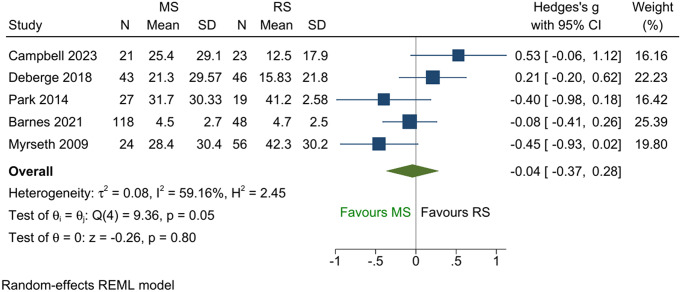
Results: Thirteen studies involving 5814 patients were included in the review; 4 were prospective studies, and the rest were retrospective cohort studies. The median follow-up duration in the microsurgery and radiosurgery groups was 39.5 months and 41.1 months, respectively. Studies were diverse with respect to inclusion criteria and method of tinnitus outcome assessment. Only 4 studies reported tinnitus scores using tinnitus questionnaires, while others used Likert scale, visual analogue scale, binary (present or absent) scale or ordinal (improved, same or worse) scale. Four studies reported better tinnitus outcomes after microsurgery than radiosurgery. However, the overall quality of the studies was low, and most did not control for important confounders, such as age, tumour characteristics, and hearing impairment. Meta-analysis of continuous and binary tinnitus outcomes showed no difference between the interventions (standardised mean difference = -0.04, 95% CI -0.37 to 0.28, p = 0.80; log odds ratio = 0.32, 95% CI -1.11 to 1.74, p = 0.66). Meta-analysis of tinnitus outcomes on an ordinal scale showed microsurgery increased the odds of reporting improved tinnitus compared to radiosurgery (log odds ratio = 0.83, 95% CI 0.01 to 1.64, p = 0.045). Heterogeneity between the studies was high for all outcome measures (I2 > 56%).
Conclusion: Meta-analyses of tinnitus outcomes were largely inconclusive, except when tinnitus was reported as an ordinal outcome, which favoured microsurgery. However, due to the low quality of studies and high heterogeneity, no definitive conclusions could be drawn favouring either treatment.
期刊介绍:
The Journal of Neuro-Oncology is a multi-disciplinary journal encompassing basic, applied, and clinical investigations in all research areas as they relate to cancer and the central nervous system. It provides a single forum for communication among neurologists, neurosurgeons, radiotherapists, medical oncologists, neuropathologists, neurodiagnosticians, and laboratory-based oncologists conducting relevant research. The Journal of Neuro-Oncology does not seek to isolate the field, but rather to focus the efforts of many disciplines in one publication through a format which pulls together these diverse interests. More than any other field of oncology, cancer of the central nervous system requires multi-disciplinary approaches. To alleviate having to scan dozens of journals of cell biology, pathology, laboratory and clinical endeavours, JNO is a periodical in which current, high-quality, relevant research in all aspects of neuro-oncology may be found.






 京公网安备 11010802042870号
京ICP备2023020795号-1
京公网安备 11010802042870号
京ICP备2023020795号-1

 分享
分享
 求助内容:
求助内容: 应助结果提醒方式:
 扫码关注我们
