Morteza Pishghadam, Lylach Haizler-Cohen, Julius S Ngwa, Wu Yao, Kushal Kapse, Sara N Iqbal, Catherine Limperopoulos, Nickie N Andescavage
{"title":"胎盘定量易感性图谱和T2*特征预测健康和高危妊娠出生体重","authors":"Morteza Pishghadam, Lylach Haizler-Cohen, Julius S Ngwa, Wu Yao, Kushal Kapse, Sara N Iqbal, Catherine Limperopoulos, Nickie N Andescavage","doi":"10.1186/s41747-025-00565-2","DOIUrl":null,"url":null,"abstract":"<p><strong>Background: </strong>The human placenta is critical in supporting fetal development, and placental dysfunction may compromise maternal-fetal health. Early detection of placental dysfunction remains challenging due to the lack of reliable biomarkers. This study compares placental quantitative susceptibility mapping and T2* values between healthy and high-risk pregnancies and investigates their association with maternal and fetal parameters and their ability to predict birth weight (BW).</p><p><strong>Methods: </strong>A total of 105 pregnant individuals were included: 68 healthy controls and 37 high-risk due to fetal growth restriction (FGR), chronic or gestational hypertension, and pre-eclampsia. Placental magnetic resonance imaging data were collected using a three-dimensional multi-echo radiofrequency-spoiled gradient-echo, and mean susceptibility and T2* values were calculated. To analyze associations and estimate BW, we employed linear regression and regression forest models.</p><p><strong>Results: </strong>No significant differences were found in susceptibility between high-risk pregnancies and controls (p = 0.928). T2* values were significantly lower in high-risk pregnancies (p = 0.013), particularly in pre-eclampsia and FGR, emerging as a predictor of BW. The regression forest model showed placental T2* as a promising mode for BW estimation.</p><p><strong>Conclusion: </strong>Our findings underscore the potential of mean placental T2* as a more sensitive marker for detecting placental dysfunction in high-risk pregnancies than mean placental susceptibility. Moreover, the high-risk status emerged as a significant predictor of BW. These results call for further research with larger and more diverse populations to validate these findings and enhance prediction models for improved pregnancy management.</p><p><strong>Relevance statement: </strong>This study highlights the potential of placental T2* magnetic resonance imaging measurements as reliable indicators for detecting placental dysfunction in high-risk pregnancies, aiding in improved prenatal care and birth weight prediction.</p><p><strong>Key points: </strong>Placental dysfunction in high-risk pregnancies is evaluated using MRI T2* values. Lower T2* values significantly correlate with pre-eclampsia and fetal growth restriction. T2* MRI may predict birth weight, enhancing prenatal care outcomes.</p>","PeriodicalId":36926,"journal":{"name":"European Radiology Experimental","volume":"9 1","pages":"18"},"PeriodicalIF":3.6000,"publicationDate":"2025-02-18","publicationTypes":"Journal Article","fieldsOfStudy":null,"isOpenAccess":false,"openAccessPdf":"https://www.ncbi.nlm.nih.gov/pmc/articles/PMC11836258/pdf/","citationCount":"0","resultStr":"{\"title\":\"Placental quantitative susceptibility mapping and T2* characteristics for predicting birth weight in healthy and high-risk pregnancies.\",\"authors\":\"Morteza Pishghadam, Lylach Haizler-Cohen, Julius S Ngwa, Wu Yao, Kushal Kapse, Sara N Iqbal, Catherine Limperopoulos, Nickie N Andescavage\",\"doi\":\"10.1186/s41747-025-00565-2\",\"DOIUrl\":null,\"url\":null,\"abstract\":\"<p><strong>Background: </strong>The human placenta is critical in supporting fetal development, and placental dysfunction may compromise maternal-fetal health. Early detection of placental dysfunction remains challenging due to the lack of reliable biomarkers. This study compares placental quantitative susceptibility mapping and T2* values between healthy and high-risk pregnancies and investigates their association with maternal and fetal parameters and their ability to predict birth weight (BW).</p><p><strong>Methods: </strong>A total of 105 pregnant individuals were included: 68 healthy controls and 37 high-risk due to fetal growth restriction (FGR), chronic or gestational hypertension, and pre-eclampsia. Placental magnetic resonance imaging data were collected using a three-dimensional multi-echo radiofrequency-spoiled gradient-echo, and mean susceptibility and T2* values were calculated. To analyze associations and estimate BW, we employed linear regression and regression forest models.</p><p><strong>Results: </strong>No significant differences were found in susceptibility between high-risk pregnancies and controls (p = 0.928). T2* values were significantly lower in high-risk pregnancies (p = 0.013), particularly in pre-eclampsia and FGR, emerging as a predictor of BW. The regression forest model showed placental T2* as a promising mode for BW estimation.</p><p><strong>Conclusion: </strong>Our findings underscore the potential of mean placental T2* as a more sensitive marker for detecting placental dysfunction in high-risk pregnancies than mean placental susceptibility. Moreover, the high-risk status emerged as a significant predictor of BW. These results call for further research with larger and more diverse populations to validate these findings and enhance prediction models for improved pregnancy management.</p><p><strong>Relevance statement: </strong>This study highlights the potential of placental T2* magnetic resonance imaging measurements as reliable indicators for detecting placental dysfunction in high-risk pregnancies, aiding in improved prenatal care and birth weight prediction.</p><p><strong>Key points: </strong>Placental dysfunction in high-risk pregnancies is evaluated using MRI T2* values. Lower T2* values significantly correlate with pre-eclampsia and fetal growth restriction. T2* MRI may predict birth weight, enhancing prenatal care outcomes.</p>\",\"PeriodicalId\":36926,\"journal\":{\"name\":\"European Radiology Experimental\",\"volume\":\"9 1\",\"pages\":\"18\"},\"PeriodicalIF\":3.6000,\"publicationDate\":\"2025-02-18\",\"publicationTypes\":\"Journal Article\",\"fieldsOfStudy\":null,\"isOpenAccess\":false,\"openAccessPdf\":\"https://www.ncbi.nlm.nih.gov/pmc/articles/PMC11836258/pdf/\",\"citationCount\":\"0\",\"resultStr\":null,\"platform\":\"Semanticscholar\",\"paperid\":null,\"PeriodicalName\":\"European Radiology Experimental\",\"FirstCategoryId\":\"1085\",\"ListUrlMain\":\"https://doi.org/10.1186/s41747-025-00565-2\",\"RegionNum\":0,\"RegionCategory\":null,\"ArticlePicture\":[],\"TitleCN\":null,\"AbstractTextCN\":null,\"PMCID\":null,\"EPubDate\":\"\",\"PubModel\":\"\",\"JCR\":\"Q1\",\"JCRName\":\"RADIOLOGY, NUCLEAR MEDICINE & MEDICAL IMAGING\",\"Score\":null,\"Total\":0}","platform":"Semanticscholar","paperid":null,"PeriodicalName":"European Radiology Experimental","FirstCategoryId":"1085","ListUrlMain":"https://doi.org/10.1186/s41747-025-00565-2","RegionNum":0,"RegionCategory":null,"ArticlePicture":[],"TitleCN":null,"AbstractTextCN":null,"PMCID":null,"EPubDate":"","PubModel":"","JCR":"Q1","JCRName":"RADIOLOGY, NUCLEAR MEDICINE & MEDICAL IMAGING","Score":null,"Total":0}
Placental quantitative susceptibility mapping and T2* characteristics for predicting birth weight in healthy and high-risk pregnancies.
Background: The human placenta is critical in supporting fetal development, and placental dysfunction may compromise maternal-fetal health. Early detection of placental dysfunction remains challenging due to the lack of reliable biomarkers. This study compares placental quantitative susceptibility mapping and T2* values between healthy and high-risk pregnancies and investigates their association with maternal and fetal parameters and their ability to predict birth weight (BW).
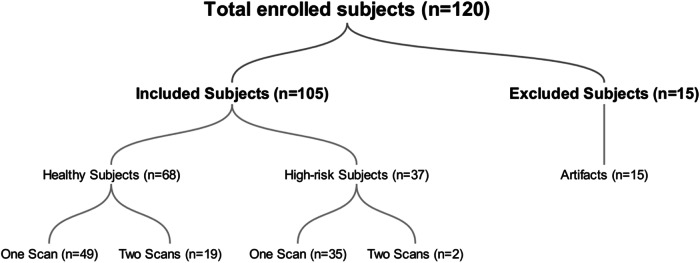
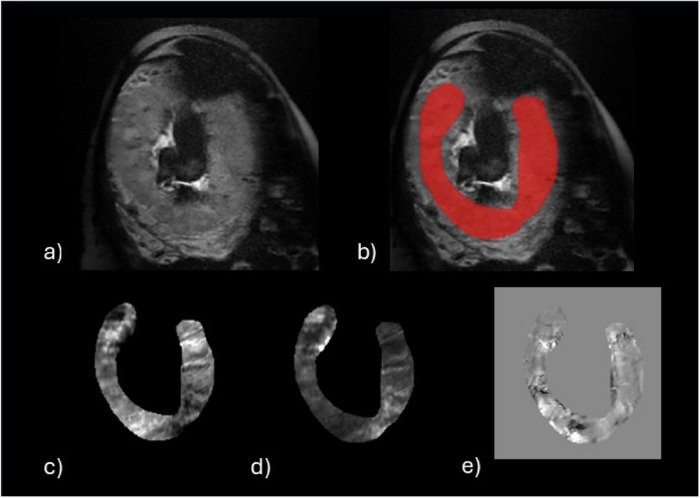
Methods: A total of 105 pregnant individuals were included: 68 healthy controls and 37 high-risk due to fetal growth restriction (FGR), chronic or gestational hypertension, and pre-eclampsia. Placental magnetic resonance imaging data were collected using a three-dimensional multi-echo radiofrequency-spoiled gradient-echo, and mean susceptibility and T2* values were calculated. To analyze associations and estimate BW, we employed linear regression and regression forest models.
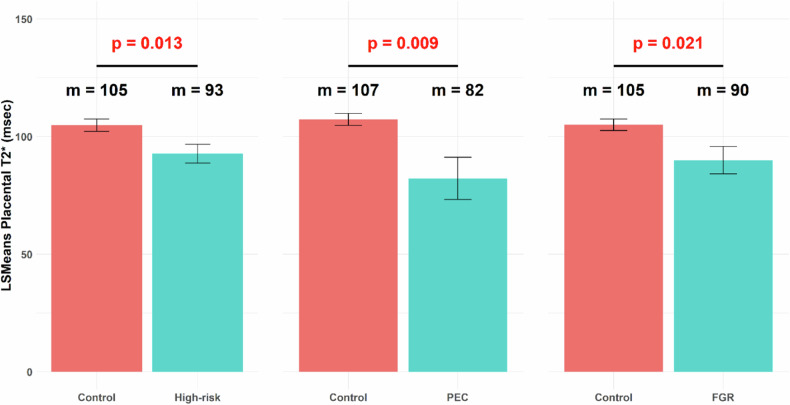
Results: No significant differences were found in susceptibility between high-risk pregnancies and controls (p = 0.928). T2* values were significantly lower in high-risk pregnancies (p = 0.013), particularly in pre-eclampsia and FGR, emerging as a predictor of BW. The regression forest model showed placental T2* as a promising mode for BW estimation.
Conclusion: Our findings underscore the potential of mean placental T2* as a more sensitive marker for detecting placental dysfunction in high-risk pregnancies than mean placental susceptibility. Moreover, the high-risk status emerged as a significant predictor of BW. These results call for further research with larger and more diverse populations to validate these findings and enhance prediction models for improved pregnancy management.
Relevance statement: This study highlights the potential of placental T2* magnetic resonance imaging measurements as reliable indicators for detecting placental dysfunction in high-risk pregnancies, aiding in improved prenatal care and birth weight prediction.
Key points: Placental dysfunction in high-risk pregnancies is evaluated using MRI T2* values. Lower T2* values significantly correlate with pre-eclampsia and fetal growth restriction. T2* MRI may predict birth weight, enhancing prenatal care outcomes.




 京公网安备 11010802042870号
京ICP备2023020795号-1
京公网安备 11010802042870号
京ICP备2023020795号-1

 分享
分享
 求助内容:
求助内容: 应助结果提醒方式:
 扫码关注我们
