Dawn Stacey, Meg Carley, Janet Gunderson, Shu-Ching Hsieh, Shannon E Kelly, Krystina B Lewis, Maureen Smith, Robert J Volk, George Wells
{"title":"患者决策辅助属性对患者预后的影响:系统评价的网络荟萃分析。","authors":"Dawn Stacey, Meg Carley, Janet Gunderson, Shu-Ching Hsieh, Shannon E Kelly, Krystina B Lewis, Maureen Smith, Robert J Volk, George Wells","doi":"10.1177/0272989X251318640","DOIUrl":null,"url":null,"abstract":"<p><p>BackgroundPatient decision aids (PtDAs) are effective interventions to help people participate in health care decisions. Although there are quality standards, PtDAs are complex interventions with variability in their attributes.PurposeTo determine and compare the effects of PtDA attributes (e.g., content elements, delivery timing, development) on primary outcomes for adults facing health care decisions.Data SourcesA systematic review of randomized controlled trials (RCTs) comparing PtDAs to usual care.Study SelectionEligible RCTs measured at least 1 primary outcome: informed values choice, knowledge, accurate risk perception, decisional conflict subscales, and undecided.Data AnalysisA network meta-analysis evaluated direct and indirect effects of PtDA attributes on primary outcomes.Data SynthesisOf 209 RCTs, 149 reported eligible outcomes. There was no difference in outcomes for PtDAs using implicit compared with explicit values clarification. Compared with PtDAs with probabilities, PtDAs without probabilities were associated with poorer patient knowledge (mean difference [MD] -3.86; 95% credible interval [CrI] -7.67, -0.03); there were no difference for other outcomes. There was no difference in outcomes when PtDAs presented information in ways that decrease cognitive demand and mixed results when PtDAs used strategies to enhance communication. Compared with PtDAs delivered in preparation for consultations, PtDAs used during consultations were associated with poorer knowledge (MD -4.34; 95% CrI -7.24, -1.43) and patients feeling more uninformed (MD 5.07; 95% CrI 1.06, 9.11). Involving patients in PtDA development was associated with greater knowledge (MD 6.56; 95% CrI 1.10, 12.03) compared with involving health care professionals alone.LimitationsThere were no direct comparisons between PtDAs with/without attributes.ConclusionsImprovements in knowledge were influenced by some PtDA content elements, using PtDA content before the consultation, and involving patients in development. There were few or no differences on other outcomes.HighlightsThis is the first known network meta-analysis conducted to determine the contributions of the different attributes of patient decision aids (PtDAs) on patient outcomes.There was no difference in outcomes when PtDAs used implicit compared with explicit values clarification.There were greater improvements in knowledge when PtDAs included information on probabilities, PtDAs were used in preparation for the consultation or development included patients on the research team.There was no difference in outcomes when PtDAs presented information in ways that decrease cognitive demand and mixed results when PtDAs used strategies to enhance communication.</p>","PeriodicalId":49839,"journal":{"name":"Medical Decision Making","volume":" ","pages":"437-448"},"PeriodicalIF":2.0000,"publicationDate":"2025-05-01","publicationTypes":"Journal Article","fieldsOfStudy":null,"isOpenAccess":false,"openAccessPdf":"https://www.ncbi.nlm.nih.gov/pmc/articles/PMC11992630/pdf/","citationCount":"0","resultStr":"{\"title\":\"The Effect of Patient Decision Aid Attributes on Patient Outcomes: A Network Meta-Analysis of a Systematic Review.\",\"authors\":\"Dawn Stacey, Meg Carley, Janet Gunderson, Shu-Ching Hsieh, Shannon E Kelly, Krystina B Lewis, Maureen Smith, Robert J Volk, George Wells\",\"doi\":\"10.1177/0272989X251318640\",\"DOIUrl\":null,\"url\":null,\"abstract\":\"<p><p>BackgroundPatient decision aids (PtDAs) are effective interventions to help people participate in health care decisions. Although there are quality standards, PtDAs are complex interventions with variability in their attributes.PurposeTo determine and compare the effects of PtDA attributes (e.g., content elements, delivery timing, development) on primary outcomes for adults facing health care decisions.Data SourcesA systematic review of randomized controlled trials (RCTs) comparing PtDAs to usual care.Study SelectionEligible RCTs measured at least 1 primary outcome: informed values choice, knowledge, accurate risk perception, decisional conflict subscales, and undecided.Data AnalysisA network meta-analysis evaluated direct and indirect effects of PtDA attributes on primary outcomes.Data SynthesisOf 209 RCTs, 149 reported eligible outcomes. There was no difference in outcomes for PtDAs using implicit compared with explicit values clarification. Compared with PtDAs with probabilities, PtDAs without probabilities were associated with poorer patient knowledge (mean difference [MD] -3.86; 95% credible interval [CrI] -7.67, -0.03); there were no difference for other outcomes. There was no difference in outcomes when PtDAs presented information in ways that decrease cognitive demand and mixed results when PtDAs used strategies to enhance communication. Compared with PtDAs delivered in preparation for consultations, PtDAs used during consultations were associated with poorer knowledge (MD -4.34; 95% CrI -7.24, -1.43) and patients feeling more uninformed (MD 5.07; 95% CrI 1.06, 9.11). Involving patients in PtDA development was associated with greater knowledge (MD 6.56; 95% CrI 1.10, 12.03) compared with involving health care professionals alone.LimitationsThere were no direct comparisons between PtDAs with/without attributes.ConclusionsImprovements in knowledge were influenced by some PtDA content elements, using PtDA content before the consultation, and involving patients in development. There were few or no differences on other outcomes.HighlightsThis is the first known network meta-analysis conducted to determine the contributions of the different attributes of patient decision aids (PtDAs) on patient outcomes.There was no difference in outcomes when PtDAs used implicit compared with explicit values clarification.There were greater improvements in knowledge when PtDAs included information on probabilities, PtDAs were used in preparation for the consultation or development included patients on the research team.There was no difference in outcomes when PtDAs presented information in ways that decrease cognitive demand and mixed results when PtDAs used strategies to enhance communication.</p>\",\"PeriodicalId\":49839,\"journal\":{\"name\":\"Medical Decision Making\",\"volume\":\" \",\"pages\":\"437-448\"},\"PeriodicalIF\":2.0000,\"publicationDate\":\"2025-05-01\",\"publicationTypes\":\"Journal Article\",\"fieldsOfStudy\":null,\"isOpenAccess\":false,\"openAccessPdf\":\"https://www.ncbi.nlm.nih.gov/pmc/articles/PMC11992630/pdf/\",\"citationCount\":\"0\",\"resultStr\":null,\"platform\":\"Semanticscholar\",\"paperid\":null,\"PeriodicalName\":\"Medical Decision Making\",\"FirstCategoryId\":\"3\",\"ListUrlMain\":\"https://doi.org/10.1177/0272989X251318640\",\"RegionNum\":3,\"RegionCategory\":\"医学\",\"ArticlePicture\":[],\"TitleCN\":null,\"AbstractTextCN\":null,\"PMCID\":null,\"EPubDate\":\"2025/2/19 0:00:00\",\"PubModel\":\"Epub\",\"JCR\":\"Q2\",\"JCRName\":\"HEALTH CARE SCIENCES & SERVICES\",\"Score\":null,\"Total\":0}","platform":"Semanticscholar","paperid":null,"PeriodicalName":"Medical Decision Making","FirstCategoryId":"3","ListUrlMain":"https://doi.org/10.1177/0272989X251318640","RegionNum":3,"RegionCategory":"医学","ArticlePicture":[],"TitleCN":null,"AbstractTextCN":null,"PMCID":null,"EPubDate":"2025/2/19 0:00:00","PubModel":"Epub","JCR":"Q2","JCRName":"HEALTH CARE SCIENCES & SERVICES","Score":null,"Total":0}
The Effect of Patient Decision Aid Attributes on Patient Outcomes: A Network Meta-Analysis of a Systematic Review.
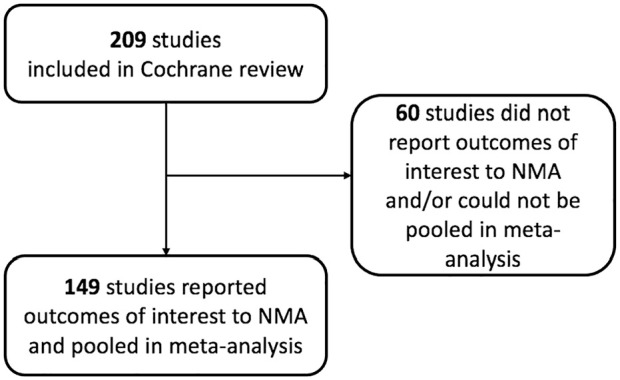
BackgroundPatient decision aids (PtDAs) are effective interventions to help people participate in health care decisions. Although there are quality standards, PtDAs are complex interventions with variability in their attributes.PurposeTo determine and compare the effects of PtDA attributes (e.g., content elements, delivery timing, development) on primary outcomes for adults facing health care decisions.Data SourcesA systematic review of randomized controlled trials (RCTs) comparing PtDAs to usual care.Study SelectionEligible RCTs measured at least 1 primary outcome: informed values choice, knowledge, accurate risk perception, decisional conflict subscales, and undecided.Data AnalysisA network meta-analysis evaluated direct and indirect effects of PtDA attributes on primary outcomes.Data SynthesisOf 209 RCTs, 149 reported eligible outcomes. There was no difference in outcomes for PtDAs using implicit compared with explicit values clarification. Compared with PtDAs with probabilities, PtDAs without probabilities were associated with poorer patient knowledge (mean difference [MD] -3.86; 95% credible interval [CrI] -7.67, -0.03); there were no difference for other outcomes. There was no difference in outcomes when PtDAs presented information in ways that decrease cognitive demand and mixed results when PtDAs used strategies to enhance communication. Compared with PtDAs delivered in preparation for consultations, PtDAs used during consultations were associated with poorer knowledge (MD -4.34; 95% CrI -7.24, -1.43) and patients feeling more uninformed (MD 5.07; 95% CrI 1.06, 9.11). Involving patients in PtDA development was associated with greater knowledge (MD 6.56; 95% CrI 1.10, 12.03) compared with involving health care professionals alone.LimitationsThere were no direct comparisons between PtDAs with/without attributes.ConclusionsImprovements in knowledge were influenced by some PtDA content elements, using PtDA content before the consultation, and involving patients in development. There were few or no differences on other outcomes.HighlightsThis is the first known network meta-analysis conducted to determine the contributions of the different attributes of patient decision aids (PtDAs) on patient outcomes.There was no difference in outcomes when PtDAs used implicit compared with explicit values clarification.There were greater improvements in knowledge when PtDAs included information on probabilities, PtDAs were used in preparation for the consultation or development included patients on the research team.There was no difference in outcomes when PtDAs presented information in ways that decrease cognitive demand and mixed results when PtDAs used strategies to enhance communication.
期刊介绍:
Medical Decision Making offers rigorous and systematic approaches to decision making that are designed to improve the health and clinical care of individuals and to assist with health care policy development. Using the fundamentals of decision analysis and theory, economic evaluation, and evidence based quality assessment, Medical Decision Making presents both theoretical and practical statistical and modeling techniques and methods from a variety of disciplines.






 京公网安备 11010802042870号
京ICP备2023020795号-1
京公网安备 11010802042870号
京ICP备2023020795号-1

 分享
分享
 求助内容:
求助内容: 应助结果提醒方式:
 扫码关注我们
