Xing Jia , Xingxin Zhu , Shinuo Chen , Qiongzi Qiu , Wenfeng Song , Shiyu Zhang , Haijiang Dong , Zequn Li , Suchen Bian , Hao Wu , Haojiang Dai , Cheng Jin , Mengqiao Zhou , Jun Chen , Zefeng Xuan , Pengfei Liu , Qiufang Zeng , Haiyang Xie , Shusen Zheng , Penghong Song
{"title":"综合多组学分析揭示了利用WEE1抑制肝癌复制应激的精确治疗策略","authors":"Xing Jia , Xingxin Zhu , Shinuo Chen , Qiongzi Qiu , Wenfeng Song , Shiyu Zhang , Haijiang Dong , Zequn Li , Suchen Bian , Hao Wu , Haojiang Dai , Cheng Jin , Mengqiao Zhou , Jun Chen , Zefeng Xuan , Pengfei Liu , Qiufang Zeng , Haiyang Xie , Shusen Zheng , Penghong Song","doi":"10.1016/j.jare.2025.02.016","DOIUrl":null,"url":null,"abstract":"<div><h3>Introduction</h3><div>Hepatocellular carcinoma (HCC) is an extremely heterogeneous malignancy with a poor prognosis, highlighting the need to target specific vulnerabilities within the tumor during treatment.</div></div><div><h3>Objectives</h3><div>This study employs multi-omics analysis techniques to provide novel insights into personalized therapeutic strategies for HCC patients.</div></div><div><h3>Methods</h3><div>We performed proteomic and transcriptomic sequencing on 178 and 94 clinical samples of primary HCC without prior treatment, respectively. We employed an unbiased Kinome CRISPR-Cas9 library screening approach to systematically evaluate and identify novel therapeutic strategies that specifically target replication stress (RS). The synergy between oxaliplatin and adavosertib was verified using in vitro and in vivo models, including hydrodynamic injection, patient-derived organoids, and patient-derived xenografts.</div></div><div><h3>Results</h3><div>In both proteomic- and transcriptomic-based subtyping analyses, subtypes characterized by hyperproliferative features demonstrated the poorest prognosis and the highest levels of RS. Among all first-line chemotherapeutic agents in these analyses, oxaliplatin accumulated the highest RS levels in HCC, while resistance remained a major challenge. With unbiased Kinome CRISPR loss-of-function gene screening, WEE1 was identified as a synthetic lethal target of oxaliplatin. The synergy between the WEE1 inhibitor adavosertib and oxaliplatin has been demonstrated in multiple in vitro and in vivo models. Mechanistically, adavosertib inhibits oxaliplatin-induced homologous recombination repair and G2/M checkpoint activation, leading to the accumulation of lethal DNA damage. Furthermore, patients with HCC showing high RS levels had poor prognoses and responded well to adavosertib and oxaliplatin combination treatments. This was validated by preclinical models and unsupervised clustering analysis.</div></div><div><h3>Conclusions</h3><div>Our findings provide promising insights into the precise therapeutic targeting of RS in HCC at both the proteomic and transcriptomic levels. Furthermore, our study highlights the potential of combining oxaliplatin with adavosertib as a treatment approach for HCC.</div><div>In this study, we analyzed 178 and 94 pairs of clinical HCC samples using proteomic and transcriptomic sequencing, respectively. We discovered that the subtype characterized by high proliferation had the worst prognosis and highest RS level. Drug screening revealed that oxaliplatin promotes RS accumulation in HCC, but its resistance remains a challenge. Through unbiased CRISPR deletion-gene screening, WEE1 was identified as a lethal target of oxaliplatin. The WEE1 inhibitor adavosertib inhibits oxaliplatin-induced DNA repair, leading to lethal DNA damage accumulation. Furthermore, our clustering analysis based on RS levels demonstrated that HCC patients with high RS levels have poorer prognoses and be more beneficial from adavosertib and oxaliplatin combination therapy. These findings support an individualized treatment approach for HCC targeting RS based on WEE1 Inhibition.</div></div>","PeriodicalId":14952,"journal":{"name":"Journal of Advanced Research","volume":"78 ","pages":"Pages 497-515"},"PeriodicalIF":13.0000,"publicationDate":"2025-12-01","publicationTypes":"Journal Article","fieldsOfStudy":null,"isOpenAccess":false,"openAccessPdf":"","citationCount":"0","resultStr":"{\"title\":\"Comprehensive multi-omics analyses expose a precision therapy strategy that targets replication stress in hepatocellular carcinoma using WEE1 inhibition\",\"authors\":\"Xing Jia , Xingxin Zhu , Shinuo Chen , Qiongzi Qiu , Wenfeng Song , Shiyu Zhang , Haijiang Dong , Zequn Li , Suchen Bian , Hao Wu , Haojiang Dai , Cheng Jin , Mengqiao Zhou , Jun Chen , Zefeng Xuan , Pengfei Liu , Qiufang Zeng , Haiyang Xie , Shusen Zheng , Penghong Song\",\"doi\":\"10.1016/j.jare.2025.02.016\",\"DOIUrl\":null,\"url\":null,\"abstract\":\"<div><h3>Introduction</h3><div>Hepatocellular carcinoma (HCC) is an extremely heterogeneous malignancy with a poor prognosis, highlighting the need to target specific vulnerabilities within the tumor during treatment.</div></div><div><h3>Objectives</h3><div>This study employs multi-omics analysis techniques to provide novel insights into personalized therapeutic strategies for HCC patients.</div></div><div><h3>Methods</h3><div>We performed proteomic and transcriptomic sequencing on 178 and 94 clinical samples of primary HCC without prior treatment, respectively. We employed an unbiased Kinome CRISPR-Cas9 library screening approach to systematically evaluate and identify novel therapeutic strategies that specifically target replication stress (RS). The synergy between oxaliplatin and adavosertib was verified using in vitro and in vivo models, including hydrodynamic injection, patient-derived organoids, and patient-derived xenografts.</div></div><div><h3>Results</h3><div>In both proteomic- and transcriptomic-based subtyping analyses, subtypes characterized by hyperproliferative features demonstrated the poorest prognosis and the highest levels of RS. Among all first-line chemotherapeutic agents in these analyses, oxaliplatin accumulated the highest RS levels in HCC, while resistance remained a major challenge. With unbiased Kinome CRISPR loss-of-function gene screening, WEE1 was identified as a synthetic lethal target of oxaliplatin. The synergy between the WEE1 inhibitor adavosertib and oxaliplatin has been demonstrated in multiple in vitro and in vivo models. Mechanistically, adavosertib inhibits oxaliplatin-induced homologous recombination repair and G2/M checkpoint activation, leading to the accumulation of lethal DNA damage. Furthermore, patients with HCC showing high RS levels had poor prognoses and responded well to adavosertib and oxaliplatin combination treatments. This was validated by preclinical models and unsupervised clustering analysis.</div></div><div><h3>Conclusions</h3><div>Our findings provide promising insights into the precise therapeutic targeting of RS in HCC at both the proteomic and transcriptomic levels. Furthermore, our study highlights the potential of combining oxaliplatin with adavosertib as a treatment approach for HCC.</div><div>In this study, we analyzed 178 and 94 pairs of clinical HCC samples using proteomic and transcriptomic sequencing, respectively. We discovered that the subtype characterized by high proliferation had the worst prognosis and highest RS level. Drug screening revealed that oxaliplatin promotes RS accumulation in HCC, but its resistance remains a challenge. Through unbiased CRISPR deletion-gene screening, WEE1 was identified as a lethal target of oxaliplatin. The WEE1 inhibitor adavosertib inhibits oxaliplatin-induced DNA repair, leading to lethal DNA damage accumulation. Furthermore, our clustering analysis based on RS levels demonstrated that HCC patients with high RS levels have poorer prognoses and be more beneficial from adavosertib and oxaliplatin combination therapy. These findings support an individualized treatment approach for HCC targeting RS based on WEE1 Inhibition.</div></div>\",\"PeriodicalId\":14952,\"journal\":{\"name\":\"Journal of Advanced Research\",\"volume\":\"78 \",\"pages\":\"Pages 497-515\"},\"PeriodicalIF\":13.0000,\"publicationDate\":\"2025-12-01\",\"publicationTypes\":\"Journal Article\",\"fieldsOfStudy\":null,\"isOpenAccess\":false,\"openAccessPdf\":\"\",\"citationCount\":\"0\",\"resultStr\":null,\"platform\":\"Semanticscholar\",\"paperid\":null,\"PeriodicalName\":\"Journal of Advanced Research\",\"FirstCategoryId\":\"103\",\"ListUrlMain\":\"https://www.sciencedirect.com/science/article/pii/S2090123225001146\",\"RegionNum\":1,\"RegionCategory\":\"综合性期刊\",\"ArticlePicture\":[],\"TitleCN\":null,\"AbstractTextCN\":null,\"PMCID\":null,\"EPubDate\":\"2025/2/18 0:00:00\",\"PubModel\":\"Epub\",\"JCR\":\"Q1\",\"JCRName\":\"MULTIDISCIPLINARY SCIENCES\",\"Score\":null,\"Total\":0}","platform":"Semanticscholar","paperid":null,"PeriodicalName":"Journal of Advanced Research","FirstCategoryId":"103","ListUrlMain":"https://www.sciencedirect.com/science/article/pii/S2090123225001146","RegionNum":1,"RegionCategory":"综合性期刊","ArticlePicture":[],"TitleCN":null,"AbstractTextCN":null,"PMCID":null,"EPubDate":"2025/2/18 0:00:00","PubModel":"Epub","JCR":"Q1","JCRName":"MULTIDISCIPLINARY SCIENCES","Score":null,"Total":0}
Comprehensive multi-omics analyses expose a precision therapy strategy that targets replication stress in hepatocellular carcinoma using WEE1 inhibition
Introduction
Hepatocellular carcinoma (HCC) is an extremely heterogeneous malignancy with a poor prognosis, highlighting the need to target specific vulnerabilities within the tumor during treatment.
Objectives
This study employs multi-omics analysis techniques to provide novel insights into personalized therapeutic strategies for HCC patients.
Methods
We performed proteomic and transcriptomic sequencing on 178 and 94 clinical samples of primary HCC without prior treatment, respectively. We employed an unbiased Kinome CRISPR-Cas9 library screening approach to systematically evaluate and identify novel therapeutic strategies that specifically target replication stress (RS). The synergy between oxaliplatin and adavosertib was verified using in vitro and in vivo models, including hydrodynamic injection, patient-derived organoids, and patient-derived xenografts.
Results
In both proteomic- and transcriptomic-based subtyping analyses, subtypes characterized by hyperproliferative features demonstrated the poorest prognosis and the highest levels of RS. Among all first-line chemotherapeutic agents in these analyses, oxaliplatin accumulated the highest RS levels in HCC, while resistance remained a major challenge. With unbiased Kinome CRISPR loss-of-function gene screening, WEE1 was identified as a synthetic lethal target of oxaliplatin. The synergy between the WEE1 inhibitor adavosertib and oxaliplatin has been demonstrated in multiple in vitro and in vivo models. Mechanistically, adavosertib inhibits oxaliplatin-induced homologous recombination repair and G2/M checkpoint activation, leading to the accumulation of lethal DNA damage. Furthermore, patients with HCC showing high RS levels had poor prognoses and responded well to adavosertib and oxaliplatin combination treatments. This was validated by preclinical models and unsupervised clustering analysis.
Conclusions
Our findings provide promising insights into the precise therapeutic targeting of RS in HCC at both the proteomic and transcriptomic levels. Furthermore, our study highlights the potential of combining oxaliplatin with adavosertib as a treatment approach for HCC.
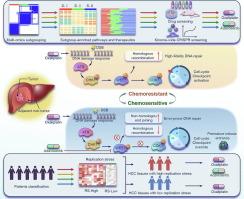
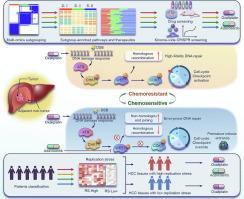
In this study, we analyzed 178 and 94 pairs of clinical HCC samples using proteomic and transcriptomic sequencing, respectively. We discovered that the subtype characterized by high proliferation had the worst prognosis and highest RS level. Drug screening revealed that oxaliplatin promotes RS accumulation in HCC, but its resistance remains a challenge. Through unbiased CRISPR deletion-gene screening, WEE1 was identified as a lethal target of oxaliplatin. The WEE1 inhibitor adavosertib inhibits oxaliplatin-induced DNA repair, leading to lethal DNA damage accumulation. Furthermore, our clustering analysis based on RS levels demonstrated that HCC patients with high RS levels have poorer prognoses and be more beneficial from adavosertib and oxaliplatin combination therapy. These findings support an individualized treatment approach for HCC targeting RS based on WEE1 Inhibition.
期刊介绍:
Journal of Advanced Research (J. Adv. Res.) is an applied/natural sciences, peer-reviewed journal that focuses on interdisciplinary research. The journal aims to contribute to applied research and knowledge worldwide through the publication of original and high-quality research articles in the fields of Medicine, Pharmaceutical Sciences, Dentistry, Physical Therapy, Veterinary Medicine, and Basic and Biological Sciences.
The following abstracting and indexing services cover the Journal of Advanced Research: PubMed/Medline, Essential Science Indicators, Web of Science, Scopus, PubMed Central, PubMed, Science Citation Index Expanded, Directory of Open Access Journals (DOAJ), and INSPEC.





 京公网安备 11010802042870号
京ICP备2023020795号-1
京公网安备 11010802042870号
京ICP备2023020795号-1

 分享
分享
 求助内容:
求助内容: 应助结果提醒方式:
 扫码关注我们
