Margaux Frigoli, Joseph W. Lowdon, Thomas J. Cleij, Hanne Diliën, Kasper Eersels, Bart van Grinsven
{"title":"用分子印迹聚合物热生物传感器检测牛奶中抗生素磺胺甲恶唑残留","authors":"Margaux Frigoli, Joseph W. Lowdon, Thomas J. Cleij, Hanne Diliën, Kasper Eersels, Bart van Grinsven","doi":"10.1016/j.foodchem.2025.143525","DOIUrl":null,"url":null,"abstract":"<div><div>Antibiotic resistance is a growing concern, partly due to inadequate inspections in the food safety chain. The accumulation of antibiotics like sulfamethoxazole (SMX) in animal products contributes to the rise of resistant microorganisms, posing a global health challenge. This work focuses on developing a thermal sensor to quickly and affordably detect SMX residues in milk samples. Molecularly imprinted polymers (MIPs) were synthesized and immobilized on an aluminum chip to measure thermal changes using the heat-transfer method (HTM). The sensor's detection limit in calcium chloride solutions was 261 ± 12 pmol L<sup>−1</sup>, well below regulatory limits for sulfonamides in dairy. The sensor also showed good selectivity when tested against antibiotics from different classes, and good performances in spiked milk samples. These results indicate that the thermal sensor provides a sensitive, low-cost alternative for detecting sulfamethoxazole traces in dairy products, contributing to improved food safety.</div></div>","PeriodicalId":318,"journal":{"name":"Food Chemistry","volume":"476 ","pages":"Article 143525"},"PeriodicalIF":9.8000,"publicationDate":"2025-06-01","publicationTypes":"Journal Article","fieldsOfStudy":null,"isOpenAccess":false,"openAccessPdf":"","citationCount":"0","resultStr":"{\"title\":\"Detection of antibiotic sulfamethoxazole residues in milk using a molecularly imprinted polymer-based thermal biosensor\",\"authors\":\"Margaux Frigoli, Joseph W. Lowdon, Thomas J. Cleij, Hanne Diliën, Kasper Eersels, Bart van Grinsven\",\"doi\":\"10.1016/j.foodchem.2025.143525\",\"DOIUrl\":null,\"url\":null,\"abstract\":\"<div><div>Antibiotic resistance is a growing concern, partly due to inadequate inspections in the food safety chain. The accumulation of antibiotics like sulfamethoxazole (SMX) in animal products contributes to the rise of resistant microorganisms, posing a global health challenge. This work focuses on developing a thermal sensor to quickly and affordably detect SMX residues in milk samples. Molecularly imprinted polymers (MIPs) were synthesized and immobilized on an aluminum chip to measure thermal changes using the heat-transfer method (HTM). The sensor's detection limit in calcium chloride solutions was 261 ± 12 pmol L<sup>−1</sup>, well below regulatory limits for sulfonamides in dairy. The sensor also showed good selectivity when tested against antibiotics from different classes, and good performances in spiked milk samples. These results indicate that the thermal sensor provides a sensitive, low-cost alternative for detecting sulfamethoxazole traces in dairy products, contributing to improved food safety.</div></div>\",\"PeriodicalId\":318,\"journal\":{\"name\":\"Food Chemistry\",\"volume\":\"476 \",\"pages\":\"Article 143525\"},\"PeriodicalIF\":9.8000,\"publicationDate\":\"2025-06-01\",\"publicationTypes\":\"Journal Article\",\"fieldsOfStudy\":null,\"isOpenAccess\":false,\"openAccessPdf\":\"\",\"citationCount\":\"0\",\"resultStr\":null,\"platform\":\"Semanticscholar\",\"paperid\":null,\"PeriodicalName\":\"Food Chemistry\",\"FirstCategoryId\":\"97\",\"ListUrlMain\":\"https://www.sciencedirect.com/science/article/pii/S0308814625007769\",\"RegionNum\":1,\"RegionCategory\":\"农林科学\",\"ArticlePicture\":[],\"TitleCN\":null,\"AbstractTextCN\":null,\"PMCID\":null,\"EPubDate\":\"2025/2/19 0:00:00\",\"PubModel\":\"Epub\",\"JCR\":\"Q1\",\"JCRName\":\"CHEMISTRY, APPLIED\",\"Score\":null,\"Total\":0}","platform":"Semanticscholar","paperid":null,"PeriodicalName":"Food Chemistry","FirstCategoryId":"97","ListUrlMain":"https://www.sciencedirect.com/science/article/pii/S0308814625007769","RegionNum":1,"RegionCategory":"农林科学","ArticlePicture":[],"TitleCN":null,"AbstractTextCN":null,"PMCID":null,"EPubDate":"2025/2/19 0:00:00","PubModel":"Epub","JCR":"Q1","JCRName":"CHEMISTRY, APPLIED","Score":null,"Total":0}
Detection of antibiotic sulfamethoxazole residues in milk using a molecularly imprinted polymer-based thermal biosensor
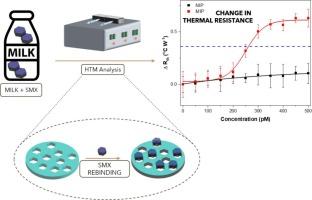
Antibiotic resistance is a growing concern, partly due to inadequate inspections in the food safety chain. The accumulation of antibiotics like sulfamethoxazole (SMX) in animal products contributes to the rise of resistant microorganisms, posing a global health challenge. This work focuses on developing a thermal sensor to quickly and affordably detect SMX residues in milk samples. Molecularly imprinted polymers (MIPs) were synthesized and immobilized on an aluminum chip to measure thermal changes using the heat-transfer method (HTM). The sensor's detection limit in calcium chloride solutions was 261 ± 12 pmol L−1, well below regulatory limits for sulfonamides in dairy. The sensor also showed good selectivity when tested against antibiotics from different classes, and good performances in spiked milk samples. These results indicate that the thermal sensor provides a sensitive, low-cost alternative for detecting sulfamethoxazole traces in dairy products, contributing to improved food safety.
期刊介绍:
Food Chemistry publishes original research papers dealing with the advancement of the chemistry and biochemistry of foods or the analytical methods/ approach used. All papers should focus on the novelty of the research carried out.





 京公网安备 11010802042870号
京ICP备2023020795号-1
京公网安备 11010802042870号
京ICP备2023020795号-1

 分享
分享
 求助内容:
求助内容: 应助结果提醒方式:
 扫码关注我们
