Gaofeng Chen, Zhiwei Wang, Na Guo, Lei Liu, Huina Zhu, Qun Wang, Tingzhou Lei
{"title":"C60改性疏水催化剂上玉米秸秆生物质合成气制备储氢液体燃料的研究","authors":"Gaofeng Chen, Zhiwei Wang, Na Guo, Lei Liu, Huina Zhu, Qun Wang, Tingzhou Lei","doi":"10.1021/acssuschemeng.4c09852","DOIUrl":null,"url":null,"abstract":"Alcohols, being a substantial category of hydrogen storage liquid fuels, exhibit promising development potential. Alcohol-based hydrogen storage liquid fuels can be efficiently produced from biomass-derived syngas (CO and H<sub>2</sub>). Considerable efforts have been made in the conversion of syngas to alcohols through a higher alcohol synthesis (HAS) reaction. However, inevitably, there will be significant generation of H<sub>2</sub>O and C1 byproducts (CO<sub>2</sub> and CH<sub>4</sub>). In this study, a hydrophobic CoCuSNT@C<sub>60</sub> catalyst modified with fullerene (C<sub>60</sub>, an all-carbon cage molecule) was designed to hinder the formation of H<sub>2</sub>O and C1 byproducts. The hydrophobic C<sub>60</sub> shortened the retention of H<sub>2</sub>O on the active site interface, restraining the water–gas shift reaction. This leads to a significant decrease in CO<sub>2</sub> generation, accompanied by an increase in the CO conversion and selectivity toward alcohols. The hydrophobic CoCuSNT@C<sub>60</sub> catalyst was characterized by X-ray diffraction, Fourier transform infrared spectra, N<sub>2</sub> adsorption–desorption isotherms, X-ray photoelectron spectroscopy, scanning electron microscopy, and transmission electron microscopy. Compared to the unmodified CoCuSNT, the C<sub>60</sub>-modified hydrophobic CoCuSNT@C<sub>60</sub> catalyst possesses higher CO hydrogenation activity and high alcohol selectivity, along with an impressive stability of up to 350 h to meet industrial applications.","PeriodicalId":25,"journal":{"name":"ACS Sustainable Chemistry & Engineering","volume":"28 1","pages":""},"PeriodicalIF":7.3000,"publicationDate":"2025-02-20","publicationTypes":"Journal Article","fieldsOfStudy":null,"isOpenAccess":false,"openAccessPdf":"","citationCount":"0","resultStr":"{\"title\":\"Preparation of Hydrogen Storage Liquid Fuel by Biomass-Based Syngas from Corn Straw over a C60 Modified Hydrophobic Catalyst\",\"authors\":\"Gaofeng Chen, Zhiwei Wang, Na Guo, Lei Liu, Huina Zhu, Qun Wang, Tingzhou Lei\",\"doi\":\"10.1021/acssuschemeng.4c09852\",\"DOIUrl\":null,\"url\":null,\"abstract\":\"Alcohols, being a substantial category of hydrogen storage liquid fuels, exhibit promising development potential. Alcohol-based hydrogen storage liquid fuels can be efficiently produced from biomass-derived syngas (CO and H<sub>2</sub>). Considerable efforts have been made in the conversion of syngas to alcohols through a higher alcohol synthesis (HAS) reaction. However, inevitably, there will be significant generation of H<sub>2</sub>O and C1 byproducts (CO<sub>2</sub> and CH<sub>4</sub>). In this study, a hydrophobic CoCuSNT@C<sub>60</sub> catalyst modified with fullerene (C<sub>60</sub>, an all-carbon cage molecule) was designed to hinder the formation of H<sub>2</sub>O and C1 byproducts. The hydrophobic C<sub>60</sub> shortened the retention of H<sub>2</sub>O on the active site interface, restraining the water–gas shift reaction. This leads to a significant decrease in CO<sub>2</sub> generation, accompanied by an increase in the CO conversion and selectivity toward alcohols. The hydrophobic CoCuSNT@C<sub>60</sub> catalyst was characterized by X-ray diffraction, Fourier transform infrared spectra, N<sub>2</sub> adsorption–desorption isotherms, X-ray photoelectron spectroscopy, scanning electron microscopy, and transmission electron microscopy. Compared to the unmodified CoCuSNT, the C<sub>60</sub>-modified hydrophobic CoCuSNT@C<sub>60</sub> catalyst possesses higher CO hydrogenation activity and high alcohol selectivity, along with an impressive stability of up to 350 h to meet industrial applications.\",\"PeriodicalId\":25,\"journal\":{\"name\":\"ACS Sustainable Chemistry & Engineering\",\"volume\":\"28 1\",\"pages\":\"\"},\"PeriodicalIF\":7.3000,\"publicationDate\":\"2025-02-20\",\"publicationTypes\":\"Journal Article\",\"fieldsOfStudy\":null,\"isOpenAccess\":false,\"openAccessPdf\":\"\",\"citationCount\":\"0\",\"resultStr\":null,\"platform\":\"Semanticscholar\",\"paperid\":null,\"PeriodicalName\":\"ACS Sustainable Chemistry & Engineering\",\"FirstCategoryId\":\"92\",\"ListUrlMain\":\"https://doi.org/10.1021/acssuschemeng.4c09852\",\"RegionNum\":1,\"RegionCategory\":\"化学\",\"ArticlePicture\":[],\"TitleCN\":null,\"AbstractTextCN\":null,\"PMCID\":null,\"EPubDate\":\"\",\"PubModel\":\"\",\"JCR\":\"Q1\",\"JCRName\":\"CHEMISTRY, MULTIDISCIPLINARY\",\"Score\":null,\"Total\":0}","platform":"Semanticscholar","paperid":null,"PeriodicalName":"ACS Sustainable Chemistry & Engineering","FirstCategoryId":"92","ListUrlMain":"https://doi.org/10.1021/acssuschemeng.4c09852","RegionNum":1,"RegionCategory":"化学","ArticlePicture":[],"TitleCN":null,"AbstractTextCN":null,"PMCID":null,"EPubDate":"","PubModel":"","JCR":"Q1","JCRName":"CHEMISTRY, MULTIDISCIPLINARY","Score":null,"Total":0}
Preparation of Hydrogen Storage Liquid Fuel by Biomass-Based Syngas from Corn Straw over a C60 Modified Hydrophobic Catalyst
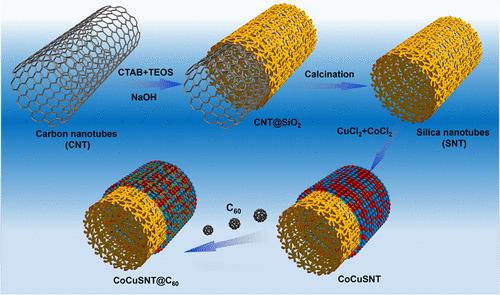
Alcohols, being a substantial category of hydrogen storage liquid fuels, exhibit promising development potential. Alcohol-based hydrogen storage liquid fuels can be efficiently produced from biomass-derived syngas (CO and H2). Considerable efforts have been made in the conversion of syngas to alcohols through a higher alcohol synthesis (HAS) reaction. However, inevitably, there will be significant generation of H2O and C1 byproducts (CO2 and CH4). In this study, a hydrophobic CoCuSNT@C60 catalyst modified with fullerene (C60, an all-carbon cage molecule) was designed to hinder the formation of H2O and C1 byproducts. The hydrophobic C60 shortened the retention of H2O on the active site interface, restraining the water–gas shift reaction. This leads to a significant decrease in CO2 generation, accompanied by an increase in the CO conversion and selectivity toward alcohols. The hydrophobic CoCuSNT@C60 catalyst was characterized by X-ray diffraction, Fourier transform infrared spectra, N2 adsorption–desorption isotherms, X-ray photoelectron spectroscopy, scanning electron microscopy, and transmission electron microscopy. Compared to the unmodified CoCuSNT, the C60-modified hydrophobic CoCuSNT@C60 catalyst possesses higher CO hydrogenation activity and high alcohol selectivity, along with an impressive stability of up to 350 h to meet industrial applications.
期刊介绍:
ACS Sustainable Chemistry & Engineering is a prestigious weekly peer-reviewed scientific journal published by the American Chemical Society. Dedicated to advancing the principles of green chemistry and green engineering, it covers a wide array of research topics including green chemistry, green engineering, biomass, alternative energy, and life cycle assessment.
The journal welcomes submissions in various formats, including Letters, Articles, Features, and Perspectives (Reviews), that address the challenges of sustainability in the chemical enterprise and contribute to the advancement of sustainable practices. Join us in shaping the future of sustainable chemistry and engineering.




 京公网安备 11010802042870号
京ICP备2023020795号-1
京公网安备 11010802042870号
京ICP备2023020795号-1

 分享
分享
 求助内容:
求助内容: 应助结果提醒方式:
 扫码关注我们
