Liya Chen, Sijing Wan, Qintian Shen, Keting Zhao, Yanlan He, Yexin Xie, Shiyu Tao, Shuchang Zheng, Yi Zhang, Shigui Wang, Bin Tang, Yan Li
{"title":"镉锌复合污染对蚕豆和蚜虫生理反应的影响。","authors":"Liya Chen, Sijing Wan, Qintian Shen, Keting Zhao, Yanlan He, Yexin Xie, Shiyu Tao, Shuchang Zheng, Yi Zhang, Shigui Wang, Bin Tang, Yan Li","doi":"10.3389/fphys.2025.1533241","DOIUrl":null,"url":null,"abstract":"<p><strong>Introduction: </strong>The heavy metal elements cadmium (Cd) and zinc (Zn) often coexist in nature, making the environmental media more prone to compound pollution. However, research on the toxic effect of the Cd-Zn combination is still lacking, and the underlying toxic mechanisms remain unclear.</p><p><strong>Methods: </strong>Therefore, in this experiment, we established four treatment groups with different ratios of Cd-Zn compound stress for the broad bean, <i>Vicia faba</i> L., and aphids, <i>Megoura crassicauda</i>, to explore the growth and physiological adaptation mechanisms under different levels of mixed heavy metal stress.</p><p><strong>Results: </strong>By measuring the germination rate, seedling height, and chlorophyll content of broad beans, we found that Cd-Zn-mixed stress has a synergistic inhibitory effect on the growth and development of broad beans. Cd and Zn can be transferred through the food chain, while broad beans can resist complex stress by regulating the content of total soluble sugars and photosynthetic pigments in the body, as well as accumulating proline. In addition, in the first generation of adult aphids, treatment with Cd (12.5 mg/kg) + Zn (100 mg/kg) significantly affected the expression of trehalase (<i>TRE</i>) and trehalose-6-phosphate synthase (<i>TPS</i>) genes and influenced the carbohydrate content and trehalase activity in the aphids.</p><p><strong>Discussion: </strong>The number of offspring produced by the second-generation aphids was significantly reduced under mixed heavy metal treatment, but it was not caused by changes in the vitellogenin (Vg) content. These related results provide new avenues for further exploration of plant responses to mixed heavy metal stress, pest control, and management of heavy metal pollution.</p>","PeriodicalId":12477,"journal":{"name":"Frontiers in Physiology","volume":"16 ","pages":"1533241"},"PeriodicalIF":4.3000,"publicationDate":"2025-02-05","publicationTypes":"Journal Article","fieldsOfStudy":null,"isOpenAccess":false,"openAccessPdf":"https://www.ncbi.nlm.nih.gov/pmc/articles/PMC11835991/pdf/","citationCount":"0","resultStr":"{\"title\":\"Effect of Cd-Zn compound contamination on the physiological response of broad bean and aphids.\",\"authors\":\"Liya Chen, Sijing Wan, Qintian Shen, Keting Zhao, Yanlan He, Yexin Xie, Shiyu Tao, Shuchang Zheng, Yi Zhang, Shigui Wang, Bin Tang, Yan Li\",\"doi\":\"10.3389/fphys.2025.1533241\",\"DOIUrl\":null,\"url\":null,\"abstract\":\"<p><strong>Introduction: </strong>The heavy metal elements cadmium (Cd) and zinc (Zn) often coexist in nature, making the environmental media more prone to compound pollution. However, research on the toxic effect of the Cd-Zn combination is still lacking, and the underlying toxic mechanisms remain unclear.</p><p><strong>Methods: </strong>Therefore, in this experiment, we established four treatment groups with different ratios of Cd-Zn compound stress for the broad bean, <i>Vicia faba</i> L., and aphids, <i>Megoura crassicauda</i>, to explore the growth and physiological adaptation mechanisms under different levels of mixed heavy metal stress.</p><p><strong>Results: </strong>By measuring the germination rate, seedling height, and chlorophyll content of broad beans, we found that Cd-Zn-mixed stress has a synergistic inhibitory effect on the growth and development of broad beans. Cd and Zn can be transferred through the food chain, while broad beans can resist complex stress by regulating the content of total soluble sugars and photosynthetic pigments in the body, as well as accumulating proline. In addition, in the first generation of adult aphids, treatment with Cd (12.5 mg/kg) + Zn (100 mg/kg) significantly affected the expression of trehalase (<i>TRE</i>) and trehalose-6-phosphate synthase (<i>TPS</i>) genes and influenced the carbohydrate content and trehalase activity in the aphids.</p><p><strong>Discussion: </strong>The number of offspring produced by the second-generation aphids was significantly reduced under mixed heavy metal treatment, but it was not caused by changes in the vitellogenin (Vg) content. These related results provide new avenues for further exploration of plant responses to mixed heavy metal stress, pest control, and management of heavy metal pollution.</p>\",\"PeriodicalId\":12477,\"journal\":{\"name\":\"Frontiers in Physiology\",\"volume\":\"16 \",\"pages\":\"1533241\"},\"PeriodicalIF\":4.3000,\"publicationDate\":\"2025-02-05\",\"publicationTypes\":\"Journal Article\",\"fieldsOfStudy\":null,\"isOpenAccess\":false,\"openAccessPdf\":\"https://www.ncbi.nlm.nih.gov/pmc/articles/PMC11835991/pdf/\",\"citationCount\":\"0\",\"resultStr\":null,\"platform\":\"Semanticscholar\",\"paperid\":null,\"PeriodicalName\":\"Frontiers in Physiology\",\"FirstCategoryId\":\"3\",\"ListUrlMain\":\"https://doi.org/10.3389/fphys.2025.1533241\",\"RegionNum\":3,\"RegionCategory\":\"医学\",\"ArticlePicture\":[],\"TitleCN\":null,\"AbstractTextCN\":null,\"PMCID\":null,\"EPubDate\":\"2025/1/1 0:00:00\",\"PubModel\":\"eCollection\",\"JCR\":\"Q2\",\"JCRName\":\"PHYSIOLOGY\",\"Score\":null,\"Total\":0}","platform":"Semanticscholar","paperid":null,"PeriodicalName":"Frontiers in Physiology","FirstCategoryId":"3","ListUrlMain":"https://doi.org/10.3389/fphys.2025.1533241","RegionNum":3,"RegionCategory":"医学","ArticlePicture":[],"TitleCN":null,"AbstractTextCN":null,"PMCID":null,"EPubDate":"2025/1/1 0:00:00","PubModel":"eCollection","JCR":"Q2","JCRName":"PHYSIOLOGY","Score":null,"Total":0}
Effect of Cd-Zn compound contamination on the physiological response of broad bean and aphids.
Introduction: The heavy metal elements cadmium (Cd) and zinc (Zn) often coexist in nature, making the environmental media more prone to compound pollution. However, research on the toxic effect of the Cd-Zn combination is still lacking, and the underlying toxic mechanisms remain unclear.
Methods: Therefore, in this experiment, we established four treatment groups with different ratios of Cd-Zn compound stress for the broad bean, Vicia faba L., and aphids, Megoura crassicauda, to explore the growth and physiological adaptation mechanisms under different levels of mixed heavy metal stress.
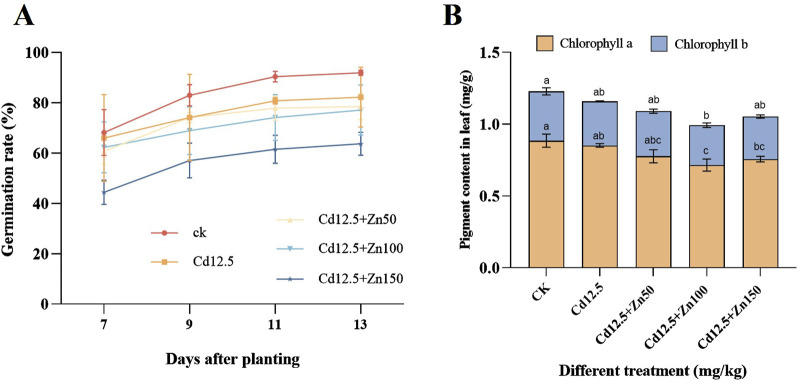
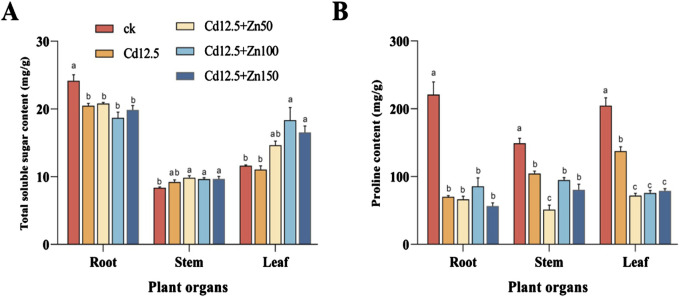
Results: By measuring the germination rate, seedling height, and chlorophyll content of broad beans, we found that Cd-Zn-mixed stress has a synergistic inhibitory effect on the growth and development of broad beans. Cd and Zn can be transferred through the food chain, while broad beans can resist complex stress by regulating the content of total soluble sugars and photosynthetic pigments in the body, as well as accumulating proline. In addition, in the first generation of adult aphids, treatment with Cd (12.5 mg/kg) + Zn (100 mg/kg) significantly affected the expression of trehalase (TRE) and trehalose-6-phosphate synthase (TPS) genes and influenced the carbohydrate content and trehalase activity in the aphids.
Discussion: The number of offspring produced by the second-generation aphids was significantly reduced under mixed heavy metal treatment, but it was not caused by changes in the vitellogenin (Vg) content. These related results provide new avenues for further exploration of plant responses to mixed heavy metal stress, pest control, and management of heavy metal pollution.
期刊介绍:
Frontiers in Physiology is a leading journal in its field, publishing rigorously peer-reviewed research on the physiology of living systems, from the subcellular and molecular domains to the intact organism, and its interaction with the environment. Field Chief Editor George E. Billman at the Ohio State University Columbus is supported by an outstanding Editorial Board of international researchers. This multidisciplinary open-access journal is at the forefront of disseminating and communicating scientific knowledge and impactful discoveries to researchers, academics, clinicians and the public worldwide.






 京公网安备 11010802042870号
京ICP备2023020795号-1
京公网安备 11010802042870号
京ICP备2023020795号-1

 分享
分享
 求助内容:
求助内容: 应助结果提醒方式:
 扫码关注我们
