{"title":"体外膜氧合下大鼠呼吸环境中的基因表达谱。","authors":"Shohei Mori, Takashi Ohtsuka, Kohei Hashimoto, Yutaka Fujii, Eriko Harada, Rintaro Shigemori, Daiki Kato, Takamasa Shibazaki, Masayuki Shimoda","doi":"10.21037/jtd-24-1661","DOIUrl":null,"url":null,"abstract":"<p><strong>Background: </strong>Venovenous extracorporeal membrane oxygenation (VV-ECMO) is an effective lung protection strategy that avoids ventilator-induced lung injury. However, appropriate respiratory settings for VV-ECMO are yet to be established. This study aimed to elucidate the effects of ventilation under VV-ECMO using a newly developed rat VV-ECMO model and analyzed gene expression profiles.</p><p><strong>Methods: </strong>Rats were assigned to three groups of five rats each: spontaneous breathing, conventional-protective ventilation, and ultra-protective ventilation. The conventional protective and ultraprotective ventilation groups received volume-controlled ventilation at a frequency of 60 and 20 beats/min, with tidal volumes of 6 and 3 mL/kg, respectively. VV-ECMO was performed at a pump flow rate of 20-30 mL/kg/min. At 120 min post initiation of VV-ECMO, rats were euthanized, and their lungs were harvested. Changes in gene expression were assessed using microarray analysis.</p><p><strong>Results: </strong>Gene expression profile analyses revealed lowest expression of inflammation/immune promotion, cytotoxicity, and cell proliferation related genes (<i>Defa5</i>, <i>Prg2</i>, <i>Siglec8</i>, <i>Atf3</i>, <i>Rnd1</i>, <i>Ctsg</i>, and <i>Gc</i>), and the highest expression of inflammation/immune suppression related genes (<i>Pp2d1</i>) in the spontaneous breathing group as compared to that in the other two mechanical ventilation groups.</p><p><strong>Conclusions: </strong>The findings of this study demonstrated that spontaneous breathing was the least invasive respiratory setting under VV-ECMO. Further, mechanical ventilation may be associated with lung injury even at low ventilation frequency and tidal volume.</p>","PeriodicalId":17542,"journal":{"name":"Journal of thoracic disease","volume":"17 1","pages":"31-41"},"PeriodicalIF":2.3000,"publicationDate":"2025-01-24","publicationTypes":"Journal Article","fieldsOfStudy":null,"isOpenAccess":false,"openAccessPdf":"https://www.ncbi.nlm.nih.gov/pmc/articles/PMC11833566/pdf/","citationCount":"0","resultStr":"{\"title\":\"Gene expression profiles in respiratory settings in rats under extracorporeal membrane oxygenation.\",\"authors\":\"Shohei Mori, Takashi Ohtsuka, Kohei Hashimoto, Yutaka Fujii, Eriko Harada, Rintaro Shigemori, Daiki Kato, Takamasa Shibazaki, Masayuki Shimoda\",\"doi\":\"10.21037/jtd-24-1661\",\"DOIUrl\":null,\"url\":null,\"abstract\":\"<p><strong>Background: </strong>Venovenous extracorporeal membrane oxygenation (VV-ECMO) is an effective lung protection strategy that avoids ventilator-induced lung injury. However, appropriate respiratory settings for VV-ECMO are yet to be established. This study aimed to elucidate the effects of ventilation under VV-ECMO using a newly developed rat VV-ECMO model and analyzed gene expression profiles.</p><p><strong>Methods: </strong>Rats were assigned to three groups of five rats each: spontaneous breathing, conventional-protective ventilation, and ultra-protective ventilation. The conventional protective and ultraprotective ventilation groups received volume-controlled ventilation at a frequency of 60 and 20 beats/min, with tidal volumes of 6 and 3 mL/kg, respectively. VV-ECMO was performed at a pump flow rate of 20-30 mL/kg/min. At 120 min post initiation of VV-ECMO, rats were euthanized, and their lungs were harvested. Changes in gene expression were assessed using microarray analysis.</p><p><strong>Results: </strong>Gene expression profile analyses revealed lowest expression of inflammation/immune promotion, cytotoxicity, and cell proliferation related genes (<i>Defa5</i>, <i>Prg2</i>, <i>Siglec8</i>, <i>Atf3</i>, <i>Rnd1</i>, <i>Ctsg</i>, and <i>Gc</i>), and the highest expression of inflammation/immune suppression related genes (<i>Pp2d1</i>) in the spontaneous breathing group as compared to that in the other two mechanical ventilation groups.</p><p><strong>Conclusions: </strong>The findings of this study demonstrated that spontaneous breathing was the least invasive respiratory setting under VV-ECMO. Further, mechanical ventilation may be associated with lung injury even at low ventilation frequency and tidal volume.</p>\",\"PeriodicalId\":17542,\"journal\":{\"name\":\"Journal of thoracic disease\",\"volume\":\"17 1\",\"pages\":\"31-41\"},\"PeriodicalIF\":2.3000,\"publicationDate\":\"2025-01-24\",\"publicationTypes\":\"Journal Article\",\"fieldsOfStudy\":null,\"isOpenAccess\":false,\"openAccessPdf\":\"https://www.ncbi.nlm.nih.gov/pmc/articles/PMC11833566/pdf/\",\"citationCount\":\"0\",\"resultStr\":null,\"platform\":\"Semanticscholar\",\"paperid\":null,\"PeriodicalName\":\"Journal of thoracic disease\",\"FirstCategoryId\":\"3\",\"ListUrlMain\":\"https://doi.org/10.21037/jtd-24-1661\",\"RegionNum\":3,\"RegionCategory\":\"医学\",\"ArticlePicture\":[],\"TitleCN\":null,\"AbstractTextCN\":null,\"PMCID\":null,\"EPubDate\":\"2025/1/22 0:00:00\",\"PubModel\":\"Epub\",\"JCR\":\"Q3\",\"JCRName\":\"RESPIRATORY SYSTEM\",\"Score\":null,\"Total\":0}","platform":"Semanticscholar","paperid":null,"PeriodicalName":"Journal of thoracic disease","FirstCategoryId":"3","ListUrlMain":"https://doi.org/10.21037/jtd-24-1661","RegionNum":3,"RegionCategory":"医学","ArticlePicture":[],"TitleCN":null,"AbstractTextCN":null,"PMCID":null,"EPubDate":"2025/1/22 0:00:00","PubModel":"Epub","JCR":"Q3","JCRName":"RESPIRATORY SYSTEM","Score":null,"Total":0}
Gene expression profiles in respiratory settings in rats under extracorporeal membrane oxygenation.
Background: Venovenous extracorporeal membrane oxygenation (VV-ECMO) is an effective lung protection strategy that avoids ventilator-induced lung injury. However, appropriate respiratory settings for VV-ECMO are yet to be established. This study aimed to elucidate the effects of ventilation under VV-ECMO using a newly developed rat VV-ECMO model and analyzed gene expression profiles.
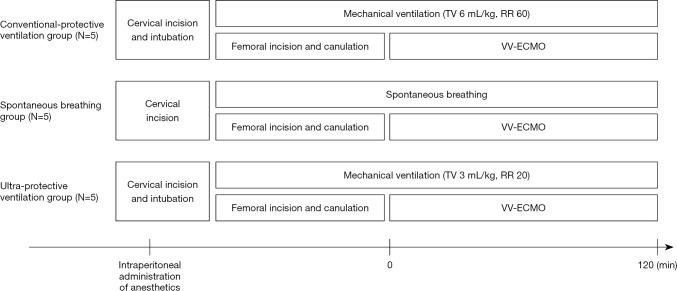
Methods: Rats were assigned to three groups of five rats each: spontaneous breathing, conventional-protective ventilation, and ultra-protective ventilation. The conventional protective and ultraprotective ventilation groups received volume-controlled ventilation at a frequency of 60 and 20 beats/min, with tidal volumes of 6 and 3 mL/kg, respectively. VV-ECMO was performed at a pump flow rate of 20-30 mL/kg/min. At 120 min post initiation of VV-ECMO, rats were euthanized, and their lungs were harvested. Changes in gene expression were assessed using microarray analysis.
Results: Gene expression profile analyses revealed lowest expression of inflammation/immune promotion, cytotoxicity, and cell proliferation related genes (Defa5, Prg2, Siglec8, Atf3, Rnd1, Ctsg, and Gc), and the highest expression of inflammation/immune suppression related genes (Pp2d1) in the spontaneous breathing group as compared to that in the other two mechanical ventilation groups.
Conclusions: The findings of this study demonstrated that spontaneous breathing was the least invasive respiratory setting under VV-ECMO. Further, mechanical ventilation may be associated with lung injury even at low ventilation frequency and tidal volume.
期刊介绍:
The Journal of Thoracic Disease (JTD, J Thorac Dis, pISSN: 2072-1439; eISSN: 2077-6624) was founded in Dec 2009, and indexed in PubMed in Dec 2011 and Science Citation Index SCI in Feb 2013. It is published quarterly (Dec 2009- Dec 2011), bimonthly (Jan 2012 - Dec 2013), monthly (Jan. 2014-) and openly distributed worldwide. JTD received its impact factor of 2.365 for the year 2016. JTD publishes manuscripts that describe new findings and provide current, practical information on the diagnosis and treatment of conditions related to thoracic disease. All the submission and reviewing are conducted electronically so that rapid review is assured.






 京公网安备 11010802042870号
京ICP备2023020795号-1
京公网安备 11010802042870号
京ICP备2023020795号-1

 分享
分享
 求助内容:
求助内容: 应助结果提醒方式:
 扫码关注我们
