Yuzhou Chu, Jianhua Li, Li Gong, Sheng Shao, Hao Chen, Pengfei He, Juntao Yan
{"title":"溃疡性结肠炎对慢性心力衰竭的影响:双向孟德尔随机研究的结果。","authors":"Yuzhou Chu, Jianhua Li, Li Gong, Sheng Shao, Hao Chen, Pengfei He, Juntao Yan","doi":"10.1186/s12876-025-03671-y","DOIUrl":null,"url":null,"abstract":"<p><p>This study aimed to detect the causal effect of ulcerative colitis (UC) on heart failure. A bidirectional two-sample Mendelian randomization (MR) analysis was performed. The causal impact of UC on heart failure was determined via MR by performing a genome-wide association study in which 4 UCs descending from European ancestors were set as individual exposures. The inverse-variance weighted (IVW) method was used as the main method, and 4 other methods were set as assistant parameters. Susbequently, the MR results were combined with meta-analysis results. The MR Egger method was employed to investigate pleiotropy. The leave-one-out method was utilized for sensitivity analysis. Furthermore, a reverse-directional study was conducted. There was evidence of the causal effect of UC on heart failure in MR estimates using 4 UC datasets. The IVW method revealed that the odds ratio (OR) = 1.03, 95% confidence interval (CI) = 1.01-1.06, P = 0.0441 when the first UC dataset was used; OR = 1.03, 95% CI = 1.01-1.05, P = 0.0445 when the second UC dataset was used; OR = 2046, 95% CI = 1.37-3.05E + 06, P = 0.0409 when the third UC dataset was used; and OR = 8.12E + 04, 95% CI = 29.09-2.27E + 08, P = 0.0052 when the fourth UC dataset was used. A meta-analysis of 4 MR studies revealed that UC had a statistically significant causal effect on heart failure (OR = 1.03, 95% CI = 1.01-1.05; P = 0.0074). Reverse MR analysis revealed that heart failure did not have a causal effect on UC. There was no pleiotropy. This MR study demonstrated that UC had a causal effect on heart failure and that there was no reverse causal effect.</p>","PeriodicalId":9129,"journal":{"name":"BMC Gastroenterology","volume":"25 1","pages":"95"},"PeriodicalIF":2.5000,"publicationDate":"2025-02-20","publicationTypes":"Journal Article","fieldsOfStudy":null,"isOpenAccess":false,"openAccessPdf":"https://www.ncbi.nlm.nih.gov/pmc/articles/PMC11841004/pdf/","citationCount":"0","resultStr":"{\"title\":\"Casual effect of ulcerative colitis on chronic heart failure: results from a bidirectional Mendelian randomization study.\",\"authors\":\"Yuzhou Chu, Jianhua Li, Li Gong, Sheng Shao, Hao Chen, Pengfei He, Juntao Yan\",\"doi\":\"10.1186/s12876-025-03671-y\",\"DOIUrl\":null,\"url\":null,\"abstract\":\"<p><p>This study aimed to detect the causal effect of ulcerative colitis (UC) on heart failure. A bidirectional two-sample Mendelian randomization (MR) analysis was performed. The causal impact of UC on heart failure was determined via MR by performing a genome-wide association study in which 4 UCs descending from European ancestors were set as individual exposures. The inverse-variance weighted (IVW) method was used as the main method, and 4 other methods were set as assistant parameters. Susbequently, the MR results were combined with meta-analysis results. The MR Egger method was employed to investigate pleiotropy. The leave-one-out method was utilized for sensitivity analysis. Furthermore, a reverse-directional study was conducted. There was evidence of the causal effect of UC on heart failure in MR estimates using 4 UC datasets. The IVW method revealed that the odds ratio (OR) = 1.03, 95% confidence interval (CI) = 1.01-1.06, P = 0.0441 when the first UC dataset was used; OR = 1.03, 95% CI = 1.01-1.05, P = 0.0445 when the second UC dataset was used; OR = 2046, 95% CI = 1.37-3.05E + 06, P = 0.0409 when the third UC dataset was used; and OR = 8.12E + 04, 95% CI = 29.09-2.27E + 08, P = 0.0052 when the fourth UC dataset was used. A meta-analysis of 4 MR studies revealed that UC had a statistically significant causal effect on heart failure (OR = 1.03, 95% CI = 1.01-1.05; P = 0.0074). Reverse MR analysis revealed that heart failure did not have a causal effect on UC. There was no pleiotropy. This MR study demonstrated that UC had a causal effect on heart failure and that there was no reverse causal effect.</p>\",\"PeriodicalId\":9129,\"journal\":{\"name\":\"BMC Gastroenterology\",\"volume\":\"25 1\",\"pages\":\"95\"},\"PeriodicalIF\":2.5000,\"publicationDate\":\"2025-02-20\",\"publicationTypes\":\"Journal Article\",\"fieldsOfStudy\":null,\"isOpenAccess\":false,\"openAccessPdf\":\"https://www.ncbi.nlm.nih.gov/pmc/articles/PMC11841004/pdf/\",\"citationCount\":\"0\",\"resultStr\":null,\"platform\":\"Semanticscholar\",\"paperid\":null,\"PeriodicalName\":\"BMC Gastroenterology\",\"FirstCategoryId\":\"3\",\"ListUrlMain\":\"https://doi.org/10.1186/s12876-025-03671-y\",\"RegionNum\":3,\"RegionCategory\":\"医学\",\"ArticlePicture\":[],\"TitleCN\":null,\"AbstractTextCN\":null,\"PMCID\":null,\"EPubDate\":\"\",\"PubModel\":\"\",\"JCR\":\"Q2\",\"JCRName\":\"GASTROENTEROLOGY & HEPATOLOGY\",\"Score\":null,\"Total\":0}","platform":"Semanticscholar","paperid":null,"PeriodicalName":"BMC Gastroenterology","FirstCategoryId":"3","ListUrlMain":"https://doi.org/10.1186/s12876-025-03671-y","RegionNum":3,"RegionCategory":"医学","ArticlePicture":[],"TitleCN":null,"AbstractTextCN":null,"PMCID":null,"EPubDate":"","PubModel":"","JCR":"Q2","JCRName":"GASTROENTEROLOGY & HEPATOLOGY","Score":null,"Total":0}
引用次数: 0
摘要
本研究旨在检测溃疡性结肠炎(UC)对心力衰竭的因果关系。进行双向双样本孟德尔随机化(MR)分析。UC对心力衰竭的因果影响通过MR确定,通过进行全基因组关联研究,其中4个来自欧洲祖先的UC被设置为个体暴露。以逆方差加权法(IVW)为主要方法,其他4种方法作为辅助参数。随后,将MR结果与meta分析结果相结合。采用MR Egger方法研究多效性。采用留一法进行敏感性分析。此外,还进行了反向研究。在使用4个UC数据集的MR估计中,有证据表明UC对心力衰竭有因果影响。IVW方法显示,首次使用UC数据集时,优势比(OR) = 1.03, 95%置信区间(CI) = 1.01-1.06, P = 0.0441;当使用第二个UC数据集时OR = 1.03, 95% CI = 1.01-1.05, P = 0.0445;使用第三个UC数据集时OR = 2046, 95% CI = 1.37-3.05E + 06, P = 0.0409;使用第四个UC数据集时OR = 8.12E + 04, 95% CI = 29.09-2.27E + 08, P = 0.0052。一项对4项MR研究的荟萃分析显示,UC对心力衰竭有统计学上显著的因果影响(OR = 1.03, 95% CI = 1.01-1.05;p = 0.0074)。反向磁共振分析显示心力衰竭对UC没有因果关系。无多效性。这项MR研究表明UC对心力衰竭有因果关系,并且没有反向因果关系。
Casual effect of ulcerative colitis on chronic heart failure: results from a bidirectional Mendelian randomization study.
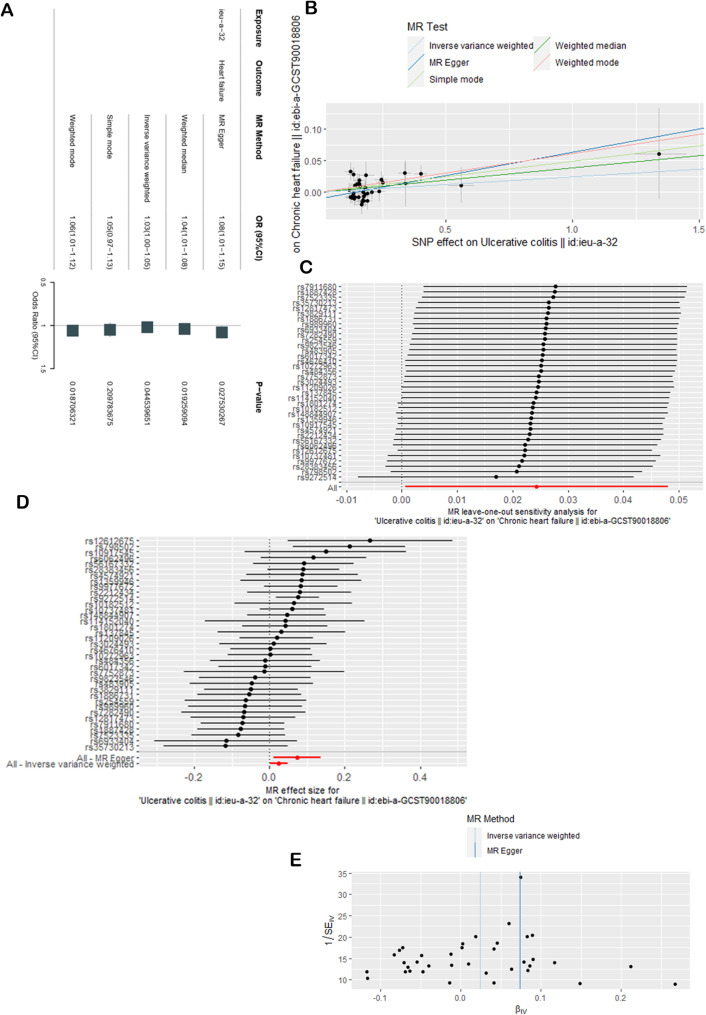
This study aimed to detect the causal effect of ulcerative colitis (UC) on heart failure. A bidirectional two-sample Mendelian randomization (MR) analysis was performed. The causal impact of UC on heart failure was determined via MR by performing a genome-wide association study in which 4 UCs descending from European ancestors were set as individual exposures. The inverse-variance weighted (IVW) method was used as the main method, and 4 other methods were set as assistant parameters. Susbequently, the MR results were combined with meta-analysis results. The MR Egger method was employed to investigate pleiotropy. The leave-one-out method was utilized for sensitivity analysis. Furthermore, a reverse-directional study was conducted. There was evidence of the causal effect of UC on heart failure in MR estimates using 4 UC datasets. The IVW method revealed that the odds ratio (OR) = 1.03, 95% confidence interval (CI) = 1.01-1.06, P = 0.0441 when the first UC dataset was used; OR = 1.03, 95% CI = 1.01-1.05, P = 0.0445 when the second UC dataset was used; OR = 2046, 95% CI = 1.37-3.05E + 06, P = 0.0409 when the third UC dataset was used; and OR = 8.12E + 04, 95% CI = 29.09-2.27E + 08, P = 0.0052 when the fourth UC dataset was used. A meta-analysis of 4 MR studies revealed that UC had a statistically significant causal effect on heart failure (OR = 1.03, 95% CI = 1.01-1.05; P = 0.0074). Reverse MR analysis revealed that heart failure did not have a causal effect on UC. There was no pleiotropy. This MR study demonstrated that UC had a causal effect on heart failure and that there was no reverse causal effect.
期刊介绍:
BMC Gastroenterology is an open access, peer-reviewed journal that considers articles on all aspects of the prevention, diagnosis and management of gastrointestinal and hepatobiliary disorders, as well as related molecular genetics, pathophysiology, and epidemiology.






 京公网安备 11010802042870号
京ICP备2023020795号-1
京公网安备 11010802042870号
京ICP备2023020795号-1

 分享
分享
 求助内容:
求助内容: 应助结果提醒方式:
 扫码关注我们
