{"title":"发表后同行评议以及确定COVID-19试验的方法学和报告问题:一项定性研究","authors":"Mauricia Davidson, Christoffer Bruun Korfitsen, Carolina Riveros, Anna Chaimani, Isabelle Boutron","doi":"10.1136/bmjebm-2024-113068","DOIUrl":null,"url":null,"abstract":"<p><strong>Objectives: </strong>We aimed to determine to what extent systematic reviewers and post-preprint and post-publication peer review identified methodological and reporting issues in COVID-19 trials that could be easily resolved by the authors.</p><p><strong>Design: </strong>Qualitative study.</p><p><strong>Data sources: </strong>COVID-NMA living systematic review (covid-nma.com), PubPeer, medRxiv, Research Square, SSRN.</p><p><strong>Methods: </strong>We considered randomised controlled trials (RCTs) in COVID-NMA that evaluated pharmacological treatments for COVID-19 and retrieved systematic reviewers' assessments of the risk of bias and outcome reporting bias. We also searched for commentary data on PubPeer and preprint servers up to 6 November 2023. We employed qualitative content analysis to develop themes and domains of methodological and reporting issues identified by commenters.</p><p><strong>Results: </strong>We identified 500 eligible RCTs. Systematic reviewers identified methodological and reporting issues in 446 (89%) RCTs. In 391 (78%) RCTs, the issues could be easily resolved by the trial authors; issues included incomplete reporting (49%), selection of the reported results (52%) and no access to the pre-specified plan (25%). Alternatively, 74 (15%) RCTs had received at least one comment on PubPeer or preprint servers, totalling 348 comments. In 46 (9%) RCTs, the issues identified by post-preprint and post-publication peer review comments could be easily resolved by the trial authors; the issues were related to incomplete reporting (6%), errors (5%), statistical analysis (3%), inconsistent reporting of methods and analyses (2%), spin (2%), selection of the reported results (1%) and no access to the raw data/pre-specified plan (1%).</p><p><strong>Conclusions: </strong>Without changing their process, systematic reviewers identified issues in most RCTs that could be easily resolved by the trial authors; however, the lack of an established author feedback mechanism represents a wasted opportunity for facilitating improvement and enhancing the overall manuscript quality. On the other hand, despite the existing feedback loop to authors present in post-publication peer review, it demonstrated limited effectiveness in identifying methodological and reporting issues.</p>","PeriodicalId":9059,"journal":{"name":"BMJ Evidence-Based Medicine","volume":" ","pages":"233-240"},"PeriodicalIF":7.6000,"publicationDate":"2025-07-21","publicationTypes":"Journal Article","fieldsOfStudy":null,"isOpenAccess":false,"openAccessPdf":"https://www.ncbi.nlm.nih.gov/pmc/articles/PMC12320597/pdf/","citationCount":"0","resultStr":"{\"title\":\"Post-publication peer review and the identification of methodological and reporting issues in COVID-19 trials: a qualitative study.\",\"authors\":\"Mauricia Davidson, Christoffer Bruun Korfitsen, Carolina Riveros, Anna Chaimani, Isabelle Boutron\",\"doi\":\"10.1136/bmjebm-2024-113068\",\"DOIUrl\":null,\"url\":null,\"abstract\":\"<p><strong>Objectives: </strong>We aimed to determine to what extent systematic reviewers and post-preprint and post-publication peer review identified methodological and reporting issues in COVID-19 trials that could be easily resolved by the authors.</p><p><strong>Design: </strong>Qualitative study.</p><p><strong>Data sources: </strong>COVID-NMA living systematic review (covid-nma.com), PubPeer, medRxiv, Research Square, SSRN.</p><p><strong>Methods: </strong>We considered randomised controlled trials (RCTs) in COVID-NMA that evaluated pharmacological treatments for COVID-19 and retrieved systematic reviewers' assessments of the risk of bias and outcome reporting bias. We also searched for commentary data on PubPeer and preprint servers up to 6 November 2023. We employed qualitative content analysis to develop themes and domains of methodological and reporting issues identified by commenters.</p><p><strong>Results: </strong>We identified 500 eligible RCTs. Systematic reviewers identified methodological and reporting issues in 446 (89%) RCTs. In 391 (78%) RCTs, the issues could be easily resolved by the trial authors; issues included incomplete reporting (49%), selection of the reported results (52%) and no access to the pre-specified plan (25%). Alternatively, 74 (15%) RCTs had received at least one comment on PubPeer or preprint servers, totalling 348 comments. In 46 (9%) RCTs, the issues identified by post-preprint and post-publication peer review comments could be easily resolved by the trial authors; the issues were related to incomplete reporting (6%), errors (5%), statistical analysis (3%), inconsistent reporting of methods and analyses (2%), spin (2%), selection of the reported results (1%) and no access to the raw data/pre-specified plan (1%).</p><p><strong>Conclusions: </strong>Without changing their process, systematic reviewers identified issues in most RCTs that could be easily resolved by the trial authors; however, the lack of an established author feedback mechanism represents a wasted opportunity for facilitating improvement and enhancing the overall manuscript quality. On the other hand, despite the existing feedback loop to authors present in post-publication peer review, it demonstrated limited effectiveness in identifying methodological and reporting issues.</p>\",\"PeriodicalId\":9059,\"journal\":{\"name\":\"BMJ Evidence-Based Medicine\",\"volume\":\" \",\"pages\":\"233-240\"},\"PeriodicalIF\":7.6000,\"publicationDate\":\"2025-07-21\",\"publicationTypes\":\"Journal Article\",\"fieldsOfStudy\":null,\"isOpenAccess\":false,\"openAccessPdf\":\"https://www.ncbi.nlm.nih.gov/pmc/articles/PMC12320597/pdf/\",\"citationCount\":\"0\",\"resultStr\":null,\"platform\":\"Semanticscholar\",\"paperid\":null,\"PeriodicalName\":\"BMJ Evidence-Based Medicine\",\"FirstCategoryId\":\"3\",\"ListUrlMain\":\"https://doi.org/10.1136/bmjebm-2024-113068\",\"RegionNum\":3,\"RegionCategory\":\"医学\",\"ArticlePicture\":[],\"TitleCN\":null,\"AbstractTextCN\":null,\"PMCID\":null,\"EPubDate\":\"\",\"PubModel\":\"\",\"JCR\":\"Q1\",\"JCRName\":\"MEDICINE, GENERAL & INTERNAL\",\"Score\":null,\"Total\":0}","platform":"Semanticscholar","paperid":null,"PeriodicalName":"BMJ Evidence-Based Medicine","FirstCategoryId":"3","ListUrlMain":"https://doi.org/10.1136/bmjebm-2024-113068","RegionNum":3,"RegionCategory":"医学","ArticlePicture":[],"TitleCN":null,"AbstractTextCN":null,"PMCID":null,"EPubDate":"","PubModel":"","JCR":"Q1","JCRName":"MEDICINE, GENERAL & INTERNAL","Score":null,"Total":0}
Post-publication peer review and the identification of methodological and reporting issues in COVID-19 trials: a qualitative study.
Objectives: We aimed to determine to what extent systematic reviewers and post-preprint and post-publication peer review identified methodological and reporting issues in COVID-19 trials that could be easily resolved by the authors.
Design: Qualitative study.
Data sources: COVID-NMA living systematic review (covid-nma.com), PubPeer, medRxiv, Research Square, SSRN.
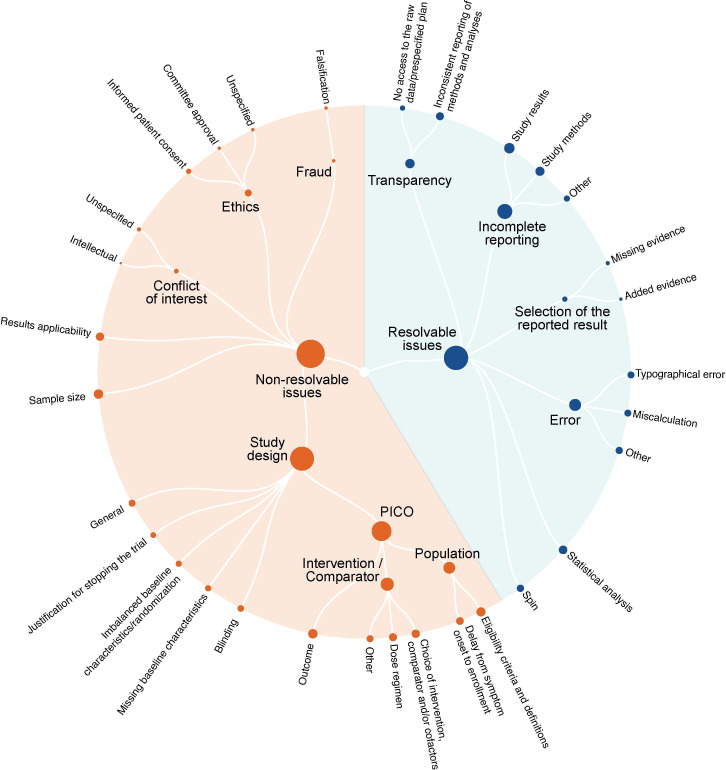
Methods: We considered randomised controlled trials (RCTs) in COVID-NMA that evaluated pharmacological treatments for COVID-19 and retrieved systematic reviewers' assessments of the risk of bias and outcome reporting bias. We also searched for commentary data on PubPeer and preprint servers up to 6 November 2023. We employed qualitative content analysis to develop themes and domains of methodological and reporting issues identified by commenters.
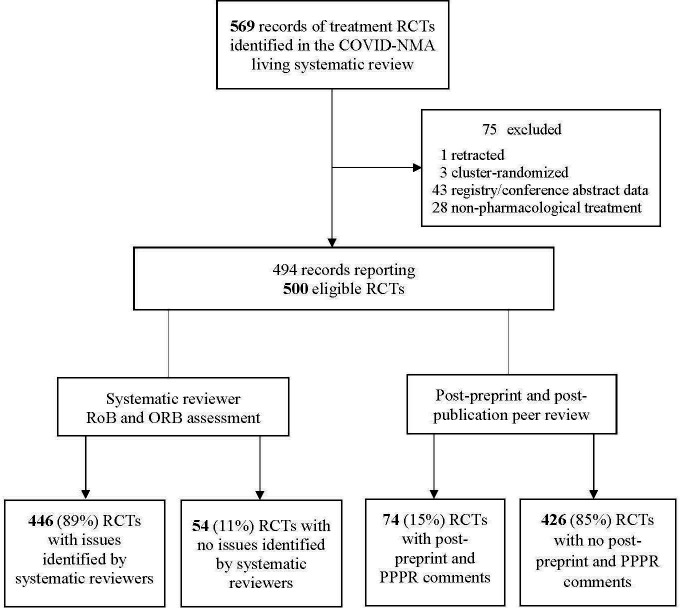
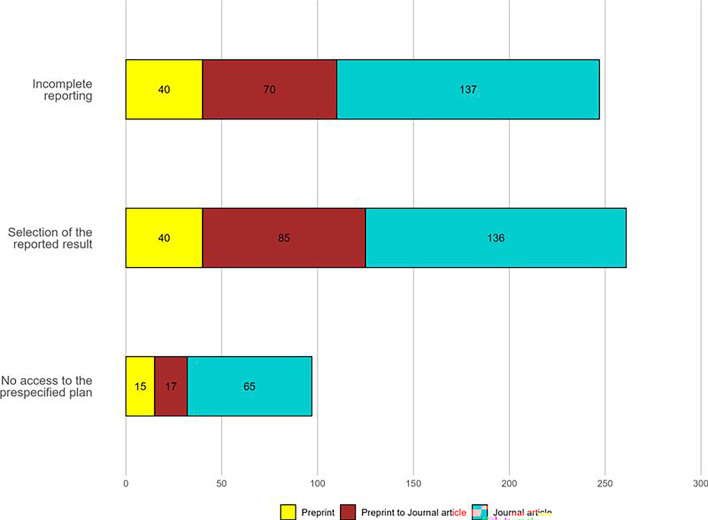
Results: We identified 500 eligible RCTs. Systematic reviewers identified methodological and reporting issues in 446 (89%) RCTs. In 391 (78%) RCTs, the issues could be easily resolved by the trial authors; issues included incomplete reporting (49%), selection of the reported results (52%) and no access to the pre-specified plan (25%). Alternatively, 74 (15%) RCTs had received at least one comment on PubPeer or preprint servers, totalling 348 comments. In 46 (9%) RCTs, the issues identified by post-preprint and post-publication peer review comments could be easily resolved by the trial authors; the issues were related to incomplete reporting (6%), errors (5%), statistical analysis (3%), inconsistent reporting of methods and analyses (2%), spin (2%), selection of the reported results (1%) and no access to the raw data/pre-specified plan (1%).
Conclusions: Without changing their process, systematic reviewers identified issues in most RCTs that could be easily resolved by the trial authors; however, the lack of an established author feedback mechanism represents a wasted opportunity for facilitating improvement and enhancing the overall manuscript quality. On the other hand, despite the existing feedback loop to authors present in post-publication peer review, it demonstrated limited effectiveness in identifying methodological and reporting issues.
期刊介绍:
BMJ Evidence-Based Medicine (BMJ EBM) publishes original evidence-based research, insights and opinions on what matters for health care. We focus on the tools, methods, and concepts that are basic and central to practising evidence-based medicine and deliver relevant, trustworthy and impactful evidence.
BMJ EBM is a Plan S compliant Transformative Journal and adheres to the highest possible industry standards for editorial policies and publication ethics.




 京公网安备 11010802042870号
京ICP备2023020795号-1
京公网安备 11010802042870号
京ICP备2023020795号-1

 分享
分享
 求助内容:
求助内容: 应助结果提醒方式:
 扫码关注我们
