{"title":"大麻素在神经系统疾病中的治疗潜力:临床试验的系统回顾。","authors":"Alqassem Y Hakami, Fahad S Alshehri","doi":"10.3389/fphar.2025.1521792","DOIUrl":null,"url":null,"abstract":"<p><strong>Overview: </strong>Cannabinoids have gained increasing attention for their therapeutic potential in treating several neurological conditions, including neurodegenerative diseases, chronic pain, and epilepsy. This review aims to assess the current clinical trials investigating cannabinoids, primarily Tetrahydrocannabinol and Cannabidiol, for neurological disorders. This review will aim to highlight the efficacy, safety, and outcome measures used in these trials.</p><p><strong>Methods: </strong>Clinical trials were identified using ClinicalTrials.gov, focusing on studies that examined the effects of cannabinoids in treating neurological conditions. All trials that fulfilled the following criteria were included: Phase 1-4, focused on cannabinoids as primary intervention, and measured relevant outcomes such as pain relief, cognitive function, or spasticity reduction. Data on conditions, interventions, primary and secondary outcomes, and trial phases were extracted and analysed.</p><p><strong>Results: </strong>A total of 47 clinical trials were identified, including different neurological conditions. The most frequently studied conditions were Multiple Sclerosis, Fibromyalgia, and Parkinson's Disease. Most trials were in Phase 2, with the primary outcome measures focused on pain management, spasticity, and cognitive function. Secondary outcomes included safety and tolerability measures.</p><p><strong>Conclusion: </strong>The review highlights the broad therapeutic potential of cannabinoids in neurology, with promising results in symptom management for conditions like Multiple Sclerosis and Fibromyalgia. However, the lack of standardized study protocols, dosing, and outcome measures presents challenges for broader clinical implementation.</p><p><strong>Systematic review registration: </strong>clinicatrials.gov.</p>","PeriodicalId":12491,"journal":{"name":"Frontiers in Pharmacology","volume":"16 ","pages":"1521792"},"PeriodicalIF":4.8000,"publicationDate":"2025-02-06","publicationTypes":"Journal Article","fieldsOfStudy":null,"isOpenAccess":false,"openAccessPdf":"https://www.ncbi.nlm.nih.gov/pmc/articles/PMC11839665/pdf/","citationCount":"0","resultStr":"{\"title\":\"Therapeutic potential of cannabinoids in neurological conditions: a systematic review of clinical trials.\",\"authors\":\"Alqassem Y Hakami, Fahad S Alshehri\",\"doi\":\"10.3389/fphar.2025.1521792\",\"DOIUrl\":null,\"url\":null,\"abstract\":\"<p><strong>Overview: </strong>Cannabinoids have gained increasing attention for their therapeutic potential in treating several neurological conditions, including neurodegenerative diseases, chronic pain, and epilepsy. This review aims to assess the current clinical trials investigating cannabinoids, primarily Tetrahydrocannabinol and Cannabidiol, for neurological disorders. This review will aim to highlight the efficacy, safety, and outcome measures used in these trials.</p><p><strong>Methods: </strong>Clinical trials were identified using ClinicalTrials.gov, focusing on studies that examined the effects of cannabinoids in treating neurological conditions. All trials that fulfilled the following criteria were included: Phase 1-4, focused on cannabinoids as primary intervention, and measured relevant outcomes such as pain relief, cognitive function, or spasticity reduction. Data on conditions, interventions, primary and secondary outcomes, and trial phases were extracted and analysed.</p><p><strong>Results: </strong>A total of 47 clinical trials were identified, including different neurological conditions. The most frequently studied conditions were Multiple Sclerosis, Fibromyalgia, and Parkinson's Disease. Most trials were in Phase 2, with the primary outcome measures focused on pain management, spasticity, and cognitive function. Secondary outcomes included safety and tolerability measures.</p><p><strong>Conclusion: </strong>The review highlights the broad therapeutic potential of cannabinoids in neurology, with promising results in symptom management for conditions like Multiple Sclerosis and Fibromyalgia. However, the lack of standardized study protocols, dosing, and outcome measures presents challenges for broader clinical implementation.</p><p><strong>Systematic review registration: </strong>clinicatrials.gov.</p>\",\"PeriodicalId\":12491,\"journal\":{\"name\":\"Frontiers in Pharmacology\",\"volume\":\"16 \",\"pages\":\"1521792\"},\"PeriodicalIF\":4.8000,\"publicationDate\":\"2025-02-06\",\"publicationTypes\":\"Journal Article\",\"fieldsOfStudy\":null,\"isOpenAccess\":false,\"openAccessPdf\":\"https://www.ncbi.nlm.nih.gov/pmc/articles/PMC11839665/pdf/\",\"citationCount\":\"0\",\"resultStr\":null,\"platform\":\"Semanticscholar\",\"paperid\":null,\"PeriodicalName\":\"Frontiers in Pharmacology\",\"FirstCategoryId\":\"3\",\"ListUrlMain\":\"https://doi.org/10.3389/fphar.2025.1521792\",\"RegionNum\":2,\"RegionCategory\":\"医学\",\"ArticlePicture\":[],\"TitleCN\":null,\"AbstractTextCN\":null,\"PMCID\":null,\"EPubDate\":\"2025/1/1 0:00:00\",\"PubModel\":\"eCollection\",\"JCR\":\"Q1\",\"JCRName\":\"PHARMACOLOGY & PHARMACY\",\"Score\":null,\"Total\":0}","platform":"Semanticscholar","paperid":null,"PeriodicalName":"Frontiers in Pharmacology","FirstCategoryId":"3","ListUrlMain":"https://doi.org/10.3389/fphar.2025.1521792","RegionNum":2,"RegionCategory":"医学","ArticlePicture":[],"TitleCN":null,"AbstractTextCN":null,"PMCID":null,"EPubDate":"2025/1/1 0:00:00","PubModel":"eCollection","JCR":"Q1","JCRName":"PHARMACOLOGY & PHARMACY","Score":null,"Total":0}
Therapeutic potential of cannabinoids in neurological conditions: a systematic review of clinical trials.
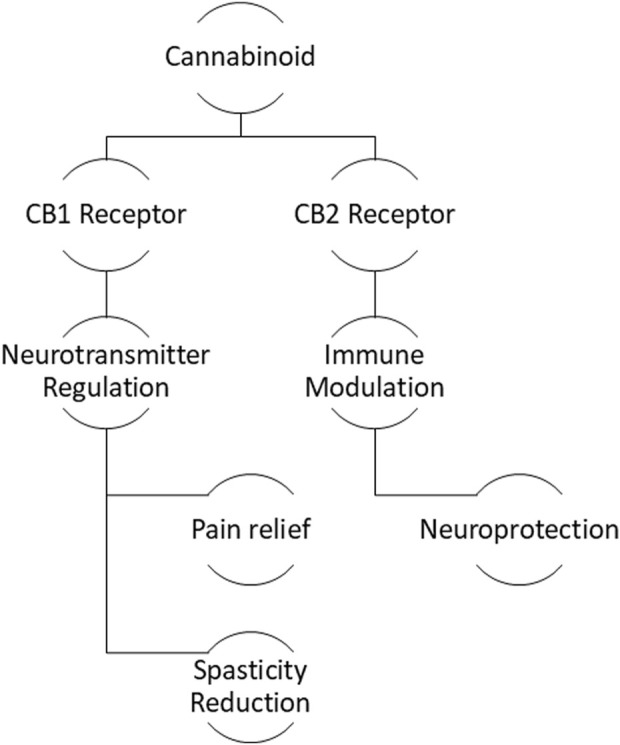
Overview: Cannabinoids have gained increasing attention for their therapeutic potential in treating several neurological conditions, including neurodegenerative diseases, chronic pain, and epilepsy. This review aims to assess the current clinical trials investigating cannabinoids, primarily Tetrahydrocannabinol and Cannabidiol, for neurological disorders. This review will aim to highlight the efficacy, safety, and outcome measures used in these trials.
Methods: Clinical trials were identified using ClinicalTrials.gov, focusing on studies that examined the effects of cannabinoids in treating neurological conditions. All trials that fulfilled the following criteria were included: Phase 1-4, focused on cannabinoids as primary intervention, and measured relevant outcomes such as pain relief, cognitive function, or spasticity reduction. Data on conditions, interventions, primary and secondary outcomes, and trial phases were extracted and analysed.
Results: A total of 47 clinical trials were identified, including different neurological conditions. The most frequently studied conditions were Multiple Sclerosis, Fibromyalgia, and Parkinson's Disease. Most trials were in Phase 2, with the primary outcome measures focused on pain management, spasticity, and cognitive function. Secondary outcomes included safety and tolerability measures.
Conclusion: The review highlights the broad therapeutic potential of cannabinoids in neurology, with promising results in symptom management for conditions like Multiple Sclerosis and Fibromyalgia. However, the lack of standardized study protocols, dosing, and outcome measures presents challenges for broader clinical implementation.
期刊介绍:
Frontiers in Pharmacology is a leading journal in its field, publishing rigorously peer-reviewed research across disciplines, including basic and clinical pharmacology, medicinal chemistry, pharmacy and toxicology. Field Chief Editor Heike Wulff at UC Davis is supported by an outstanding Editorial Board of international researchers. This multidisciplinary open-access journal is at the forefront of disseminating and communicating scientific knowledge and impactful discoveries to researchers, academics, clinicians and the public worldwide.





 京公网安备 11010802042870号
京ICP备2023020795号-1
京公网安备 11010802042870号
京ICP备2023020795号-1

 分享
分享
 求助内容:
求助内容: 应助结果提醒方式:
 扫码关注我们
