Shrikant Bhute, Jon G Sanders, Se Jin Song, Sydney Lavoie, Austin Swafford, Caitlin Guccione, Lucas Patel, Antonio Gonzalez, Michelle G Rooks, Rob Knight, Andrew Bartko
{"title":"ChIP 可将组织中的微生物 DNA 富集 10 倍,同时将偏差降至最低。","authors":"Shrikant Bhute, Jon G Sanders, Se Jin Song, Sydney Lavoie, Austin Swafford, Caitlin Guccione, Lucas Patel, Antonio Gonzalez, Michelle G Rooks, Rob Knight, Andrew Bartko","doi":"10.1007/s11033-025-10330-8","DOIUrl":null,"url":null,"abstract":"<p><strong>Background: </strong>Host DNA depletion is a critical tool for accessing the microbiomes of samples that have a small amount of microbial DNA contained in a high host background. Of critical practical importance is the ability to identify microbial DNA sequences in frozen tissue specimens. Here, we compare four existing commercial methods and two newly introduced methods involving chromatin immunoprecipitation (ChIP) on frozen human and pig intestinal biopsies.</p><p><strong>Results: </strong>We find that all methods that rely on differential lysis of host and microbial cells introduce substantial biases as assessed by 16 S rRNA gene amplicon profiling. However, ChIP enables 10-fold enrichment of microbial DNA while introducing less bias, sufficient to make assessment possible against background, in both pigs and humans.</p><p><strong>Conclusions: </strong>We recommend ChIP in situations where host depletion is important but where minimizing taxonomic bias is essential, and the MolYsis or Zymo kit for situations where host depletion level is more important than taxonomic bias.</p><p><strong>Conclusions: </strong>We recommend ChIP in situations where host depletion is important but where minimizing taxonomic bias is essential, and the MolYsis or Zymo kit for situations where host depletion level is more important than taxonomic bias.</p>","PeriodicalId":18755,"journal":{"name":"Molecular Biology Reports","volume":"52 1","pages":"258"},"PeriodicalIF":2.8000,"publicationDate":"2025-02-21","publicationTypes":"Journal Article","fieldsOfStudy":null,"isOpenAccess":false,"openAccessPdf":"https://www.ncbi.nlm.nih.gov/pmc/articles/PMC11845529/pdf/","citationCount":"0","resultStr":"{\"title\":\"ChIP provides 10-fold microbial DNA enrichment from tissue while minimizing bias.\",\"authors\":\"Shrikant Bhute, Jon G Sanders, Se Jin Song, Sydney Lavoie, Austin Swafford, Caitlin Guccione, Lucas Patel, Antonio Gonzalez, Michelle G Rooks, Rob Knight, Andrew Bartko\",\"doi\":\"10.1007/s11033-025-10330-8\",\"DOIUrl\":null,\"url\":null,\"abstract\":\"<p><strong>Background: </strong>Host DNA depletion is a critical tool for accessing the microbiomes of samples that have a small amount of microbial DNA contained in a high host background. Of critical practical importance is the ability to identify microbial DNA sequences in frozen tissue specimens. Here, we compare four existing commercial methods and two newly introduced methods involving chromatin immunoprecipitation (ChIP) on frozen human and pig intestinal biopsies.</p><p><strong>Results: </strong>We find that all methods that rely on differential lysis of host and microbial cells introduce substantial biases as assessed by 16 S rRNA gene amplicon profiling. However, ChIP enables 10-fold enrichment of microbial DNA while introducing less bias, sufficient to make assessment possible against background, in both pigs and humans.</p><p><strong>Conclusions: </strong>We recommend ChIP in situations where host depletion is important but where minimizing taxonomic bias is essential, and the MolYsis or Zymo kit for situations where host depletion level is more important than taxonomic bias.</p><p><strong>Conclusions: </strong>We recommend ChIP in situations where host depletion is important but where minimizing taxonomic bias is essential, and the MolYsis or Zymo kit for situations where host depletion level is more important than taxonomic bias.</p>\",\"PeriodicalId\":18755,\"journal\":{\"name\":\"Molecular Biology Reports\",\"volume\":\"52 1\",\"pages\":\"258\"},\"PeriodicalIF\":2.8000,\"publicationDate\":\"2025-02-21\",\"publicationTypes\":\"Journal Article\",\"fieldsOfStudy\":null,\"isOpenAccess\":false,\"openAccessPdf\":\"https://www.ncbi.nlm.nih.gov/pmc/articles/PMC11845529/pdf/\",\"citationCount\":\"0\",\"resultStr\":null,\"platform\":\"Semanticscholar\",\"paperid\":null,\"PeriodicalName\":\"Molecular Biology Reports\",\"FirstCategoryId\":\"99\",\"ListUrlMain\":\"https://doi.org/10.1007/s11033-025-10330-8\",\"RegionNum\":4,\"RegionCategory\":\"生物学\",\"ArticlePicture\":[],\"TitleCN\":null,\"AbstractTextCN\":null,\"PMCID\":null,\"EPubDate\":\"\",\"PubModel\":\"\",\"JCR\":\"Q3\",\"JCRName\":\"BIOCHEMISTRY & MOLECULAR BIOLOGY\",\"Score\":null,\"Total\":0}","platform":"Semanticscholar","paperid":null,"PeriodicalName":"Molecular Biology Reports","FirstCategoryId":"99","ListUrlMain":"https://doi.org/10.1007/s11033-025-10330-8","RegionNum":4,"RegionCategory":"生物学","ArticlePicture":[],"TitleCN":null,"AbstractTextCN":null,"PMCID":null,"EPubDate":"","PubModel":"","JCR":"Q3","JCRName":"BIOCHEMISTRY & MOLECULAR BIOLOGY","Score":null,"Total":0}
ChIP provides 10-fold microbial DNA enrichment from tissue while minimizing bias.
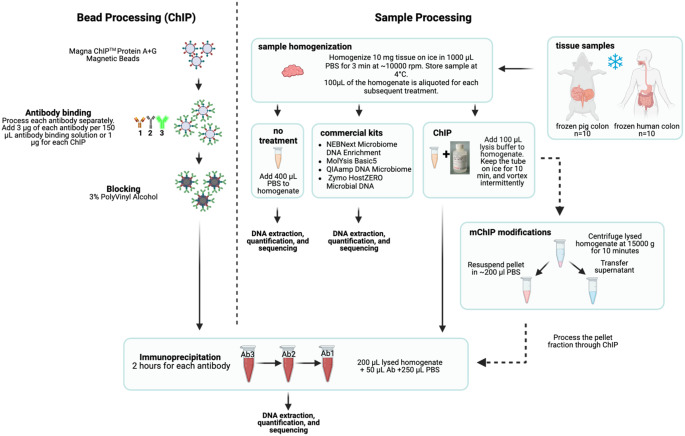
Background: Host DNA depletion is a critical tool for accessing the microbiomes of samples that have a small amount of microbial DNA contained in a high host background. Of critical practical importance is the ability to identify microbial DNA sequences in frozen tissue specimens. Here, we compare four existing commercial methods and two newly introduced methods involving chromatin immunoprecipitation (ChIP) on frozen human and pig intestinal biopsies.
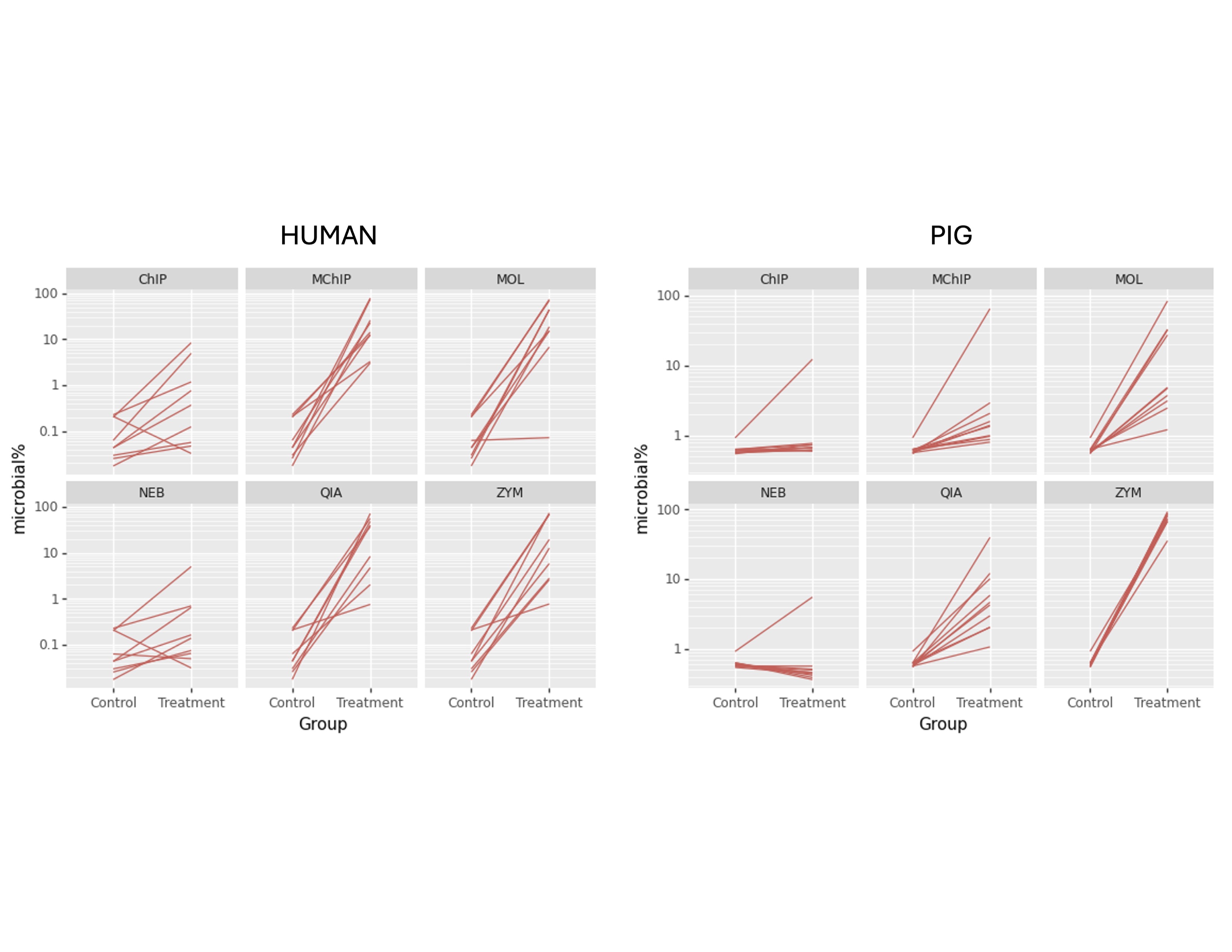
Results: We find that all methods that rely on differential lysis of host and microbial cells introduce substantial biases as assessed by 16 S rRNA gene amplicon profiling. However, ChIP enables 10-fold enrichment of microbial DNA while introducing less bias, sufficient to make assessment possible against background, in both pigs and humans.
Conclusions: We recommend ChIP in situations where host depletion is important but where minimizing taxonomic bias is essential, and the MolYsis or Zymo kit for situations where host depletion level is more important than taxonomic bias.
Conclusions: We recommend ChIP in situations where host depletion is important but where minimizing taxonomic bias is essential, and the MolYsis or Zymo kit for situations where host depletion level is more important than taxonomic bias.
期刊介绍:
Molecular Biology Reports publishes original research papers and review articles that demonstrate novel molecular and cellular findings in both eukaryotes (animals, plants, algae, funghi) and prokaryotes (bacteria and archaea).The journal publishes results of both fundamental and translational research as well as new techniques that advance experimental progress in the field and presents original research papers, short communications and (mini-) reviews.





 京公网安备 11010802042870号
京ICP备2023020795号-1
京公网安备 11010802042870号
京ICP备2023020795号-1

 分享
分享
 求助内容:
求助内容: 应助结果提醒方式:
 扫码关注我们
