Amit Rai , Ashish Shrivastava , Kartick C. Jana , Jay Liu , Kulwant Singh , N.S. Jayalakshmi , Amit Agrawal
{"title":"跨不同气候带的强大短期太阳能预测元机器学习框架","authors":"Amit Rai , Ashish Shrivastava , Kartick C. Jana , Jay Liu , Kulwant Singh , N.S. Jayalakshmi , Amit Agrawal","doi":"10.1016/j.engappai.2025.110295","DOIUrl":null,"url":null,"abstract":"<div><div>The global energy landscape is increasingly dominated by solar power installations, driven by the sun’s position as Earth’s most abundant and sustainable energy resource. However, the intermittent nature of solar radiation, influenced by both astronomical cycles and meteorological conditions, creates significant challenges for reliable power generation and grid integration. To address the issue of uncertainty, this study proposes a robust and improved capacity machine learning framework with enhanced hypothesis functional space. The proposed model improves the capacity of an individual model by combining the hypothesis functions of individual machine learning models, increasing the representational capacity and hence the model’s generalization. Moreover, a non-linear second stage is stacked to increase the depth of the proposed model, which utilizes meta-data of first stage to further improve the forecasting accuracy. Furthermore, the proposed model is validated on four different climatic zones of the world for solar power forecasting. The proposed model achieves an average improvement of 66.7% in mean absolute error across all locations compared to the next best performing algorithm, with particularly strong performance in arid zones. Statistical validation through Cook’s distance analysis also confirms the model’s reliability with an average of 8.64% influential points across all locations.</div></div>","PeriodicalId":50523,"journal":{"name":"Engineering Applications of Artificial Intelligence","volume":"147 ","pages":"Article 110295"},"PeriodicalIF":8.0000,"publicationDate":"2025-05-01","publicationTypes":"Journal Article","fieldsOfStudy":null,"isOpenAccess":false,"openAccessPdf":"","citationCount":"0","resultStr":"{\"title\":\"Meta-machine learning framework for robust short-term solar power prediction across different climatic zones\",\"authors\":\"Amit Rai , Ashish Shrivastava , Kartick C. Jana , Jay Liu , Kulwant Singh , N.S. Jayalakshmi , Amit Agrawal\",\"doi\":\"10.1016/j.engappai.2025.110295\",\"DOIUrl\":null,\"url\":null,\"abstract\":\"<div><div>The global energy landscape is increasingly dominated by solar power installations, driven by the sun’s position as Earth’s most abundant and sustainable energy resource. However, the intermittent nature of solar radiation, influenced by both astronomical cycles and meteorological conditions, creates significant challenges for reliable power generation and grid integration. To address the issue of uncertainty, this study proposes a robust and improved capacity machine learning framework with enhanced hypothesis functional space. The proposed model improves the capacity of an individual model by combining the hypothesis functions of individual machine learning models, increasing the representational capacity and hence the model’s generalization. Moreover, a non-linear second stage is stacked to increase the depth of the proposed model, which utilizes meta-data of first stage to further improve the forecasting accuracy. Furthermore, the proposed model is validated on four different climatic zones of the world for solar power forecasting. The proposed model achieves an average improvement of 66.7% in mean absolute error across all locations compared to the next best performing algorithm, with particularly strong performance in arid zones. Statistical validation through Cook’s distance analysis also confirms the model’s reliability with an average of 8.64% influential points across all locations.</div></div>\",\"PeriodicalId\":50523,\"journal\":{\"name\":\"Engineering Applications of Artificial Intelligence\",\"volume\":\"147 \",\"pages\":\"Article 110295\"},\"PeriodicalIF\":8.0000,\"publicationDate\":\"2025-05-01\",\"publicationTypes\":\"Journal Article\",\"fieldsOfStudy\":null,\"isOpenAccess\":false,\"openAccessPdf\":\"\",\"citationCount\":\"0\",\"resultStr\":null,\"platform\":\"Semanticscholar\",\"paperid\":null,\"PeriodicalName\":\"Engineering Applications of Artificial Intelligence\",\"FirstCategoryId\":\"94\",\"ListUrlMain\":\"https://www.sciencedirect.com/science/article/pii/S0952197625002957\",\"RegionNum\":2,\"RegionCategory\":\"计算机科学\",\"ArticlePicture\":[],\"TitleCN\":null,\"AbstractTextCN\":null,\"PMCID\":null,\"EPubDate\":\"2025/2/22 0:00:00\",\"PubModel\":\"Epub\",\"JCR\":\"Q1\",\"JCRName\":\"AUTOMATION & CONTROL SYSTEMS\",\"Score\":null,\"Total\":0}","platform":"Semanticscholar","paperid":null,"PeriodicalName":"Engineering Applications of Artificial Intelligence","FirstCategoryId":"94","ListUrlMain":"https://www.sciencedirect.com/science/article/pii/S0952197625002957","RegionNum":2,"RegionCategory":"计算机科学","ArticlePicture":[],"TitleCN":null,"AbstractTextCN":null,"PMCID":null,"EPubDate":"2025/2/22 0:00:00","PubModel":"Epub","JCR":"Q1","JCRName":"AUTOMATION & CONTROL SYSTEMS","Score":null,"Total":0}
Meta-machine learning framework for robust short-term solar power prediction across different climatic zones
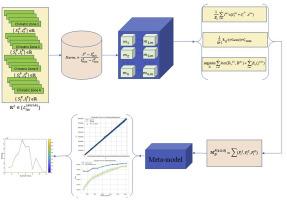
The global energy landscape is increasingly dominated by solar power installations, driven by the sun’s position as Earth’s most abundant and sustainable energy resource. However, the intermittent nature of solar radiation, influenced by both astronomical cycles and meteorological conditions, creates significant challenges for reliable power generation and grid integration. To address the issue of uncertainty, this study proposes a robust and improved capacity machine learning framework with enhanced hypothesis functional space. The proposed model improves the capacity of an individual model by combining the hypothesis functions of individual machine learning models, increasing the representational capacity and hence the model’s generalization. Moreover, a non-linear second stage is stacked to increase the depth of the proposed model, which utilizes meta-data of first stage to further improve the forecasting accuracy. Furthermore, the proposed model is validated on four different climatic zones of the world for solar power forecasting. The proposed model achieves an average improvement of 66.7% in mean absolute error across all locations compared to the next best performing algorithm, with particularly strong performance in arid zones. Statistical validation through Cook’s distance analysis also confirms the model’s reliability with an average of 8.64% influential points across all locations.
期刊介绍:
Artificial Intelligence (AI) is pivotal in driving the fourth industrial revolution, witnessing remarkable advancements across various machine learning methodologies. AI techniques have become indispensable tools for practicing engineers, enabling them to tackle previously insurmountable challenges. Engineering Applications of Artificial Intelligence serves as a global platform for the swift dissemination of research elucidating the practical application of AI methods across all engineering disciplines. Submitted papers are expected to present novel aspects of AI utilized in real-world engineering applications, validated using publicly available datasets to ensure the replicability of research outcomes. Join us in exploring the transformative potential of AI in engineering.




 京公网安备 11010802042870号
京ICP备2023020795号-1
京公网安备 11010802042870号
京ICP备2023020795号-1

 分享
分享
 求助内容:
求助内容: 应助结果提醒方式:
 扫码关注我们
