Elaheh Rashidbeygi, Niloufar Rasaei, Mohammad Reza Amini, Marieh Salavatizadeh, Mehdi Mohammadizadeh, Azita Hekmatdoost
{"title":"熊去氧胆酸对心脏代谢危险因素的影响:随机对照试验的系统回顾和荟萃分析。","authors":"Elaheh Rashidbeygi, Niloufar Rasaei, Mohammad Reza Amini, Marieh Salavatizadeh, Mehdi Mohammadizadeh, Azita Hekmatdoost","doi":"10.1186/s12872-025-04549-3","DOIUrl":null,"url":null,"abstract":"<p><strong>Background: </strong>Chronic diseases such as obesity, hypertension, and metabolic syndrome are major health concerns worldwide. Ursodeoxycholic acid (UDCA) is a bile acid that is naturally produced in the liver and has been used for the treatment of various liver disorders. In this systematic review and meta-analysis, we investigated how UDCA might affect inflammation, blood pressure, and obesity.</p><p><strong>Methods: </strong>Five major databases were searched from inception to August 2024. The investigated outcomes included body mass index (BMI), systolic blood pressure (SBP), diastolic blood pressure (DBP), interleukin-6 (IL-6), and tumor necrosis factor-alpha (TNF-α). A random effect was carried out to estimate pooled weighted mean difference (WMD) with 95% confidence intervals (CI). The registration code is CRD42023428064.</p><p><strong>Results: </strong>Of the 7912 articles in the initial search, 12 were included in the systematic review and meta-analysis. UDCA consumption significantly decreased BMI (WMD: -0.29 kg/m<sup>2</sup>, 95% CI: -0.58, -0.01, P = 0.044), and DBP (WMD: -2.16 mmHg, 95% CI: -3.66, -0.66, P = 0.005). It also increased SBP (WMD: 5.50 mmHg, 95% CI: 3.65, 7.35, P < 0.001); however, it was not associated with weight loss (WMD: -0.3 kg, 95% CI: -1.3, 0.71, P = 0.561). Our systematic review showed that UDCA consumption has no effect on IL-6 and TNF-α.</p><p><strong>Conclusion: </strong>This systematic review and meta-analysis suggest that UDCA supplementation may improve BMI and DBP, whereas it may increase SBP and have no effect on weight or inflammation. Further long-term and well-designed RCTs are needed to further assess and confirm these results.</p>","PeriodicalId":9195,"journal":{"name":"BMC Cardiovascular Disorders","volume":"25 1","pages":"125"},"PeriodicalIF":3.1000,"publicationDate":"2025-02-21","publicationTypes":"Journal Article","fieldsOfStudy":null,"isOpenAccess":false,"openAccessPdf":"https://www.ncbi.nlm.nih.gov/pmc/articles/PMC11844182/pdf/","citationCount":"0","resultStr":"{\"title\":\"The effects of ursodeoxycholic acid on cardiometabolic risk factors: a systematic review and meta-analysis of randomized controlled trials.\",\"authors\":\"Elaheh Rashidbeygi, Niloufar Rasaei, Mohammad Reza Amini, Marieh Salavatizadeh, Mehdi Mohammadizadeh, Azita Hekmatdoost\",\"doi\":\"10.1186/s12872-025-04549-3\",\"DOIUrl\":null,\"url\":null,\"abstract\":\"<p><strong>Background: </strong>Chronic diseases such as obesity, hypertension, and metabolic syndrome are major health concerns worldwide. Ursodeoxycholic acid (UDCA) is a bile acid that is naturally produced in the liver and has been used for the treatment of various liver disorders. In this systematic review and meta-analysis, we investigated how UDCA might affect inflammation, blood pressure, and obesity.</p><p><strong>Methods: </strong>Five major databases were searched from inception to August 2024. The investigated outcomes included body mass index (BMI), systolic blood pressure (SBP), diastolic blood pressure (DBP), interleukin-6 (IL-6), and tumor necrosis factor-alpha (TNF-α). A random effect was carried out to estimate pooled weighted mean difference (WMD) with 95% confidence intervals (CI). The registration code is CRD42023428064.</p><p><strong>Results: </strong>Of the 7912 articles in the initial search, 12 were included in the systematic review and meta-analysis. UDCA consumption significantly decreased BMI (WMD: -0.29 kg/m<sup>2</sup>, 95% CI: -0.58, -0.01, P = 0.044), and DBP (WMD: -2.16 mmHg, 95% CI: -3.66, -0.66, P = 0.005). It also increased SBP (WMD: 5.50 mmHg, 95% CI: 3.65, 7.35, P < 0.001); however, it was not associated with weight loss (WMD: -0.3 kg, 95% CI: -1.3, 0.71, P = 0.561). Our systematic review showed that UDCA consumption has no effect on IL-6 and TNF-α.</p><p><strong>Conclusion: </strong>This systematic review and meta-analysis suggest that UDCA supplementation may improve BMI and DBP, whereas it may increase SBP and have no effect on weight or inflammation. Further long-term and well-designed RCTs are needed to further assess and confirm these results.</p>\",\"PeriodicalId\":9195,\"journal\":{\"name\":\"BMC Cardiovascular Disorders\",\"volume\":\"25 1\",\"pages\":\"125\"},\"PeriodicalIF\":3.1000,\"publicationDate\":\"2025-02-21\",\"publicationTypes\":\"Journal Article\",\"fieldsOfStudy\":null,\"isOpenAccess\":false,\"openAccessPdf\":\"https://www.ncbi.nlm.nih.gov/pmc/articles/PMC11844182/pdf/\",\"citationCount\":\"0\",\"resultStr\":null,\"platform\":\"Semanticscholar\",\"paperid\":null,\"PeriodicalName\":\"BMC Cardiovascular Disorders\",\"FirstCategoryId\":\"3\",\"ListUrlMain\":\"https://doi.org/10.1186/s12872-025-04549-3\",\"RegionNum\":3,\"RegionCategory\":\"医学\",\"ArticlePicture\":[],\"TitleCN\":null,\"AbstractTextCN\":null,\"PMCID\":null,\"EPubDate\":\"\",\"PubModel\":\"\",\"JCR\":\"Q3\",\"JCRName\":\"CARDIAC & CARDIOVASCULAR SYSTEMS\",\"Score\":null,\"Total\":0}","platform":"Semanticscholar","paperid":null,"PeriodicalName":"BMC Cardiovascular Disorders","FirstCategoryId":"3","ListUrlMain":"https://doi.org/10.1186/s12872-025-04549-3","RegionNum":3,"RegionCategory":"医学","ArticlePicture":[],"TitleCN":null,"AbstractTextCN":null,"PMCID":null,"EPubDate":"","PubModel":"","JCR":"Q3","JCRName":"CARDIAC & CARDIOVASCULAR SYSTEMS","Score":null,"Total":0}
The effects of ursodeoxycholic acid on cardiometabolic risk factors: a systematic review and meta-analysis of randomized controlled trials.
Background: Chronic diseases such as obesity, hypertension, and metabolic syndrome are major health concerns worldwide. Ursodeoxycholic acid (UDCA) is a bile acid that is naturally produced in the liver and has been used for the treatment of various liver disorders. In this systematic review and meta-analysis, we investigated how UDCA might affect inflammation, blood pressure, and obesity.
Methods: Five major databases were searched from inception to August 2024. The investigated outcomes included body mass index (BMI), systolic blood pressure (SBP), diastolic blood pressure (DBP), interleukin-6 (IL-6), and tumor necrosis factor-alpha (TNF-α). A random effect was carried out to estimate pooled weighted mean difference (WMD) with 95% confidence intervals (CI). The registration code is CRD42023428064.
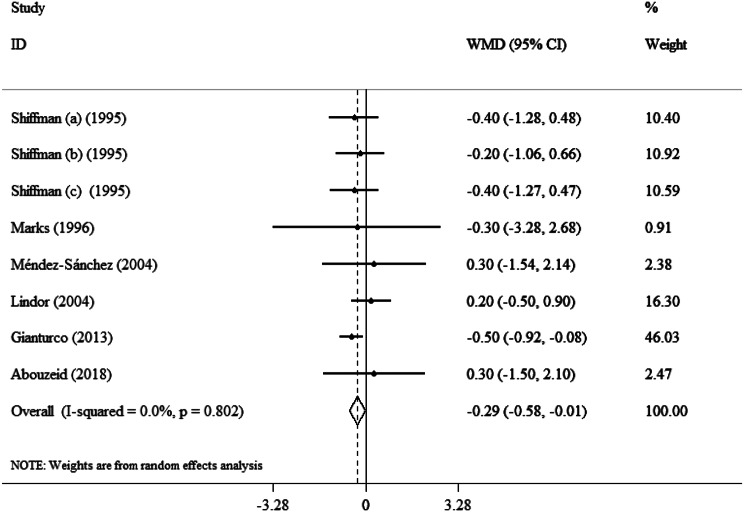
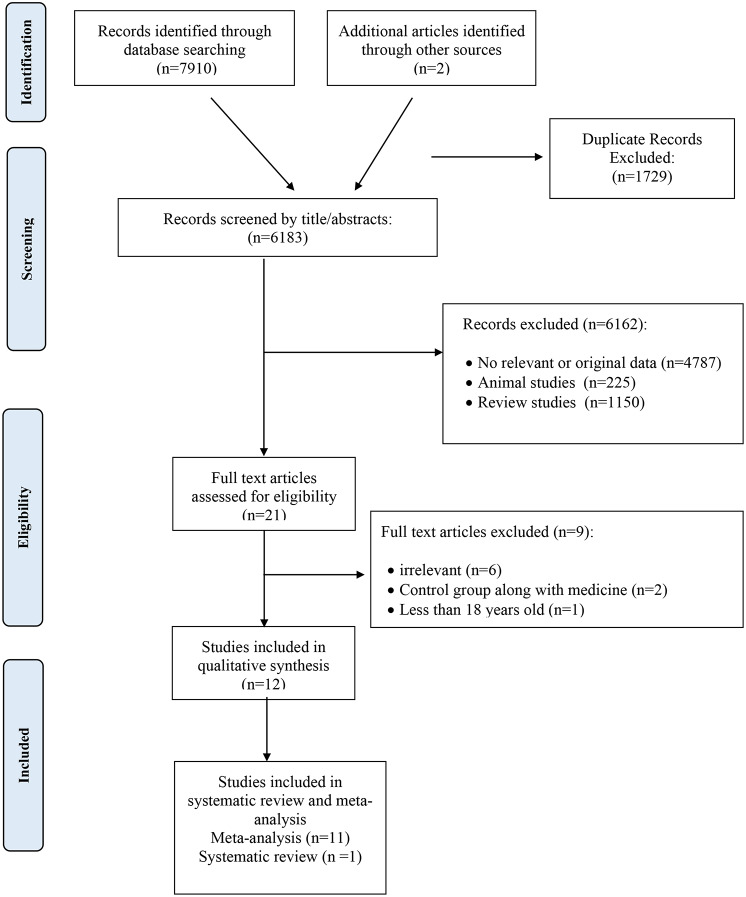
Results: Of the 7912 articles in the initial search, 12 were included in the systematic review and meta-analysis. UDCA consumption significantly decreased BMI (WMD: -0.29 kg/m2, 95% CI: -0.58, -0.01, P = 0.044), and DBP (WMD: -2.16 mmHg, 95% CI: -3.66, -0.66, P = 0.005). It also increased SBP (WMD: 5.50 mmHg, 95% CI: 3.65, 7.35, P < 0.001); however, it was not associated with weight loss (WMD: -0.3 kg, 95% CI: -1.3, 0.71, P = 0.561). Our systematic review showed that UDCA consumption has no effect on IL-6 and TNF-α.
Conclusion: This systematic review and meta-analysis suggest that UDCA supplementation may improve BMI and DBP, whereas it may increase SBP and have no effect on weight or inflammation. Further long-term and well-designed RCTs are needed to further assess and confirm these results.
期刊介绍:
BMC Cardiovascular Disorders is an open access, peer-reviewed journal that considers articles on all aspects of the prevention, diagnosis and management of disorders of the heart and circulatory system, as well as related molecular and cell biology, genetics, pathophysiology, epidemiology, and controlled trials.





 京公网安备 11010802042870号
京ICP备2023020795号-1
京公网安备 11010802042870号
京ICP备2023020795号-1

 分享
分享
 求助内容:
求助内容: 应助结果提醒方式:
 扫码关注我们
